
Living in a small apartment or a multi-cat household often forces pet parents to make tough compromises. The most common dilemma: Can I put a cat litter box in the bedroom?
Ideally, the bedroom should be a sanctuary for rest, not a restroom for your feline. However, when square footage is tight, sometimes it is the only option left. Before you move the box next to your bed, you need to understand the biological risks and the strict rules required to make this setup safe.
Generally, placing a litter box in the bedroom is not recommended due to ammonia exposure, bacterial risks, and sleep disruption.
However, if it is the only option, it can be done safely by adhering to strict hygiene protocols: utilizing an automatic litter box (like the Neakasa M1) to remove waste immediately, running a dedicated HEPA+Carbon air purifier, and maintaining a distance of at least 6 feet from your headboard to minimize inhalation risks.
Is It Safe to Sleep Near a Litter Box? The Health Risks
The question "Is it safe to sleep near a litter box?" Isn't just about the "ick" factor; it is a question of respiratory health and biology.
1. Ammonia Inhalation and Respiratory Issues
Cat urine is highly concentrated. As urea breaks down, it releases Ammonia NH_3, a toxic gas.
- The Risk: In a small, enclosed bedroom with poor ventilation, ammonia levels can rise quickly.
- The Symptom: Even low-level exposure over 8 hours of sleep can lead to headaches, throat irritation, and disrupted REM cycles.
- The Science: Ammonia is heavier than air in high humidity but generally disperses quickly; however, if you are sleeping on a low bed near the floor, you are closer to the "gas plume."
2. Bacterial Concerns and Toxoplasmosis
Litter boxes are reservoirs for bacteria like E. coli and parasites like Toxoplasma gondii.
- Aerosolization: When a cat digs or covers their waste, microscopic particles of feces and litter dust become airborne.
- Proximity: Sleeping within a few feet of the box increases the likelihood of inhaling these particulates.
- Warning: Pregnant women or immunocompromised individuals should never sleep in a room with a litter box due to the risk of Toxoplasmosis.
3. Sleep Hygiene Disruption
Cats are crepuscular, meaning they are most active at dawn and dusk.
- Noise: The sound of a cat scratching plastic liners or digging in clay at 3:00 AM creates "micro-awakenings" that ruin your sleep quality.
- Odor: Our sense of smell is active even while sleeping. A sudden waft of fresh waste triggers the brain's alert system, pulling you out of deep sleep.
The 3 Golden Rules for Putting A Litter Box In The Bedroom
If you have no choice but to keep the box in your sleeping quarters, you must follow these rules to mitigate the risks mentioned above.
Rule #1: The "6-Foot" Distance & Ventilation Protocol
Distance is your first line of defense. When a litter box is placed too close to where you sleep, odors, dust, and airborne bacteria can easily accumulate around your breathing zone. Proper spacing and airflow dramatically reduce this risk.
- The 6-Foot Rule: Place the litter box at least 6 feet (2 meters) away from your headboard. Never place it directly beside the bedside stand.
- Ventilation: The box must be placed near a window or an air vent. Do not place it in a stagnant corner or inside a sliding closet door unless there is active exhaust.
Rule #2: Zero-Tolerance Odor Control (Automation)
In a living room, you might tolerate a smell for 20 minutes before scooping. In a bedroom, zero odor is the standard. Bedrooms are enclosed spaces where you spend 6–8 hours breathing the same air, so even brief odor exposure becomes a long-term air quality issue while you sleep.
- Why Manual Scooping Fails: You cannot scoop while you are asleep. If your cat goes at 2:00 AM, that waste sits for 5+ hours, releasing ammonia while you breathe.
- The Solution: You need an Automatic Litter Box like the Neakasa M1. It cycles 5 minutes after the cat leaves, sealing the waste away before ammonia gas has time to develop. This is non-negotiable for bedroom hygiene.
Rule #3: Air Purification is Mandatory
A bedroom litter box setup requires a dedicated air purifier. General home ventilation is not enough to handle litter dust, dander, and odor gases in a confined sleeping space. Without active filtration, airborne particles will inevitably circulate throughout your bed throughout the night.
- The Specs: It must have Activated Carbon (for gas/smell) and HEPA (for dust/dander).
- Placement: Place the purifier between the litter box and your bed to act as an "air shield," capturing pollutants before they drift toward your pillow.

Best Place to Put a Litter Box in an Apartment: A Comparison
Finding the best place for a litter box in apartment layouts is a balancing act between cat comfort and human hygiene. Here is how the bedroom stacks up against other locations.
| Location | Suitability | Pros | Cons |
|---|---|---|---|
| Laundry Room | ⭐⭐⭐⭐⭐ (Best) |
|
Noise may scare very skittish cats |
| Living Room | ⭐⭐⭐⭐ |
|
|
| Bathroom | ⭐⭐⭐ |
|
High humidity (>60%) weakens litter clumping |
| Bedroom | ⭐⭐ (Risky) |
|
|
| Kitchen | ⭐ (Avoid) | High foot traffic | Hygiene hazard: risk of food contamination |
The Worst Places (Avoid These)
- The Kitchen: Never place a box near food preparation areas. Pathogens can travel via "dust plumes" onto counters.
- Carpeted Corners: If urine misses the box, it soaks into the carpet pad, creating a permanent smell that no amount of cleaning can remove.
- Dark, Unventilated Closets: While it hides the mess, it creates a concentrated "gas chamber" of ammonia that is unfair to your cat.
Litter Box in Bedroom Feng Shui
For those interested in energy flow, a litter box in the bedroom Feng Shui is generally considered negative.
- The Concept: The bedroom represents health and relationships. Waste generates "Sha Chi" (stagnant/killing energy).
- The Fix: If it must be there, Feng Shui principles dictate it should be:
- Hidden: Use a screen or enclosure.
- Impeccable: Kept scrupulously clean (another argument for the Neakasa M1).
- Placement: Never placed in the "Relationship Corner" (far right corner from the door).
Essential Gear for Placing A Litter Box In The Bedroom
To make this setup livable, standard equipment isn't enough. You need gear that actively suppresses mess and smell.
Why Open-Top Automatic Boxes Are Better for Bedrooms
There is a common misconception that "hooded" or enclosed boxes are better for bedrooms.
- The Enclosed Trap: Enclosed boxes trap ammonia inside. When the cat enters, they are forced to breathe toxic gas. When they exit, they carry that smell on their fur onto your bed.
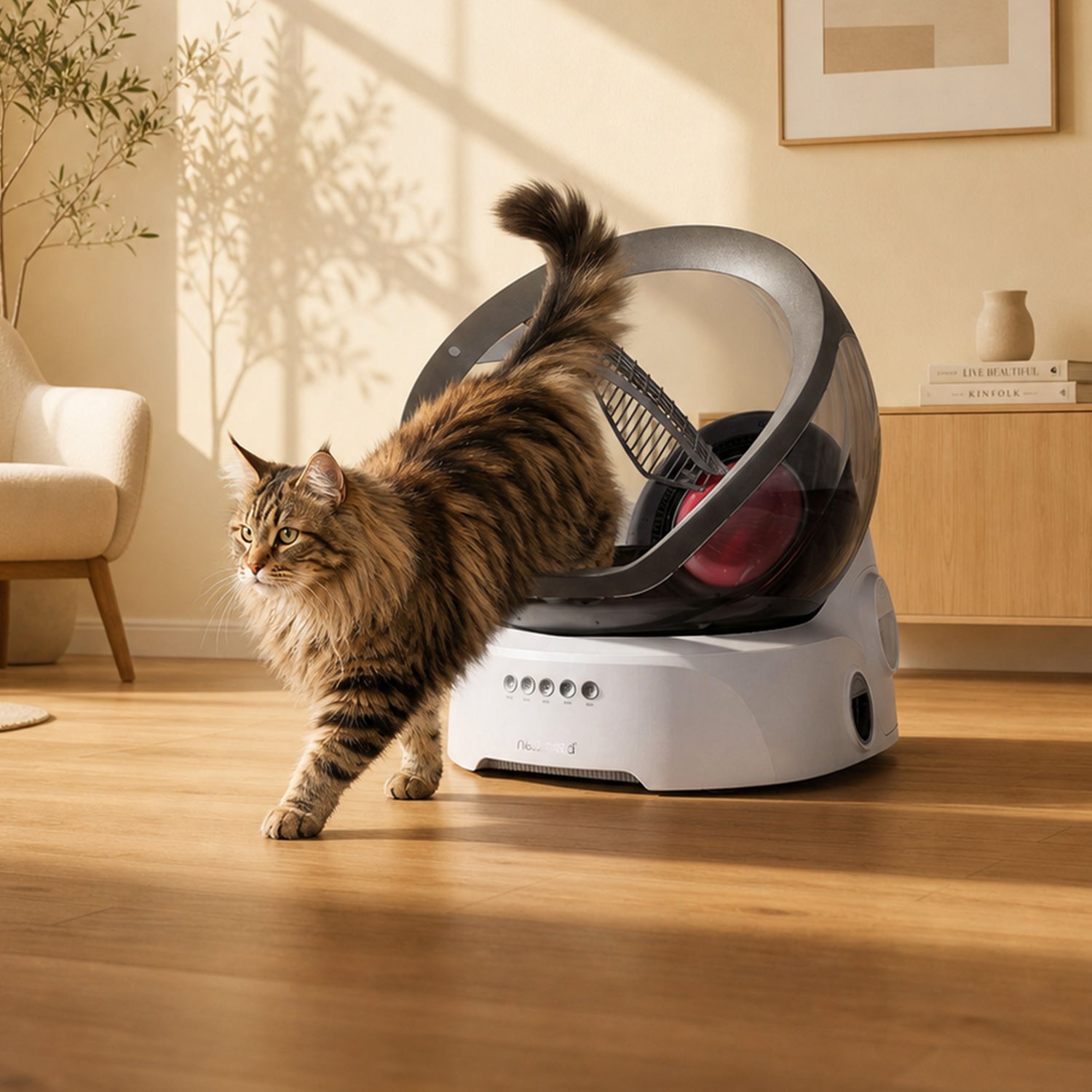
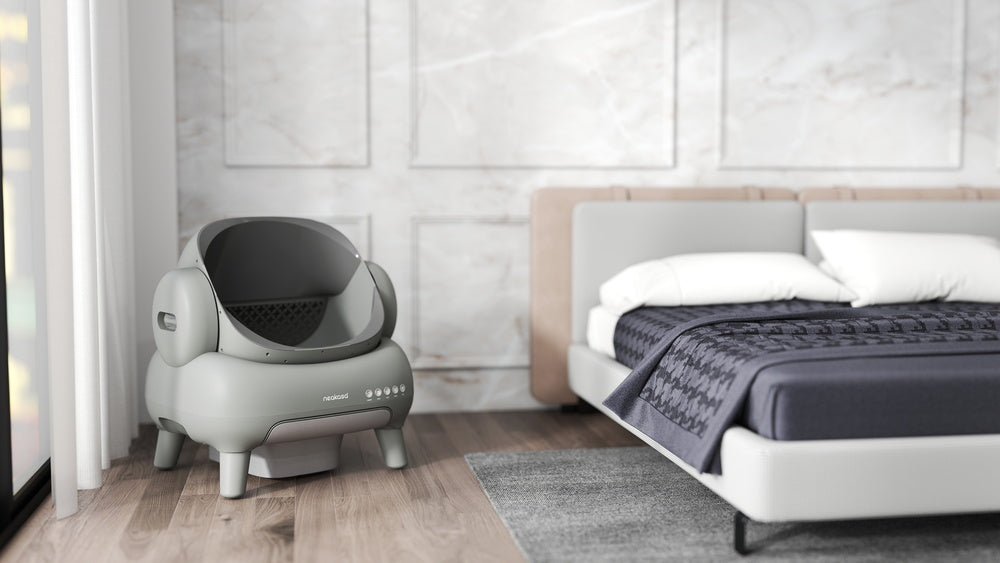
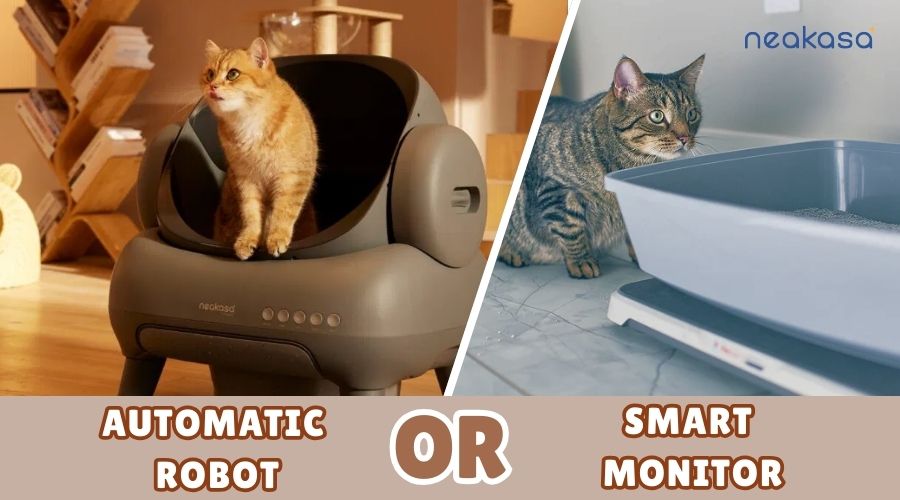
- The Neakasa M1 Advantage: The Neakasa M1 features an Open-Top design, which cats prefer for safety/visibility, but it uses a sealed waste drawer underneath.
- Result: The cat breathes fresh air, but the waste (the source of the smell) is physically sealed away within minutes.
The Role of Litter Mats and Air Purifiers
- Double-Layer Honeycomb Mats: Essential for the bedroom to trap granules before they reach your rug or sheets.
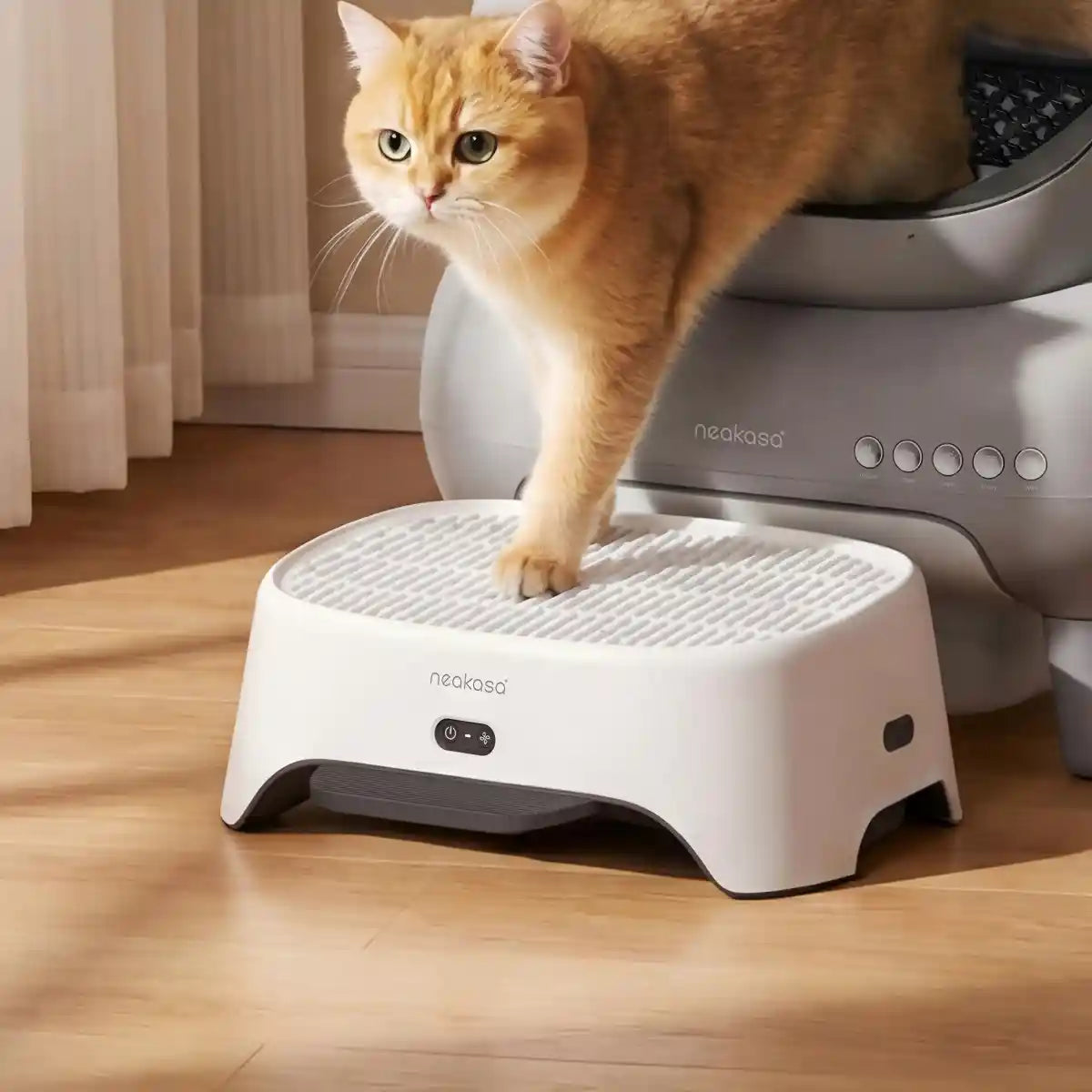
- Neakasa AirStep: Pairing your automatic box with a specific pet air purifier ensures that even the dust kicked up during digging is captured immediately.
FAQs About Litter Box Placement
Q1: Can I put a litter box in a closet?
A: Only if the closet is well-ventilated or you leave the door cracked open with a door stopper. A closed closet traps ammonia, creating a health hazard for your cat.
Q2: Is it bad to breathe in cat litter dust while sleeping?
A: Yes. Silica dust and Bentonite clay dust can be respiratory irritants. If the box is in your bedroom, switch to a low-dust litter (like Tofu or high-quality clay) and run an air purifier.
Q3: How do I hide a litter box in a small bedroom?
A: You have two options:
- Litter Box Furniture: Enclosures that look like nightstands.
- Sleek Design: Choose a modern automatic box like the Neakasa M1 that looks like a high-end appliance rather than a toilet, so you don't feel the need to hide it.
Conclusion
Can you put a cat litter box in the bedroom? The answer is a hesitant "yes"—but only if you prioritize hygiene above all else. Sleeping next to a manual litter box is a recipe for bad sleep and respiratory risks.
To make the bedroom setup safe and odor-free, you must upgrade your infrastructure. By following the 6-Foot Rule, ensuring ventilation, and utilizing the Neakasa M1 Automatic Litter Box, you can maintain a fresh, healthy sanctuary for you and a clean, comfortable bathroom for your cat.

- Enhanced sealing stops leaks, even for side-peeing.
- Self-cleaning removes waste without daily scooping.
- Open-top design ensures safety and easy access.
- Spacious interior fits cats, up to 33 lbs.
- Sealed bin locks odors for up to 14 days.


Leave a comment
All comments are moderated before being published.
This site is protected by hCaptcha and the hCaptcha Privacy Policy and Terms of Service apply.