
Ever go to scoop the litter only to be met by a white cloud and a sneezing fit? You love your cat, but your respiratory system definitely doesn’t love their bathroom. High dust levels aren’t just annoying for you; they can actually irritate your cat’s lungs, too.
You don’t have to choose between fresh air and your feline friend. To save your nose (and your sanity), here are 6 proven tips to eliminate the dust and reclaim a clean, breathable home.
Follow this 6-step checklist to transform your cat’s bathroom into a fresh-air zone:
- [ ] Ditch the Clay: Switch to low-dust alternatives like cassava, tofu, or paper.
- [ ] Upgrade Your Box: Swap static-filled plastic for smooth, anti-static stainless steel.
- [ ] Take the Lid Off: Use open-top designs to prevent dust concentration.
- [ ] Optimize Airflow: Place a HEPA air purifier 3–6 feet away from the litter zone.
- [ ] Mist and Scoop: Lightly spray the air before sifting to settle fine particles.
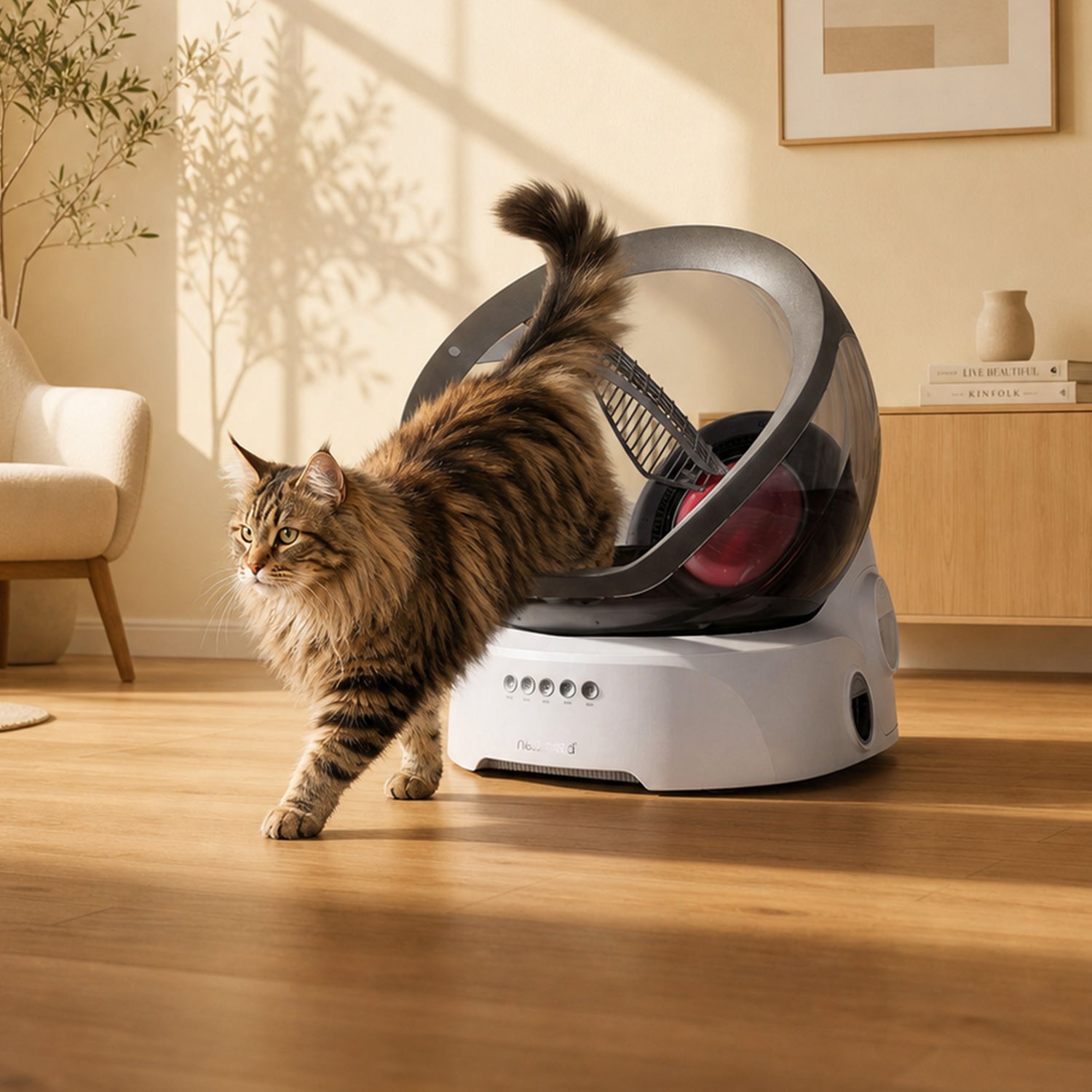
- [ ] Automate Smartly: Choose an open-top self-cleaning box like the Neakasa M1 to avoid trapping dust.
Why Does Scooping the Box Feel Like a Dust Storm?
Before we fix it, it helps to know exactly what you’re breathing in. Spoiler: it’s not just “dust.”
The Hidden Dangers in Traditional Clay Litter
Most clumping litter is made from bentonite clay. Every time the bag is shipped, poured, or dug into by your cat, those little clay pebbles rub together.
This creates microscopic silica dust. You are typically exposed to this invisible, lung-irritating dust during three peak moments:
- The Pour: When you fill a fresh box, a massive cloud of heavy silica dust billows up into the room.
- The Dig: When your cat vigorously buries their waste, they kick up settled dust particles into the air.
- The Scoop: When you sift clumps through your scooper, the friction creates a fresh wave of dust that floats straight up into your face.
Understand the Truth About “99% Dust-Free” Labels
We’ve all seen the “99% Dust-Free” label on clay litter boxes. Here’s the catch: that claim is usually based on weight, not volume. A heavy 20-pound box might only have a few ounces of dust, but those few ounces equal millions of tiny particles floating in your bathroom.
Is Your Cat Sneezing Too? Watch Out for Feline Asthma
Think about it from your cat’s perspective. They are literally inches away from the dust cloud while they dig. Figuring out how to reduce cat litter dust is just as important for them as it is for you.
If your cat is inhaling high levels of particulate matter daily, they might be developing Feline Asthma. Watch out for these common red flags:
- Frequent sneezing or wheezing, especially immediately after using the litter box.
- The “Asthma Posture”: Squatting low to the ground with their neck extended outward while coughing (often mistaken for trying to hack up a hairball).
- Open-mouth breathing or breathing more rapidly than usual while resting.
- Watery eyes or unusual nasal discharge.
6 Proven Ways to Eliminate Cat Litter Dust and Allergens
You can’t fix a dust problem if you keep pouring dust into the box. Changing your litter type is step one.
1. Ditch the Clay for Hypoallergenic Alternatives
If you really want low-dust cat litter for allergies, you have to leave clay behind. Here is how the best alternatives stack up:
| Litter Material | Dust Level | Clumping Power | Floor Tracking |
|---|---|---|---|
| 1. Cassava | 🟢 Practically Zero | ⭐⭐⭐⭐⭐ | Moderate |
| 2. Tofu Pellets | 🟢 Very Low | ⭐⭐⭐⭐ | Minimal |
| 3. Paper Pellets | 🟢 100% Zero | ⭐ | Minimal |
Cassava Litter
Made from the yuca root, cassava is incredible for allergy sufferers who refuse to give up hard clumps. It clumps just as well as clay but without the silica dust cloud. Plus, it’s very light-colored, making it easy to spot any changes in your cat’s urine.
| ✅ Pros | ❌ Cons |
|---|---|
|
|
Tofu Pellets
3. Tofu litter comes in little cylindrical pellets. Because the pieces are bigger and smoother, there’s way less friction when your cat digs, which means less dust. As a bonus, the heavier pellets don’t stick to your cat’s paws, so you won’t find them all over your house.
| ✅ Pros | ❌ Cons |
|---|---|
|
|
Paper Pellets
If your allergies are severe, or if your cat is recovering from surgery, paper pellets are the gold standard. They generate absolutely zero dust. The downside? They don’t clump, so cleaning is a bit more hands-on.
| ✅ Pros | ❌ Cons |
|---|---|
|
|
2. Upgrade to an Anti-Static Litter Box
Plastic litter boxes are magnets for trouble. Over time, your cat’s claws create micro-scratches that trap bacteria and dust. Even worse, plastic generates static electricity, causing fine particles to "stick" to the walls.
-
Step 1. Inspect and Retire
Check your current plastic box for scratches. If the bottom looks "cloudy" or rough, it’s already a dust trap—time to upgrade.
-
Step 2. Choose Anti-Static Materials
Opt for stainless steel or a high-end unit like the Neakasa M1, which uses specialized non-stick materials that prevent waste and dust from bonding to the surface.
-
Step 3. Simplified Cleaning
Because dust can't cling to these smooth surfaces, a simple wipe-down during litter changes is all you need to keep the environment allergen-free.
3. Take the Lid Off to Prevent Dust Buildup
Covered boxes might hide the mess, but they act like "dust chambers." Every time you remove the hood to scoop, you’re met with a concentrated explosion of trapped allergens. An open-top design allows dust to disperse naturally.
-
Step 1. Ditch the Hood
Removing the roof stops dust from accumulating right at your cat's breathing level while they dig.
-
Step 2. Use High Sides Instead
Opt for a box with high walls rather than a full lid to contain the mess while letting dust escape upward.
-
Step 3. Ventilate the Space
Place the open box in a well-ventilated area so any dispersed dust can be easily caught by ambient airflow or an air purifier.
4. Optimize Airflow with Targeted Purification
A standard air purifier in the corner of the room is too late—the dust has already traveled to your nose. You need "source control" exactly where the cat exits the box.
-
Step 1. Move Purification to the Exit
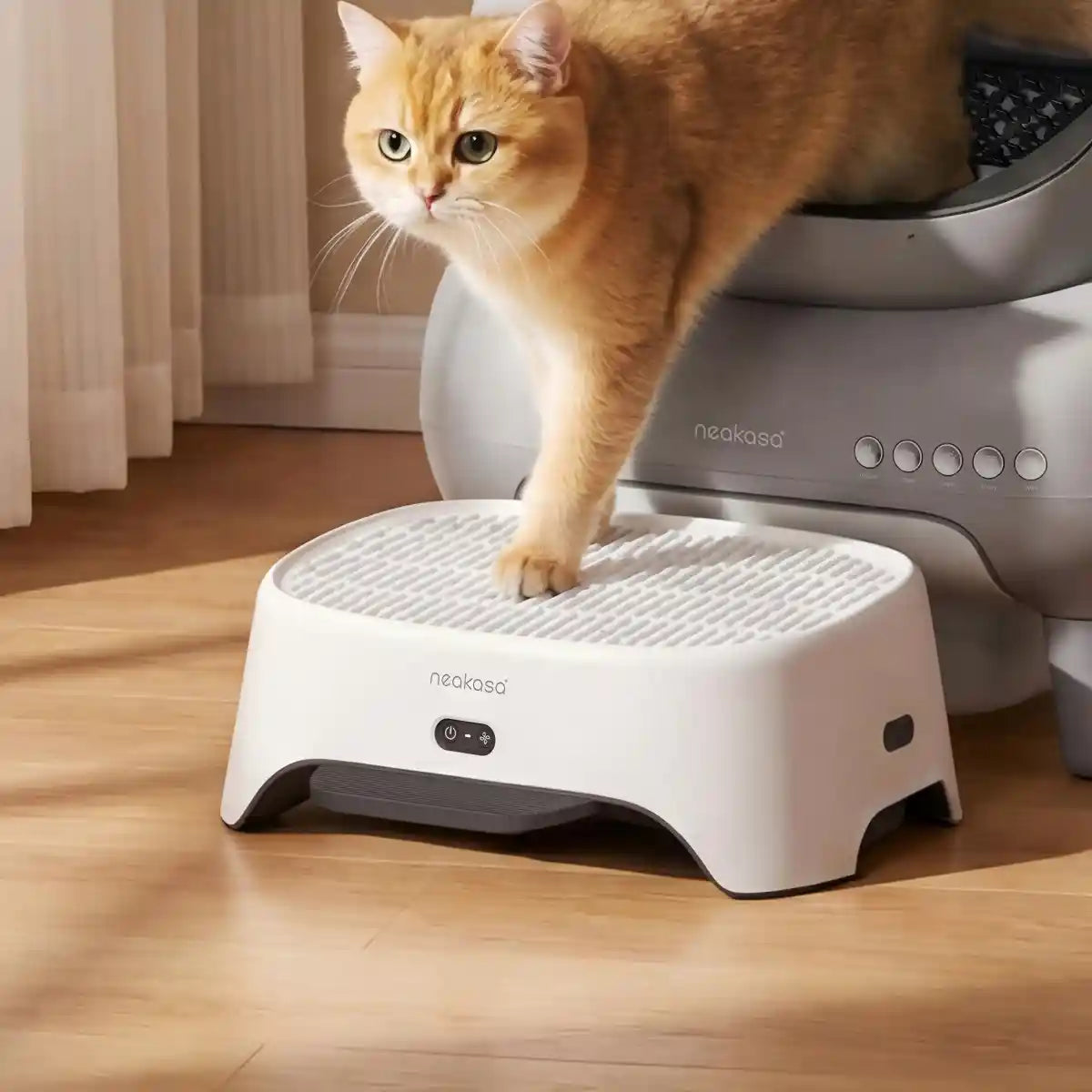
Instead of a passive mat, place a specialized solution like the Neakasa AirStep directly at the litter box entrance.
-
Step 2. Activate 3-Stage Filtration
Ensure the AirStep’s internal HEPA and Activated Carbon filters are active. This system sucks in airborne particles and odors the millisecond your cat steps out, trapping 99.7% of allergens.
-
Step 3. Double-Duty Maintenance
Let the AirStep do the heavy lifting—the physical grates catch the "tracking" sand while the internal vacuum captures the "floating" dust, keeping your floors and your lungs clear.

- 230g Activated Carbon eliminate ammonia odors.
- Honeycomb grate traps litter off paws.
- 20dB Ultra-Quiet fan won't scare your cat.
- 3 adjustable speeds balance power and silence.
- Universal 17.4" width fits Neakasa M1 & most boxes.
From $59.99
5. Use the "Water Mist Trick" Before Scooping
Even with low-dust litter, how you handle the scoop matters. Try this simple 3-step trick:
-
Step 1. Prep the Area
Grab a small spray bottle filled with plain water.
-
Step 2. Mist the Air
Right before you scoop, lightly spray the air directly above the box. (Do not spray the litter itself.
-
Step 3. Scoop Gently
Use a sturdy metal scoop with wide slots. Tilt gently to sift—do not aggressively shake your wrist!
The water droplets will grab the floating dust particles and pull them straight down to the floor before they reach your face.
6. Automate Smartly with a Self-Cleaning Box
The ultimate way to avoid the scooping dust storm is to stop scooping altogether. Investing in a smart, open-top automatic litter box removes you from the daily dust zone.
-
Step 1. Eliminate Manual Scooping
Let the machine do the dirty work, keeping your face far away from the litter box during cleanup.
-
Step 2. Gentle Auto-Sifting
Devices like the Neakasa M1 separate waste smoothly, avoiding the aggressive shaking and friction that creates dust clouds in the first place.
-
Step 3. Dust-Free Disposal
Skip the trash-day explosion. The M1's packing mechanism securely seals the waste bag shut before you pull it out, ensuring zero dust escapes.

- Enhanced sealing stops leaks, even for side-peeing.
- Self-cleaning removes waste without daily scooping.
- Open-top design ensures safety and easy access.
- Spacious interior fits cats, up to 33 lbs.
- Sealed bin locks odors for up to 14 days.
From $379.99
FAQs About Cat Litter Dust
Q1. Can cat litter dust make humans sick?
A1. Yes. Traditional clay litters release silica dust, which can irritate your respiratory system and trigger allergies or asthma in both humans and cats.
Q2. Is there any cat litter that is 100% dust-free?
A2. Paper pellets are the only truly 100% dust-free option. If you prefer clumping litters, cassava and tofu produce practically zero dust compared to clay.
Q3. Will a standard air purifier fix my litter dust problem?
A3. Not entirely. Standard purifiers catch dust too late. For immediate relief, place a specialized HEPA purifier (like the Neakasa AirStep) directly next to the litter box to catch dust at the source.
Q4. Do automatic litter boxes actually help reduce dust?
A4. Absolutely. Devices like the Neakasa M1 eliminate the friction of manual scooping and auto-seal the waste, preventing dust clouds entirely.
Q5. How often should I completely change the litter?
A5. Even low-dust litter breaks down over time. To keep air quality high, empty the box, wipe it down, and refill with fresh litter every 2 to 4 weeks.
Final Thoughts: Reclaim Your Dust-Free Home
Living with a cat doesn't have to equal living with a runny nose. As we’ve explored, eliminating harmful silica dust and allergens is just a matter of optimizing your litter routine.
Whether you swap dusty clay for a low-tracking alternative, adopt the quick "water mist" habit, or upgrade to a seamless automatic litter box, these proactive changes will instantly transform your daily air quality. It's time to breathe easy and keep your home feeling fresh.


Leave a comment
All comments are moderated before being published.
This site is protected by hCaptcha and the hCaptcha Privacy Policy and Terms of Service apply.