
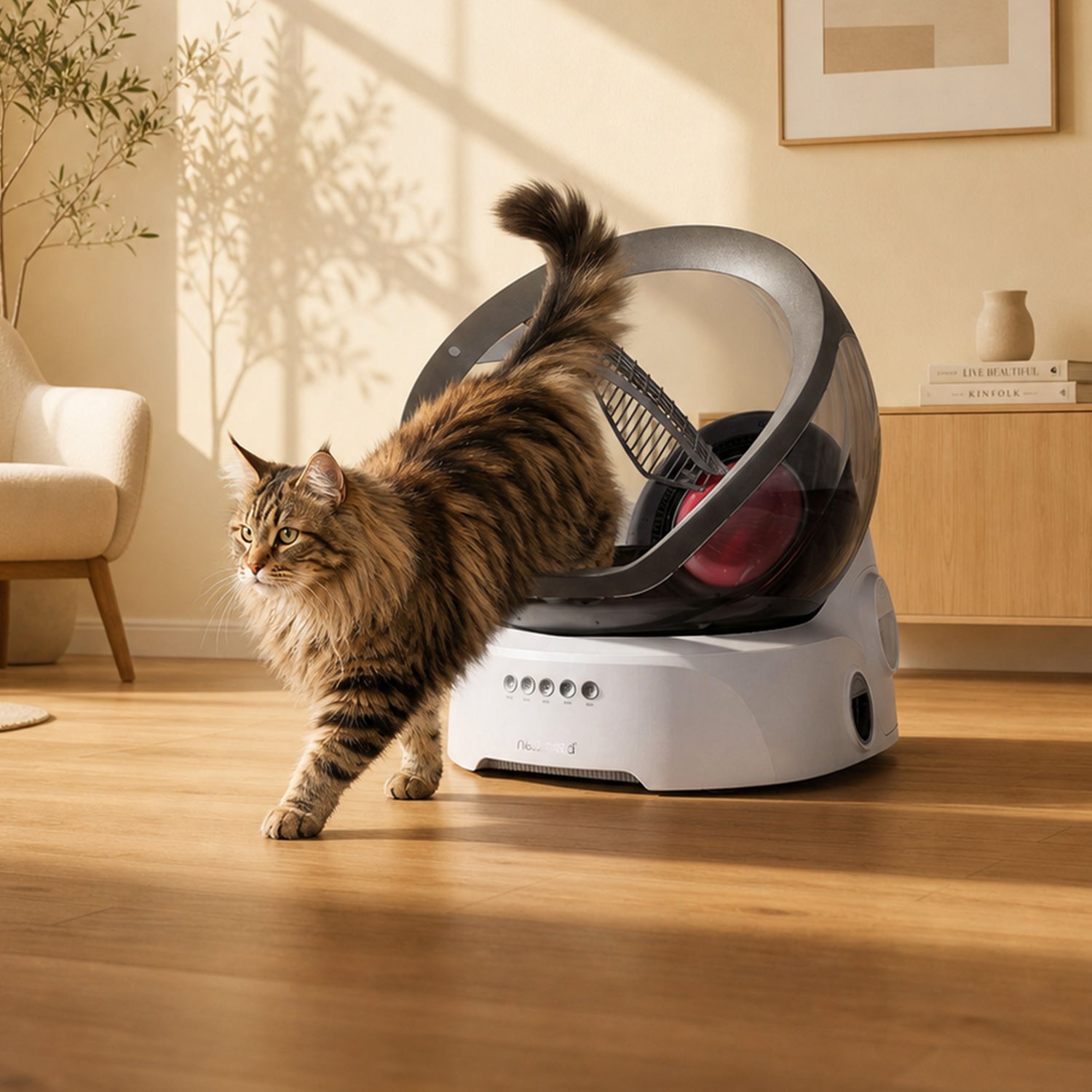
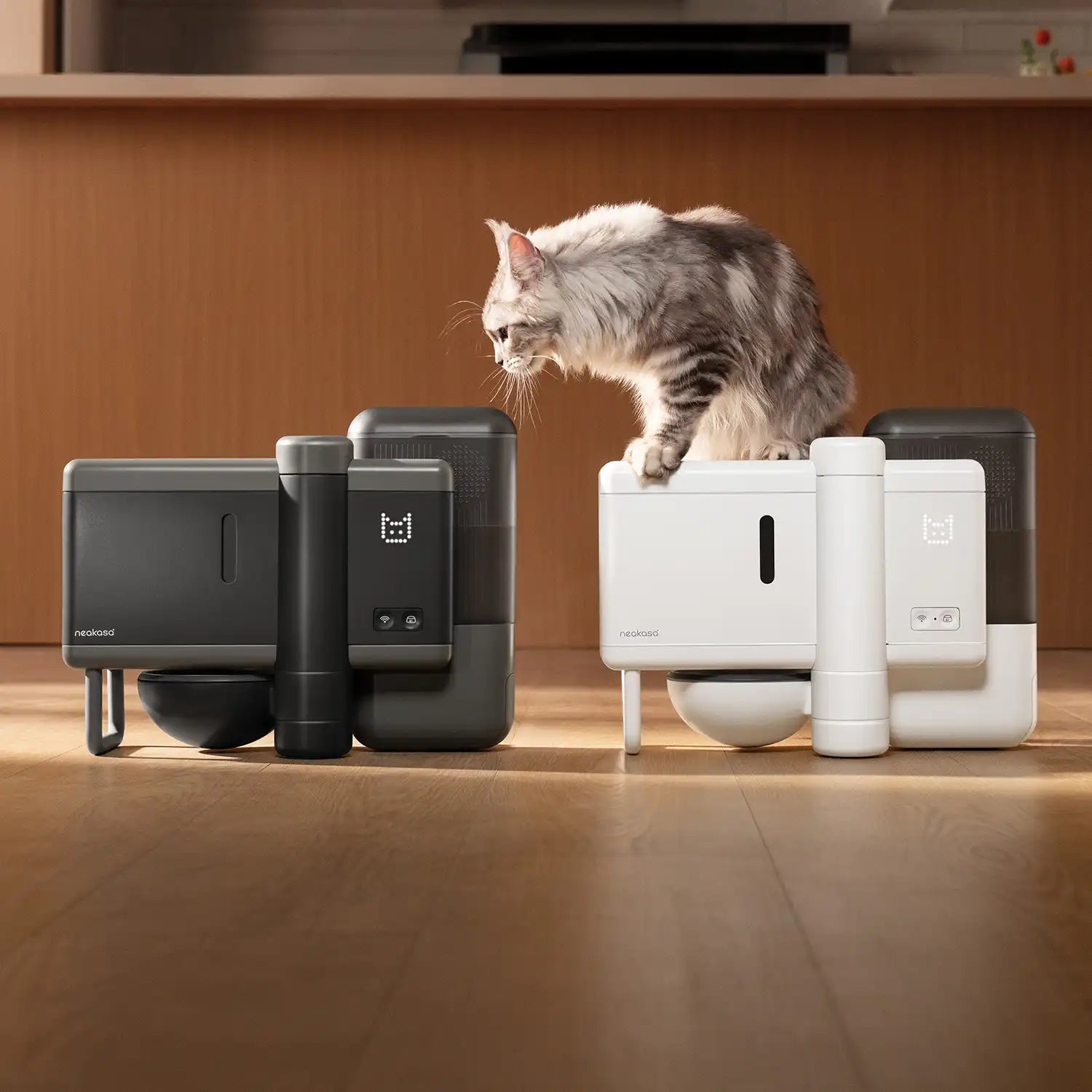
A self-cleaning litter box makes daily cat care easier, but dust and loose litter can still build up around the unit over time. From litter tracking to litter box dust behind the machine, these small messes are often linked to litter type, placement, cat movement, and routine maintenance.
In this guide, we’ll share simple ways to reduce litter mess and keep the area around your automatic litter box cleaner.
- Leave space behind the unit: A small gap makes it easier to wipe, vacuum, inspect the back area, and support airflow.
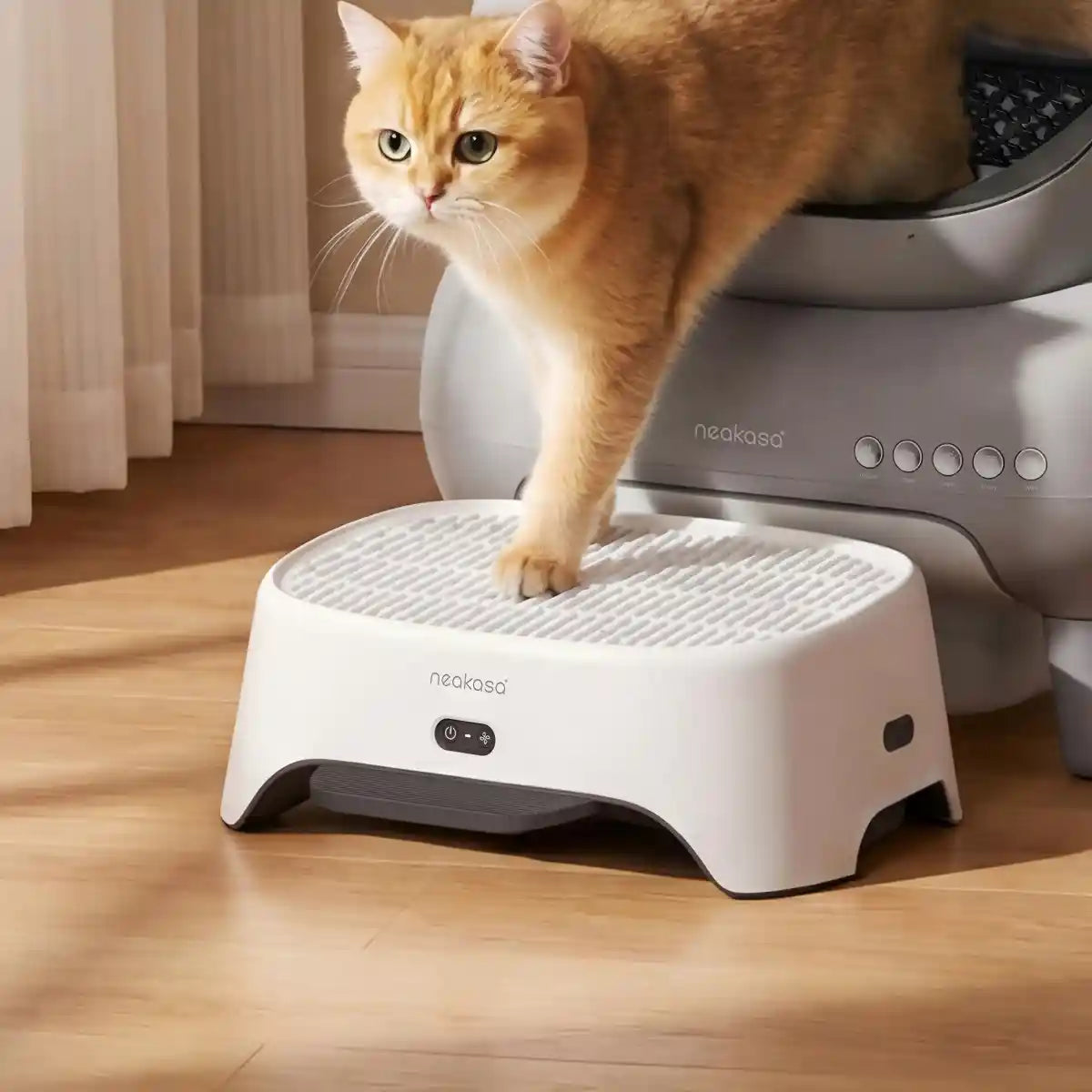
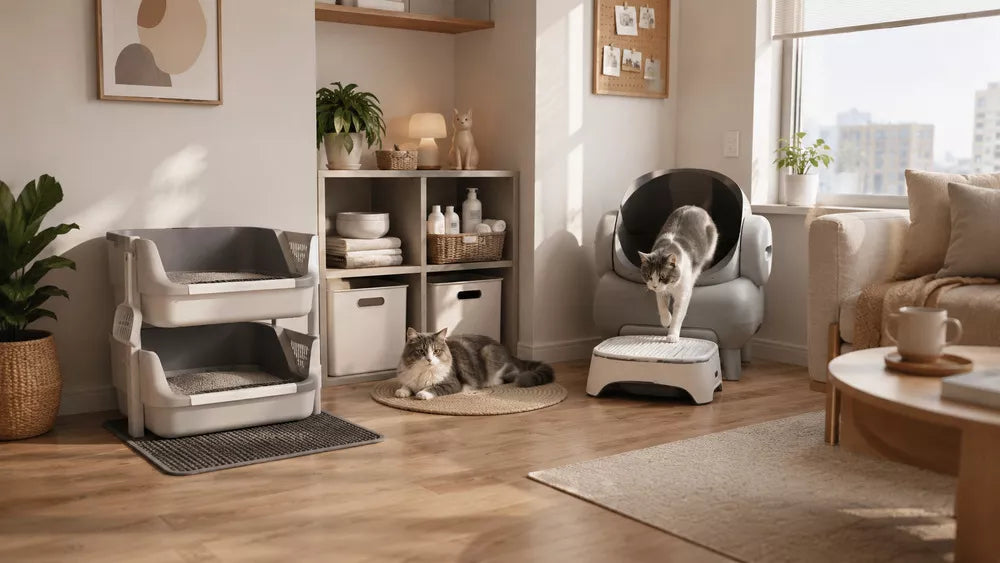
- Use a litter mat or step: A litter mat, silicone mat, or standard step can help catch loose litter before it spreads.
- Wipe visible dust regularly: Light routine care helps reduce buildup around the exterior, sides, and back of the unit.
- Choose low-dust cat litter: Stable, low-dust clumping litter can help reduce fine residue and broken particles.
- Build a weekly reset routine: Small, consistent cleaning habits make the litter box area easier to maintain.
Why Dust and Litter Tracking Happen Around a Self-Cleaning Litter Box
Dust and litter tracking are usually not caused by a single issue. They often come from how the litter breaks down, how your cat exits the box, where the unit is placed, and how easy the surrounding area is to clean.
| Common Cause | What It Looks Like | What Can Help |
|---|---|---|
| Litter dust | Fine powder behind or around the unit | Use low-dust cat litter and wipe visible dust regularly |
| Litter tracking | Small granules around the front or sides | Add a litter mat, silicone mat, or standard step |
| Tight wall placement | Dust buildup in a hard-to-reach back area | Leave enough space behind the unit for cleaning access |
| Crushed or old litter | More powder in the litter bed and nearby floor | Refresh litter when it becomes dusty, damp, or weak-clumping |
Fine litter dust can come from digging, clumping, drying, and normal cat movement inside the unit. Even when a self-cleaning litter box handles waste automatically, fine particles can still settle behind or around the base, especially if the litter breaks down easily or the unit sits close to a wall.
Litter tracking often happens when small granules cling to your cat’s paws as they exit the box. A litter mat, step, or low-profile tray can help catch those particles closer to the entry and exit area before they spread across the floor.
How to Reduce Dust Behind an Automatic Litter Box
The back of an automatic litter box is easy to overlook because it is less visible. Small placement changes can make routine cleaning easier and help reduce hard-to-reach dust buildup.
1. Leave a Small Gap Between the Unit and the Wall
Leave enough space behind the unit to inspect, wipe, and vacuum the area without moving the litter box each time. The gap does not need to be large, but it should allow visibility, airflow, and safe cleaning access.
2. Avoid Tight Corners When Possible
Tight corners can trap dust, loose litter, and odor more easily. When possible, place the self-cleaning litter box in a spot that gives your cat a comfortable path in and out while still giving you room to maintain the surrounding area.
3. Keep the Back Area Easy to Reach
Keep bags, boxes, cords, and cleaning tools away from the back of the unit. An open back area makes it easier to sweep, vacuum, wipe, and check for visible dust or blocked airflow areas.
- Do not push the unit tightly against the wall.
- Keep cords and storage items away from the back area.
- Make sure you can reach the back with a cloth or vacuum attachment.
- Check the wall edge and floor behind the unit during weekly cleaning.
How to Reduce Litter Tracking Around the Unit
Most litter tracking happens when cats step away from the litter bed. The best solutions are the ones that catch loose particles near the entry and exit area before they spread across the room.
| Accessory | Best For | How It Helps |
|---|---|---|
| Litter mat | Everyday litter tracking | Helps catch loose granules as cats step away from the box |
| Silicone mat | Easy floor cleanup | Collects small particles in one wipeable area |
| Standard step | Cats that jump or exit quickly | Gives cats a more controlled exit path |
| Low-profile tray | Hard floors or laundry rooms | Helps keep scattered litter closer to the unit |
A low-profile litter mat works well near the main entry and exit path, while a standard step can help cats exit the unit more gradually. For hard floors, a silicone mat or low-profile tray under the litter box area can make cleanup easier by collecting small particles in one place.
For Neakasa M1 Plus users, pairing the unit with a litter mat, silicone mat, or standard step can help catch loose litter closer to the exit area and make everyday cleanup easier.
A Simple Daily Cleaning Routine for the Litter Box Area
A light daily routine helps prevent small messes from becoming more noticeable. The goal is not to deep-clean the unit every day, but to remove visible dust and loose litter before they spread.
- Check the floor around the unit: Look for loose litter near the front, sides, and back.
- Shake out or vacuum the mat: Remove trapped litter before it spreads farther.
- Wipe visible dust: Use a soft microfiber cloth, lightly dampened when needed.
- Check the back area: Make sure vents, ports, and airflow areas remain clear.
When wiping the exterior, avoid letting moisture enter vents, ports, or electronic areas. Do not spray cleaner directly onto the unit. Light and consistent care is usually easier than waiting for dust and litter to build up.
Regular litter box care is also important for feline comfort. The ASPCA recommends removing waste daily and cleaning litter boxes regularly.
Choose a Low-Dust, Fast-Clumping Cat Litter
The right litter can help reduce dust, tracking, and residue around the litter box.
What to Look For
- Low dust: Helps reduce fine residue around the unit.
- Fast clumping: Makes waste easier to separate and remove.
- Stable granules: Helps reduce broken particles and tracking.
- Odor control: Helps keep the litter box area fresher.
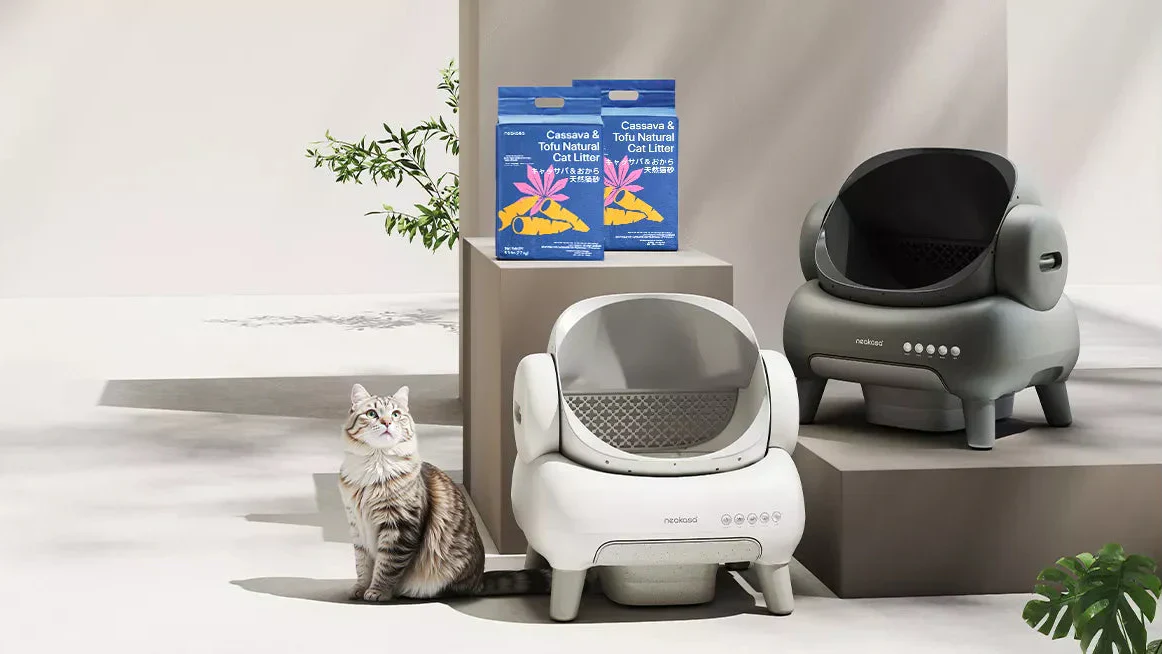
For Neakasa users, Neakasa Cassava & Tofu Blend Cat Litter offers firm clumping, ultra-low dust, plant-based odor control, and compatibility with most self-cleaning litter boxes.
Weekly Reset: A 10-Minute Maintenance Checklist
Daily cleaning handles visible mess, while a weekly reset catches areas that are easy to miss, including the back of the unit, the wall edge, the floor under accessories, and the litter-catching surfaces around the box.
The Cornell Feline Health Center also recommends removing clumps daily and replacing litter often enough to keep the litter box dry and clean. Read its litter box maintenance guidance.
| Task | Area to Check | Why It Helps |
|---|---|---|
| Vacuum or sweep | Front, sides, back, wall edge, and mat area | Removes loose litter before it spreads farther |
| Clean the mat | Litter mat, silicone mat, or tray | Keeps litter-catching surfaces working effectively |
| Wipe the exterior | Back, sides, and visible exterior surfaces | Helps reduce visible dust buildup |
| Check litter condition | Litter bed and bottom powder residue | Helps identify dusty, damp, or crushed litter |
| Review placement | Wall gap, corners, and cleaning access | Makes routine maintenance easier over time |
If dust keeps collecting behind the unit even after regular cleaning, consider moving it slightly away from the wall or out of a tight corner. Better access can make cleaning faster, improve visibility, and help keep the litter box area cleaner over time.
Common Mistakes That Make the Litter Mess Worse
Sometimes the area around a self-cleaning litter box becomes messy because of small setup habits rather than a major problem. Avoiding a few common mistakes can make the entire area easier to maintain.
- Placing the unit too close to the wall: This makes the back area harder to inspect and clean.
- Using very dusty litter: Powdery litter can create more residue around the unit.
- Skipping the mat or step: Without a litter-catching surface, tracked litter may spread farther.
- Waiting too long between cleanups: Small messes can spread into corners, rugs, or under furniture.
Product Setup Tips for a Cleaner Litter Box Area
Accessories cannot replace regular maintenance, but they can make a clean litter box area easier to maintain. The right setup can help collect loose litter, improve the surrounding environment, and support a smoother routine.
| Goal | Helpful Setup | Best Use Case |
|---|---|---|
| Reduce tracked litter | Litter mat, silicone mat, low-profile tray, or standard step | For cats that carry litter out on their paws or exit quickly |
| Improve the surrounding air experience | Neakasa AirStep | For households that want added odor-management support around the litter box area |
| Reduce fine dust | Neakasa Cassava & Tofu Blend Cat Litter | For households noticing powdery residue around the unit |
| Maintain easier cleanup | Weekly reset routine and accessible placement | For keeping the litter box area easier to clean over time |
FAQ
Q1. Why does dust collect behind my self-cleaning litter box?
Dust can collect behind a self-cleaning litter box because fine litter particles move during digging, clumping, and normal cat activity. Wall placement, airflow, and limited cleaning access can also make dust more noticeable in the back area.
Q2. How far should a self-cleaning litter box be from the wall?
A self-cleaning litter box should have enough space behind it for airflow, inspection, and wiping. The area should be easy to reach with a cloth, broom, or vacuum attachment.
Always follow the placement and clearance instructions provided for your specific litter box model.
Q3. Can a litter mat help reduce mess around an automatic litter box?
Yes. A litter mat can help catch loose litter as your cat exits an automatic litter box. It can reduce litter tracking, but it still works best with routine sweeping, vacuuming, or mat shakeouts.
Q4. What type of litter helps reduce dust?
Low-dust cat litter with strong clumping and stable granules can help reduce fine residue around the litter box area. Avoid litter that breaks down easily, leaves excessive powder at the bottom, or creates weak clumps.
Cats with respiratory sensitivities may also benefit from reduced exposure to irritating dust. The Cornell Feline Health Center identifies dusty litter as a possible environmental irritant for cats with asthma.
Q5. How often should I clean around a self-cleaning litter box?
A quick daily check can help catch visible dust and loose litter before they spread. A more complete weekly reset can help clean the back of the unit, the wall edge, litter-catching accessories, and other areas that are easy to overlook.
Conclusion
Reducing dust and litter tracking around a self-cleaning litter box depends on accessible placement, low-dust litter, litter-catching accessories, and consistent maintenance. Leaving space behind the unit, wiping visible dust, and cleaning loose litter early can make the surrounding area easier to manage.
For a cleaner Neakasa setup, pair the Neakasa M1 Plus self-cleaning litter box with a standard step or Neakasa AirStep, plus Cassava Tofu Blend Cat Litter.

Leave a comment
All comments are moderated before being published.
This site is protected by hCaptcha and the hCaptcha Privacy Policy and Terms of Service apply.