



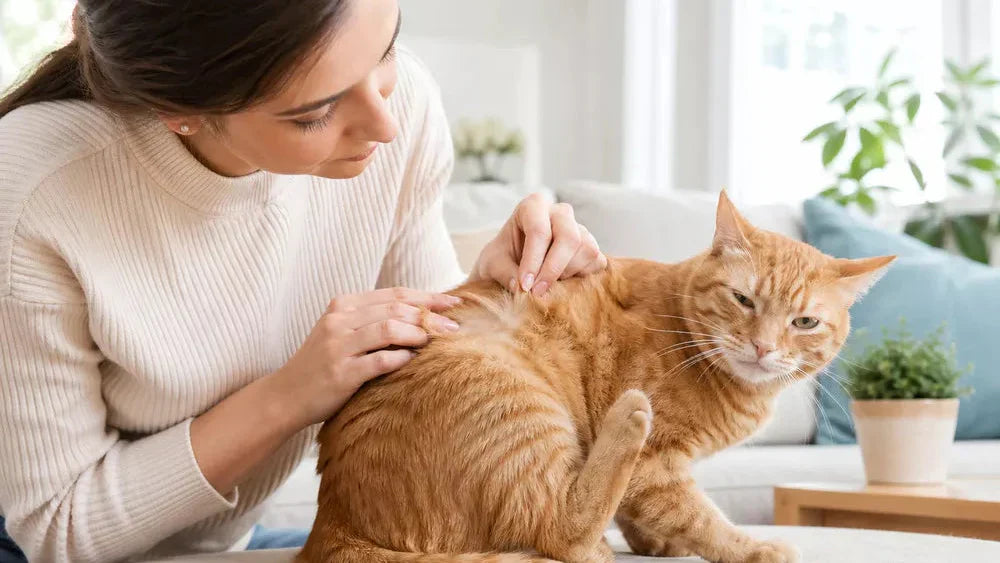
Are you waking up to the sound of your cat violently thumping their back legs against the floor? Or perhaps you’ve noticed them suddenly becoming obsessed with biting at their own tail. Finding out your indoor or outdoor cat might have pests is every pet parent’s nightmare, but don’t panic.
You don’t need a microscope or an immediate vet visit to confirm your suspicions. In this guide, we will walk you through the undeniable visual signs of an infestation and teach you a foolproof 2-minute method to verify if your cat has fleas right from your living room.
- Flea Dirt is the Biggest Clue: Black, pepper-like specks on your cat’s skin are often flea feces, not regular dirt.
- The Wet Towel Test: Smearing these black specks with water will turn them rust-red if they are flea dirt.
- Targeted Grooming: Fleas tend to cluster at the base of the tail, the groin, and the neck.
- Long-Haired Breeds Need Special Tools: Thick undercoats hide fleas well; pet grooming vacuums and fine-tooth combs are essential for a thorough check.
5 Visual Signs to Check If Your Cat Has Fleas
Cats are masters at hiding discomfort, but their bodies will eventually show signs of an infestation. Look for these five visual cues:
1. Abnormal Scratching and Over-Grooming
While all cats groom themselves naturally, a cat with fleas will take it to an extreme. Look for frantic, sudden biting or chewing, especially around their hindquarters and belly.
2. Spotting “Flea Dirt” (The Pepper-Like Specks)
If you part your cat’s fur and see tiny, dark specks that look like black pepper, you are likely looking at “flea dirt” (flea feces consisting of digested blood).
3. Hair Loss (Alopecia) at the Base of the Tail
Many cats suffer from Flea Allergy Dermatitis (FAD), a severe allergic reaction to flea saliva. A single bite can cause intense itching, leading to bald patches, redness, or scabs near the tail base.
4. Pale Gums: A Warning Sign of Flea Anemia
In severe infestations, blood loss can lead to flea anemia, which is life-threatening. Gently lift your cat’s lip; healthy gums are salmon pink, while pale or whitish gums require immediate veterinary attention.
5. Visible Live Fleas or Tiny White Eggs
Adult fleas are the size of a pinhead, fast-moving, flat-bodied, and dark brown. You may also spot flea eggs, which look like microscopic grains of salt that easily fall off the cat.

The Wet Towel Method: How to Check a Cat for Fleas at Home
If you see black specks but aren’t sure if it’s just regular garden dirt, this simple diagnostic test is 100% accurate.
Step 1: Prepare a Damp White Paper Towel and a comb
Grab a plain white paper towel and lightly mist it with water. Lay it flat on a table. Have a fine-tooth flea comb ready.
Step 2: Comb Your Cat’s Fur Over the Towel
Gently place your cat over the paper towel. Run the flea comb deeply through your cat’s fur, specifically targeting the lower back. Let any loose fur and black specks fall onto the damp towel.
Step 3: Smear the Debris and Read the Results (Red vs. Black)
Using your finger, gently press and smear the black specks into the wet towel.
- Turns rust-red or brown: It is flea dirt. The water is rehydrating the dried blood.
- Stays black or gray: It is just regular household dirt or sand.

Flea Dirt vs. Regular Dirt: Confirming What You Found
Sometimes, owners confuse flea dirt with feline acne or regular outdoor mud. Use this quick comparison table to confirm your findings:
| Feature | Flea Dirt (Flea Feces) | Feline Acne (Cat Blackheads) | Regular Dirt / Mud |
|---|---|---|---|
| Most Common Location | Base of tail, lower back, groin | Only on the chin and lower lip | Paws, belly, all over the body |
| Appearance | Tiny comma shapes, like black pepper | Hard black dots attached to hair follicles | Irregularly shaped dust or clumps |
| Wet Towel Test Result | Dissolves into a rust-red/brown color | Does not dissolve, stays black | Turns into gray/brown muddy water |
How to Tell If a Cat Has Fleas When They Have Long Hair
If you own a Maine Coon or Ragdoll, detecting fleas is significantly harder. Their dense, double-layered coats easily hide both live parasites and flea dirt.
Penetrating the Thick Undercoat
A quick surface pat-down won’t work. You must physically push the topcoat backward against the grain and look directly at the pink skin underneath.
Using Grooming Vacuums and Fine-Tooth Combs
Comb a long-haired cat with a standard flea comb, which can cause painful pulling, and loose flea dirt can scatter into your home. This is where integrating a smart tool like the Neakasa P2 Pro Pet Grooming Vacuum makes a massive difference.
By using its grooming brush attachment, you can effectively penetrate the thick undercoat. The built-in suction safely draws away loose hair, dander, and potential flea dirt straight into the vacuum canister, allowing for a deep clean while keeping your home hygienic.

- 5 advanced tools manage heavy shedding.
- Deep suction tackles thick undercoats.
- 2L capacity fits multi-pet households.
- Quiet 52dB fan keeps your pet calm.
- Adjustable suction adapts to any grooming needs.
From $84.99
Don’t Forget the House: Checking Your Home for Fleas
Adult fleas on your cat make up only 5% of the total flea population. The other 95% (eggs, larvae, and pupae) are hiding in your house.
Walking the Carpets: The White Sock Method
- Put on a pair of plain white, knee-high socks.
- Slowly shuffle your feet across carpets, rugs, and areas your cat frequents.
- Check your socks. If you see tiny dark bugs clinging to the fabric, your environment is infested.

Spot-Checking Cat Trees, Bedding, and Sofas
Inspect your cat’s favorite lounging spots for the same “salt and pepper” debris. Fleas love dark, enclosed, and humid spaces. An open-top design, such as the Neakasa M1 Automatic Litter Box, eliminates dark, enclosed spaces where pests and bacteria thrive, making it easier to maintain a clean environment.
FAQs
Q1. How can you tell if an indoor cat has fleas?
A1. Indoor cats can get fleas if pests hitch a ride inside on your shoes or visiting pets. Look for the same signs: excessive scratching, finding flea dirt with the wet towel test, and noticing hair loss around the lower back.
Q2. Why is my cat scratching constantly but has no fleas?
A2. If your cat passes the wet towel test but is still scratching, they may be suffering from food allergies, environmental allergies (like dust mites), feline ringworm, or dry skin. Consult a veterinarian for a proper diagnosis.
Conclusion
Knowing how to tell if your cat has fleas doesn’t require a medical degree—just a keen eye and a damp paper towel. By regularly checking your cat’s skin, monitoring their grooming habits, and utilizing the right tools, you can stop a minor flea issue before it becomes a home infestation.
Ensure you keep your pet’s environment clean and consider upgrading your grooming routine to keep their coat healthy and pest-free.


Leave a comment
All comments are moderated before being published.
This site is protected by hCaptcha and the hCaptcha Privacy Policy and Terms of Service apply.