


If you hear hallway thumps and find two cats rolling like furry tumbleweeds, you may wonder: are they playing or fighting? This guide helps you tell the difference in under a minute.
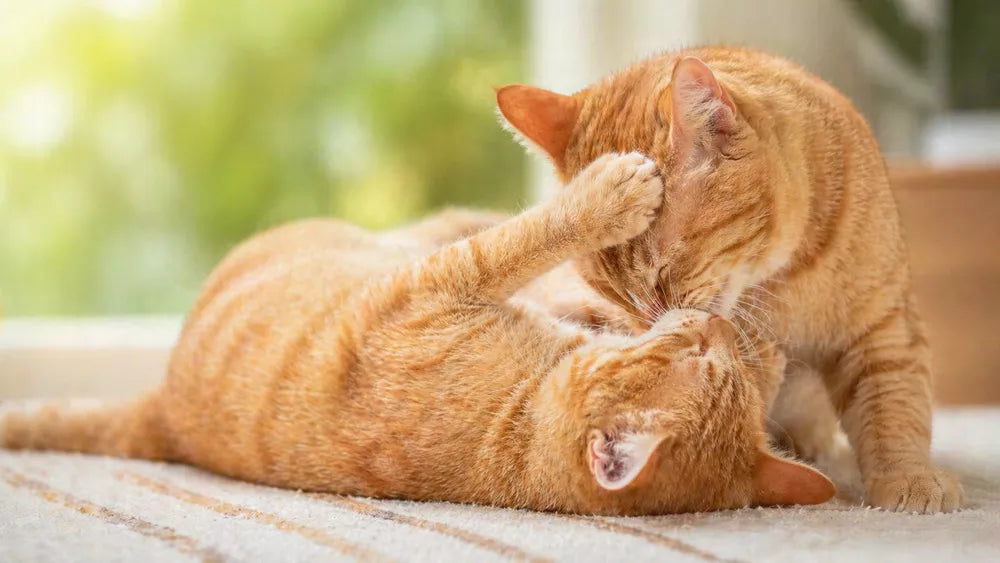
So, how do cats play with each other when things are going well? Healthy play often includes short bursts of chasing, pouncing, wrestling, and light biting, with natural pauses in between.
If your cats are still adjusting to each other, expect shorter, stop-and-start play sessions and a stronger need for escape routes, hiding spots, and personal space.
- Look for role reversal: Healthy play involves cats taking turns being the chaser and the chased.
- Listen to the volume: Friendly cat play is relatively quiet, featuring minimal hissing or growling.
- Watch the claws: Soft paws and inhibited, gentle bites indicate a friendly sparring match.
- Know when to step in: Prolonged staring, flattened ears, and puffed tails mean play has escalated into a fight.
What Does Healthy Cat-to-Cat Play Look Like?
Cats are natural predators, and their play mimics hunting behaviors. When cats play with each other, it is essentially a mock battle.
1. Chasing and Ambushing
One of the most common play behaviors is the classic game of tag. One cat will stalk the other, hide behind furniture, and suddenly pounce. The “victim” usually bounds away, initiating a high-speed, playful chase through the house.
2. Wrestling and Bunny Kicking
When cats lock together and kick with their hind legs, they are practicing vital self-defense skills.
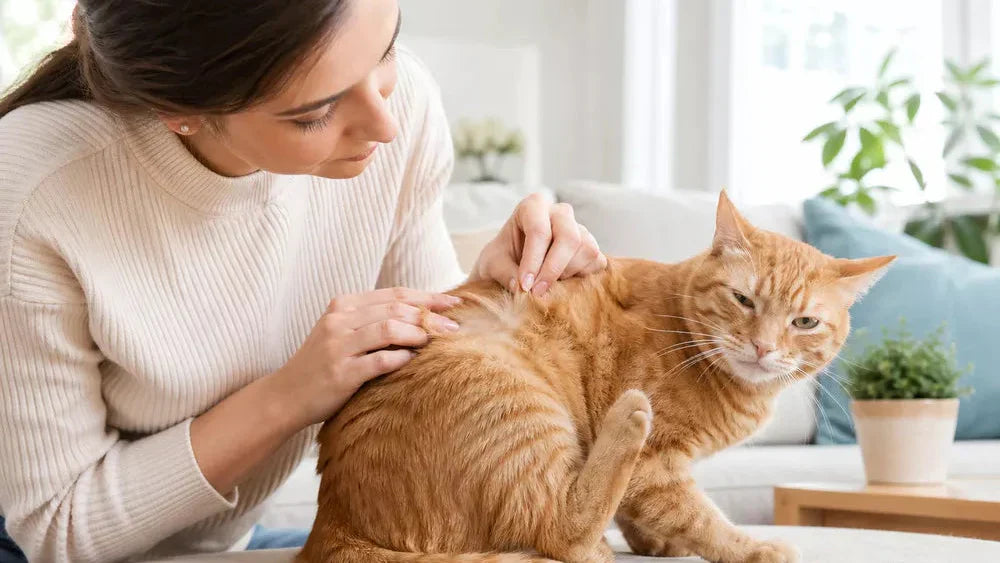
Pro Tip: This high-energy wrestling often loosens up a lot of undercoat. Having a professional grooming tool handy for a post-play session is a great way to bond with your cats while they are in a relaxed, post-adrenal state. It also helps you check for any skin irritations or parasites.
3. Paw Bops and Light Bites
Cats frequently swat at each other’s faces. During play, these bops are delivered with soft paws. You may also notice them mouthing or lightly biting each other’s necks without causing pain or panic.
4. Role Reversal
This is the most critical indicator of positive play. The cats must take turns. The cat being chased should become the chaser, and the cat pinned during wrestling should eventually end up on top.
The 60-Second Cat Play Check
Use this quick comparison table to instantly evaluate your cats’ interaction and determine if they are playing or fighting.
| Body Language | Friendly Play | Aggressive Fighting |
|---|---|---|
| Ears | Facing forward or slightly sideways | Pinned flat against the head |
| Vocalization | Mostly quiet, occasional small squeaks | Loud yowling, deep growling, sharp hissing |
| Claws & Bites | Claws sheathed, gentle mouthing | Claws fully extended, hard biting |
| Turns | Equal role reversal (taking turns) | One cat dominates, the other tries to flee |
| Tail | Relaxed, swooshing, or held high | Puffed up (bottle-brush), thrashing angrily |
When Play Turns Into Bullying or Fighting
Sometimes, what starts as a fun game can tip over into actual aggression. This usually happens when one cat gets overstimulated or a younger cat ignores an older cat’s boundaries. Watch for these clear red flags:
- Piloerection: Fur standing on end, especially creating a puffed-up tail.
- Intense Staring: Hard, unblinking eye contact preceding an attack.
- Hostile Sounds: Prolonged hissing, spitting, and deep guttural growls.
- Resource Guarding: One cat consistently corners the other or blocks access to the litter box.
- Desperate Escape: One cat actively tries to hide while the other refuses to let them leave.
What Should You Do When Cat Play Gets Too Rough?
If you notice the dynamics shifting from friendly sparring to genuine tension, you need to manage the situation safely.
1. Watch, Don’t Interrupt
If the cats are playing vigorously but still taking turns and keeping claws retracted, simply observe. Intervening too early can frustrate them; let them work out their own social boundaries.
2. Redirect With a Toy
Break their intense focus if energy gets too high. Toss a wand toy or crinkle ball across the room. Redirecting their arousal toward an inanimate object allows them to burn off predator energy safely.
3. Create Distance
Never use your bare hands to separate fighting cats. Instead, slide a piece of cardboard between them or clap your hands loudly to break their concentration, allowing the submissive cat to walk away.
4. Reset the Environment
If spats are frequent, separate the cats into different rooms for 20 to 30 minutes. This short time-out lets their adrenaline drop before they share the same space again.
How to Encourage Better Play Between Cats
You can actively shape your environment to promote harmony and positive interactions between your feline family members.
Give Each Cat an Escape Route
Cats feel safer when they aren’t trapped. Increase vertical space with cat trees so submissive cats can climb out of reach, and avoid hooded equipment with single exits. For instance, a spacious, open-top automatic litter box is ideal because it lets a cat spot a potential “ambush” early and escape from any angle, significantly reducing bathroom-related anxiety.
Use Parallel Play Before Shared Play
For cats that are not quite friends yet, use two separate wand toys to play with each cat in the same room. This builds positive associations without the pressure of direct physical contact.
Match Play Style and Energy Level
Physically exhaust high-energy kittens with interactive toys several times a day. A tired kitten is much less likely to pester a calm senior cat for a wrestling match.
FAQs
Q1. Do cats bite each other when they play?
A1. Yes, mouthing and light biting are normal. As long as the bite does not break the skin and the receiving cat does not cry out in pain, it is friendly wrestling.
Q2. Is hissing always a sign of fighting?
A2. Not always. A single hiss during play is simply a cat’s way of saying, “That was too rough!” However, continuous hissing accompanied by growling indicates aggression.
Q3. Why do cats chase each other at night?
A3. Cats are crepuscular, meaning they are most active at dawn and dusk. Nighttime quiet combined with natural biological rhythms often triggers mock-hunting behaviors and the “zoomies.”
Q4. Should I let my cats fight it out?
A4. No. You should never let cats “fight it out” to establish dominance. True fighting damages their relationship, causes stress, and can lead to severe injuries. Always interrupt true aggression safely.
Conclusion
Understanding how cats play with each other allows you to foster a happy, stress-free environment.
By watching for role reversals, monitoring body language through our 60-second checklist, and providing plenty of vertical space, you can ensure wrestling matches remain friendly. Keep a close eye on their interactions. It keeps you in tune with their social dynamics and overall health.

Leave a comment
All comments are moderated before being published.
This site is protected by hCaptcha and the hCaptcha Privacy Policy and Terms of Service apply.