
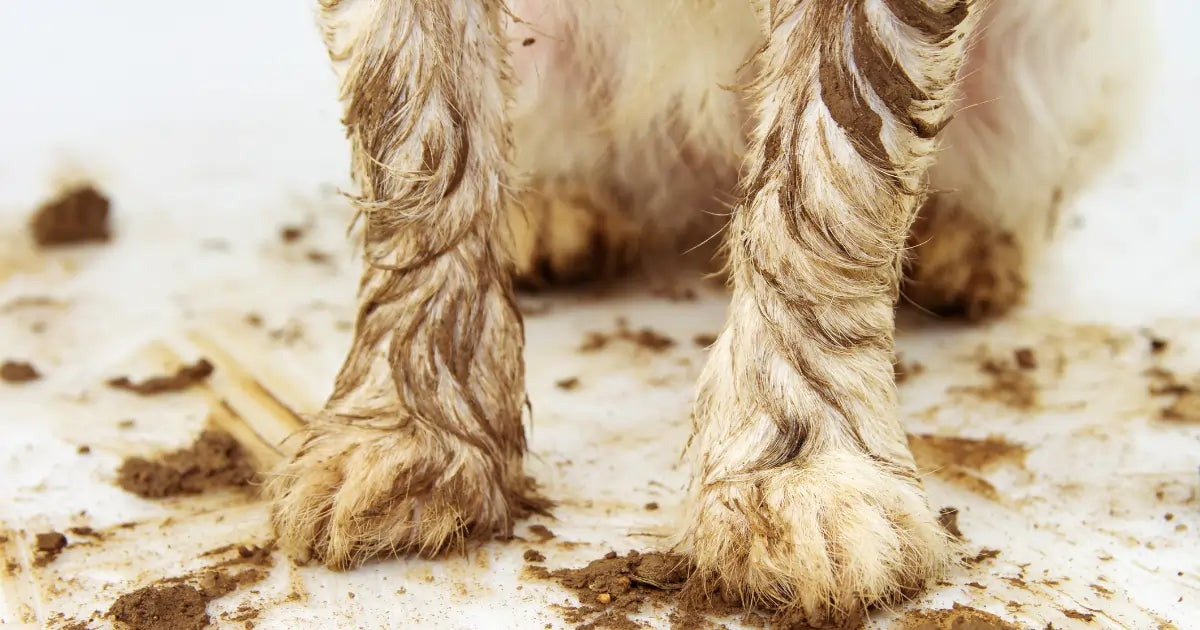
As the snow finally starts to retreat across the country, American pet owners brace themselves for a messy reality. “The Fifth Season” is a transitional period of spring thaw where your backyard, local dog park, and neighborhood sidewalks turn into a slushy, muddy obstacle course.
Whether you are navigating the deep mud of New England or the salty slush of the Midwest, managing muddy paws is a daily battle. But keeping your home spotless doesn’t have to mean limiting your dog’s outdoor fun.
With the right preventative grooming and a solid entryway strategy, you can conquer the spring melt like a pro.
- The real enemy isn’t just mud: Chemical road salt and ice melts hidden in spring slush can cause severe paw pad burns and toxicity.
- Prevention is the best cure: Keeping paw pad hair trimmed short stops mud from clumping in the first place.
- Create a mudroom station: Having your cleaning tools ready before you walk out the door is the secret to a clean home.
- Dry thoroughly: Leaving paws damp can lead to yeast infections and painful hot spots.
The Hidden Danger in the Slush: Why Road Salt is Worse Than Mud
While brown paw prints on your clean floors are frustrating, the biggest threat during the spring thaw is actually invisible. Throughout the winter, US cities and suburbs dump millions of tons of road salt and chemical de-icers on sidewalks and streets.
How Ice Melts Affect Paw Pads
Chemical de-icers are highly corrosive. When your dog walks through salty slush, the chemicals can cause microscopic cuts, extreme dryness, and painful chemical burns on their paw pads.
Watch for these signs of salt irritation:
- Excessive licking or chewing of the paws after a walk
- Limping or holding up a paw while outside
- Red, cracked, or bleeding paw pads
- Gastrointestinal distress (vomiting/diarrhea) if chemicals are ingested
Checking for “Snowballs” and Debris
Slush has a nasty habit of freezing onto the hair between your dog’s toes, forming hard little “snowballs.” As your dog walks, these ice clumps pull on the hair and force the toes apart, causing pain and even tearing the skin. The American Kennel Club (AKC) recommends making paw checks a mandatory routine during the winter-to-spring transition.
Post-walk inspection checklist:
- Gently spread the toes apart to check for hidden ice.
- Remove any sharp gravel trapped in the slush.
- Feel the webbing for any cuts or abrasions.
Step 1: The “Prevention First” Grooming Strategy
Most pet owners wait until the mud is already in the house to deal with it. The secret to a clean home actually starts before the walk.
Trimming Paw Pad Hair
If your dog has long “Grinch feet,” that excess hair acts like a mop, soaking up mud, dirty water, and salt. Keeping the hair between the paw pads trimmed short is the single most effective way to prevent mud from tracking inside.
Tool Comparison: Paw Hair Trimming
| Grooming Tool | Pros | Cons | Mess Level |
|---|---|---|---|
| Grooming Scissors | Cheap, easily available | Dangerous for squirmy dogs | High (hair falls everywhere) |
| Traditional Clippers | Faster than scissors | Loud, scares dogs, scatters hair | High |
| Pet Grooming Vacuum | Safe, low noise, sucks up hair instantly | Requires initial investment | Zero Mess |
Applying Paw Balm Before Walks
Think of paw balm as a pair of invisible boots. Massaging a high-quality, pet-safe wax or balm onto your dog’s pads before heading out creates a waterproof barrier. This prevents mud from sticking to the skin and blocks harsh salt chemicals from causing dryness and cracks.
Step 2: Building the Ultimate US “Mudroom” Station
You never want to be frantically searching for a towel while a wet dog is shaking off in your hallway. Set up a “cleaning containment zone” right at your main entryway or mudroom.
Your Mud Station Essentials:
- Microfiber Mats: Place a highly absorbent noodle-style microfiber mat inside the door.
- Dedicated Pet Towels: Keep a stack of clean, dry microfiber towels in a basket.
- Cleaning Solution: A spray bottle filled with lukewarm water and a drop of pet-safe shampoo.
- Distraction Tool: A lick mat smeared with dog-safe peanut butter (stick it to the wall to keep them still).
Step 3: How to Clean Muddy Dog Paws
Depending on where you walk, you’ll need to choose the right cleaning method to avoid a struggle.
| Walk Location | Mess Level | Recommended Method | Time Needed |
|---|---|---|---|
| City sidewalks | Light (Damp, Salt) | Quick Wipe | 1-2 mins |
| Suburban parks | Medium (Wet grass) | Towel & Spray | 3 mins |
| Hiking trails | Heavy (Deep Mud) | Paw Washer / Plunge | 5 mins |
1. The Quick Wipe (For Light City Slush)
Ideal for quick strolls around paved, suburban neighborhoods where a full wash isn’t necessary.
- Best Tools: Pet-specific grooming wipes (pH-balanced) or a warm water spray bottle and a towel.
- How to do: Thoroughly wipe the bottom of the pads and between the toes.
- Main Goal: Ensure absolutely no toxic salt residue is left behind.
2. The Paw Washer / Plunge (For Heavy Trail Mud)
Necessary for muddy spring hikes when simple wipes won’t cut it.
- Best Tools: A silicone paw washer cup filled with warm water.
- How to do: Insert your dog’s muddy paw and twist gently. The soft silicone bristles act like a mini car wash.
- Main Goal: Scrub deep mud out from between the toes without hurting the dog.
3. Drying is Just as Important as Washing
Never leave your dog’s paws wet! Moisture trapped in the dark, warm spaces between toes is a breeding ground for bacteria.
- Best Tools: A clean, dry towel or a low-heat pet dryer.
- How to do: Thoroughly absorb all moisture from the pads and the webbing between the toes.
- Main Goal: Prevent yeast infections and that famous “Fritos” corn chip smell.
FAQs
Q1: How often should I wash my dog’s paws in the spring?
A1: If walking on sidewalks treated with road salt, rinse or wipe them after every walk. For chemical-free, grassy backyards, you only need to clean them when they are visibly muddy.
Q2: Can I use baby wipes on muddy dog paws?
A2: No. Human baby wipes have a different pH and contain fragrances or chemicals that can irritate a dog’s skin or stomach if licked. Always use pet-safe wipes or plain warm water.
Q3: Do I need to clean my outdoor cat’s paws during mud season?
A3: Yes. Outdoor cats (especially long-haired breeds) can track in mud and toxic lawn fertilizers. To prevent them from ingesting chemicals while grooming, gently wipe their paws and underbelly with a damp washcloth.
Conclusion: Enjoy the Spring Thaw Stress-Free
The “Fifth Season” doesn’t have to mean the end of a clean house. By staying ahead of the mess, trimming that paw hair with a grooming vacuum, setting up an efficient entryway station, and properly washing away toxic road salts. You can keep your floors spotless and your pet healthy.
Embrace the warmer weather, hit the muddy trails, and let the right tools do the hard work for you.


Leave a comment
All comments are moderated before being published.
This site is protected by hCaptcha and the hCaptcha Privacy Policy and Terms of Service apply.