

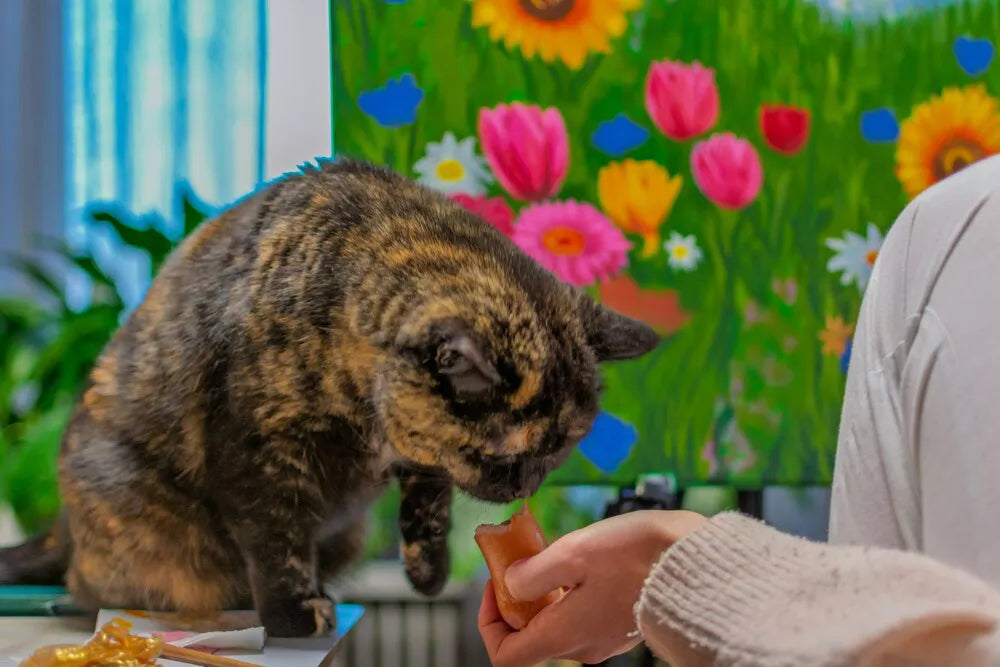
It’s hard to resist sharing a snack when your cat gives you "the look." However, since cats are obligate carnivores, not everything on our plate is safe for them. In fact, some healthy human foods can be surprisingly toxic to felines.
This guide breaks down exactly what you can (and shouldn't) share with your cat, along with vet-approved tips to keep their digestive system happy and healthy.
Key Takeaways
- Meat is Best: As obligate carnivores, cats thrive on plain, cooked animal proteins like chicken or turkey.
- The 10% Rule: Treats (including safe human foods) should never make up more than 10% of your cat’s daily calorie intake.
- Plain is Perfect: Never use salt, onions, garlic, butter, or spices. These can be toxic or cause severe digestive distress.
-
Age Matters: Avoid feeding human food to kittens, as their growth requires precise, balanced nutrition from specialized kitten food.
The “Traffic Light” System: Quick Reference Guide
When it comes to sharing your meal, not all human foods are created equal. To make things easy, we’ve categorized common pantry items into a simple “Traffic Light” system.
Green Light (🟢 Safe & Healthy)

These foods are generally safe for cats and can even provide a healthy protein or vitamin boost when served correctly.
- Plain, Lean Meats (Chicken, Turkey, Beef): Meat is the absolute best human food for cats. Rule of thumb: It must be thoroughly cooked, unseasoned, and skinless to avoid excess fat and GI upset.
- Fish (Salmon, Tuna): Rich in Omega-3 fatty acids, cooked fish is great for your cat’s coat and eyesight. Warning: Avoid canned fish packed in oil or heavy sodium. Stick to fish cooked in plain water.
- Certain Fruits & Veggies: While cats don’t need plants, some are safe and offer digestive benefits. Plain baked pumpkin is excellent for digestion and hairballs. A mashed blueberry or a steamed pea can also be a safe, low-calorie treat.
Yellow Light (🟡 Moderation Only):
 These items aren’t toxic, but they should only be given in microscopic amounts, as they can cause stomach upset if overfed.
- Cheese and Dairy: Believe it or not, the classic “saucer of milk” is a bad idea. Most adult cats are lactose intolerant. A tiny nibble of hard cheese (like cheddar or swiss, which have less lactose) is okay, but soft cheeses or bowls of milk will likely lead to diarrhea.
- Eggs: Cooked eggs are an excellent source of protein. According to AVMA (American Veterinary Medical Association), raw eggs carry the risk of Salmonella and should be avoided.
Red Light (Toxic - Strict NO):
 Never let your cat near these foods. Even a small amount can lead to a medical emergency.
- Onions, Garlic, & Chives: These alliums contain compounds that destroy a cat’s red blood cells, leading to severe anemia. Note: Onion/garlic powder hidden in human snacks is highly dangerous.
- Chocolate & Caffeine: Both contain methylxanthines (like theobromine), which cause muscle tremors, rapid heart rate, and can be fatal.
- Grapes & Raisins: Even a single grape can cause acute kidney failure in felines.
- Xylitol: Found in sugar-free gum, it causes deadly hypoglycemia. Refer to the ASPCA Animal Poison Control for a full list of toxic substances.
Quick Reference Table: 20+ Common Human Foods
For a quick answer to “can my cat eat this?” use our handy reference table below. We highly recommend bookmarking this page so you can quickly check it the next time you are cooking!
| Food Item | Safe for Cats? | Key Note / Preparation |
|---|---|---|
| Chicken / Turkey | 🟢 Yes | Must be plain, boiled/baked, and completely boneless. |
| Beef | 🟢 Yes | Lean cuts only; serve fully cooked without fat or seasoning. |
| Salmon / Tuna | 🟢 Yes | Cooked plain or canned in water. Do NOT feed raw. |
| Pumpkin | 🟢 Yes | Plain baked or 100% pure canned pumpkin (not pie filling). Great for digestion! |
| Peas & Carrots | 🟢 Yes | Must be steamed or boiled until soft to prevent choking. |
| Blueberries | 🟢 Yes | High in antioxidants; mash them up for easier eating. |
| Cheese | 🟡 Moderation | High in fat and lactose. Only tiny nibbles of hard cheeses (like Cheddar). |
| Eggs | 🟡 Moderation | Must be fully cooked (scrambled or boiled). Never feed raw. |
| Rice / Bread | 🟡 Moderation | Not toxic, but empty calories. Can lead to obesity if overfed. |
| Bananas / Apples | 🟡 Moderation | Safe but very high in sugar. Remove all apple seeds (toxic). |
| Onions / Garlic | 🔴 NO (Toxic) | Destroys red blood cells leading to severe anemia. |
| Chocolate | 🔴 NO (Toxic) | Contains theobromine; causes heart arrhythmias and tremors. |
| Grapes / Raisins | 🔴 NO (Toxic) | Can cause sudden, acute kidney failure. |
| Macadamia Nuts | 🔴 NO (Toxic) | Causes lethargy, hyperthermia, and tremors. |
| Avocado | 🔴 NO (Toxic) | Contains persin, which causes vomiting and diarrhea. |
| Milk / Cream | 🔴 NO (Avoid) | Most cats are lactose intolerant; causes severe stomach cramps and diarrhea. |
| Xylitol | 🔴 NO (Toxic) | Found in sugar-free foods; causes fatal drops in blood sugar. |
Age Matters: Human Food for Kittens vs. Senior Cats
A cat’s ability to process human food changes drastically depending on their life stage. What is safe for a healthy adult cat might be dangerous for a kitten or a senior.
- Kittens (Under 1 Year): Their digestive systems are fragile. Feeding human food can cause severe diarrhea and life-threatening dehydration. Rule of Thumb: Strictly NO human food for kittens.
- Senior Cats (7+ Years): Kidney vulnerability is high in older cats. High-phosphorus meats can put unnecessary stress on aging kidneys.
Senior Cats (7+ Years)
- Kidney Vulnerability: As cats age, their kidneys often become less efficient (Chronic Kidney Disease is extremely common in senior felines).
- Dietary Restrictions: Senior cats require diets with strictly controlled phosphorus levels and highly digestible proteins.
- Dangerous Triggers: Feeding them human foods—especially dairy or high-phosphorus meats—can put unnecessary stress on their aging kidneys.
- Rule of Thumb: Always consult your vet before sharing food with a senior cat.
The Prep Rule: How to Safely Serve Human Food
Even “Green Light” foods can send your cat to the vet if they aren’t prepared with feline biology in mind.
1. No Spices, No Oil
Cats do not need—and cannot process—butter, cooking oils, salt, or spices. High sodium damages their kidneys, and rich fats cause painful pancreatitis. If you are cooking chicken for your cat, it must be boiled, baked, or steamed entirely plain.
2. Bones Are Hazards
Never give a cat a cooked bone (like a chicken wing or rib). The cooking process draws moisture out of the bone, making it brittle. When a cat bites down, cooked bones splinter into sharp, needle-like shards that can easily puncture their throat, stomach, or intestines. Always debone meat completely and chop it into pea-sized pieces.
✨ A Quick Note on Digestion & Litter Box Odors
Whenever you introduce a new food or treat to your cat’s diet, their digestive system might need a day or two to adjust. This can occasionally lead to smellier-than-usual trips to the litter box.
If you want to share a treat without dreading the cleanup, upgrading to a self-cleaning litter box makes all the difference. The Neakasa M1 Automatic Cat Litter Box features an open-top design, ensuring your home stays smelling fresh and clean, no matter what your cat had for dinner!
A Quick & Safe Homemade Cat Treat Recipe
Want to spoil your cat safely? Skip the table scraps and try this incredibly simple, 2-ingredient treat that is 100% vet-approved and free from hidden toxins.
The 5-Minute Tuna & Egg Bake
-
Ingredients: * 1 can of tuna in water (No salt added)
- 1 whole egg
-
Instructions:
- Preheat your oven to 350°F (175°C).
- Drain the water completely from the tuna.
- In a bowl, mash the tuna and the raw egg together until it forms a paste.
- Drop pea-sized dollops onto a baking sheet lined with parchment paper.
- Bake for 10-12 minutes until firm and cooked through.
- Crucial step: Let them cool completely before serving!
- Storage: Keep these treats in an airtight container in the fridge for up to 3 days. Remember, these should still only make up 10% of their daily diet!
Emergency Response: What If Your Cat Eats Something Toxic?
Cats are sneaky. If you turned your back and your cat snatched a garlic bread crust or a piece of chocolate, panic is a natural reaction—but acting fast is what saves lives.
1. Watch for Immediate Symptoms
Signs of poisoning include vomiting, diarrhea, excessive drooling, lethargy, pale gums, panting, or muscle twitching.
2. Do NOT Induce Vomiting Blindly
Unlike with humans, making a cat vomit at home without veterinary guidance can sometimes cause more damage (especially if they swallowed something acidic or sharp).
3. Make the Call
Immediately grab the wrapper or the remaining food so you know exactly what was consumed. Call your local emergency vet clinic or a dedicated Pet Poison Helpline immediately. Time is of the essence.
FAQs
Q1: Can cats eat bananas?
A: Yes, bananas are safe for cats, but they are very high in sugar and carbohydrates. If your cat shows interest, a piece the size of your pinky nail is more than enough.
Q2: Can cats eat raw chicken?
A: While raw diets are a hotly debated topic, the general consensus among major veterinary associations is to avoid raw meat due to the high risk of Salmonella and E. coli infections, which can harm both your cat and your human family. Stick to thoroughly cooked, plain chicken.
Q3: Is bread bad for cats?
A: Plain, baked bread is not toxic to cats, but it offers exactly zero nutritional value to an obligate carnivore. It’s essentially empty calories. However, raw yeast dough is highly toxic because it can expand in the stomach and produce alcohol as it ferments.
Q4: Can I share my canned tuna with my cat?
A: Yes, but only as a rare treat, and only if it is packed in water (not oil) with no added salt or flavorings. Feeding tuna too frequently can lead to a vitamin E deficiency (steatitis) or mercury buildup.
Conclusion
While sharing a bite of plain, unseasoned meat can be a fun treat, remember the golden rule: human food should never exceed 10% of your cat's daily diet. Always check our "Traffic Light" guide before giving in to those begging eyes.
Ultimately, a balanced feline diet is the only way to ensure your cat gets the exact nutrients they need to thrive.


Leave a comment
All comments are moderated before being published.
This site is protected by hCaptcha and the hCaptcha Privacy Policy and Terms of Service apply.