
Why do most cats bolt the moment a vacuum is turned on? It is not just about the suction; it is about the frequency and volume. According to veterinary behavioral studies, 68% of cats display fear responses to vacuum cleaners, with noise cited as the primary trigger in 82% of cases.
This guide breaks down the science of feline hearing and ranks the best quiet grooming vacuums of 2026.
- Critical Threshold: Cats experience stress at sounds above 60 dB.
- The Problem: Standard vacuums run at 75+ dB; quiet grooming vacuums must be <60 dB.
- Top Pick: The Neakasa P2 Pro is the current market leader for silence at 52 dB.
- Training: Even quiet vacuums require a 5-week desensitization protocol.
The Science of Stress: Why Standard Vacuums Fail
Cats have a hearing range of 45–64,000 Hz, far exceeding the human range of 20–20,000 Hz. Because cats hear higher frequencies, the mechanical whine of a motor sounds significantly louder and more piercing to them.
The critical threshold for feline comfort is 60 dB. Sounds above this level trigger immediate stress responses, including elevated cortisol levels (2-3x normal). As the table below shows, standard vacuums far exceed this limit.
Decibel Levels & Cat Stress Response
This data helps quantify why a "Standard Vacuum" causes trauma while a "Grooming Vacuum" allows for relaxation.
| Sound Source | Decibel Level (dB) | Cat Stress Response |
|---|---|---|
| Whisper | 30 dB | None - Comfortable |
| Quiet library | 40 dB | None - Comfortable |
| Normal conversation | 50-60 dB | Minimal - Acceptable |
| Neakasa P2 Pro (lowest) | 52 dB | Minimal - Ideal |
| Neakasa P1 Pro | 56 dB | Low - Good |
| Average grooming vacuum | 65-70 dB | Moderate - Tolerable |
| Standard vacuum cleaner | 70-85 dB | High - Stressful |
| Vacuum on max power | 85-90 dB | Extreme - Traumatic |
| Pain threshold | 120+ dB | Immediate damage |
Expert recommendation: For anxiety-prone cats, target vacuums ≤ 60 dB during operation.
The 7 Essential Features of Quiet Cat Grooming Vacuums
Now that we have established the 60 dB safety zone, what other features make a vacuum "cat-friendly"? Not all quiet vacuums are created equal. Here are the seven non-negotiable features experts recommend:
1. Noise Level: The Critical Safety Zone
- Target Range: 52 - 60 dB (Verified)
-
Why It Matters:
- 60 dB: Comparable to normal conversation; minimizes the cat's fight-or-flight response.
- 52-56 dB: Quieter than most household refrigerators.
-
Key Technologies to Look For
- ✅ Brushless DC motors (smoother than traditional AC)
- ✅ Acoustic dampening chambers
- ✅ Noise-reducing fan blade design
- ✅ Vibration isolation mounts
2. Variable Suction Control
Adjustability is key to acclimating anxious cats.
- Optimal Range: 6,000 - 15,000 Pa
- Best Practice: Start at 30-40% power and increase only as needed.
| Adjustment Type | Description | Best For |
|---|---|---|
| 3-Level Control | Simple Low / Medium / High settings. | Beginners & Ease of Use |
| Continuous Control | Fine-tuned dial adjustment. | Highly sensitive cats |
1. Noise Level: The Critical Safety Zone
- Target Range: 52–60 dB (Verified)
-
Why It Matters:
- 60 dB: Comparable to normal conversation; minimizes fight-or-flight response.
- 52–56 dB: Quieter than most household refrigerators.
-
Key Technologies to Look For:
- ✅ Brushless DC motors
- ✅ Acoustic dampening chambers
- ✅ Noise-reducing fan blade design
- ✅ Vibration isolation mounts
2. Variable Suction Control
Adjustability is key to acclimating anxious cats.
- Optimal Range: 6,000–15,000 Pa
- Best Practice: Start at 30–40% power and increase only as needed.
| Adjustment Type | Description | Best For |
|---|---|---|
| 3-Level Control | Simple Low / Medium / High settings. | Beginners & Ease of Use |
| Continuous Control | Fine-tuned dial adjustment. | Highly sensitive cats |
3. Comprehensive Tool Kit (What You Need & Why)
Different coat types require specific tools. Ensure your vacuum includes the essentials:
| Tool Attachment | Function | Best For |
|---|---|---|
| Grooming Brush | Removes loose fur with rounded stainless steel tips. | Daily maintenance (all coat types) |
| De-shedding Tool | Reaches undercoat (4–9mm) without cutting. | Seasonal shedding & double coats |
| Trimming Guard | Safely trims fur to uniform lengths (3–12mm). | Long-haired cats & mat prevention |
| Massage Brush | Soft silicone tips stimulate circulation. | Sensitive areas & bonding time |
| Cleaning Brush | Wide head removes fur from furniture. | Post-grooming cleanup |
| Crevice Tool | Reaches tight spaces like couch cushions. | Detailed home cleaning |
4. Dust Capacity: Size Matters
Frequent emptying interrupts grooming and may startle cats.
- Average shedding: 0.5–1.5 oz of fur per day
- Recommended capacity:
- Single cat: 1.5L minimum
- Multi-cat: 2.0L+ ideal
- Tip: Choose a transparent dust cup to monitor fill level.
5. Corded vs. Cordless: Which Is Better for Cats?
Corded models are generally better for consistent, stress-free grooming.
| Feature | Cordless | Corded (Recommended) |
|---|---|---|
| Pros |
|
|
| Cons |
|
|
| Verdict | Best for quick touch-ups | Best for full grooming sessions |
6. Easy Cleaning & Maintenance
Proper hygiene prevents odors and allergen buildup.
| Component | Action | Frequency |
|---|---|---|
| Dust Cup | Empty contents | After each use |
| Filters | Rinse / wash | Weekly (air dry fully) |
| HEPA Filter | Replace | Every 3–6 months |
7. Ergonomic Design for User Comfort
Grooming sessions typically last 15-30 minutes. If you are uncomfortable, you may rush the process, stressing the cat.
- Weight: Look for handles under 4 lbs.
- Grip: Non-slip rubber for stability.
- Flexibility: Swivel hose connection to prevent tangles.
- Controls: Intuitive button placement for one-handed operation.
Top 5 Quietest Cat Grooming Vacuums (2025)
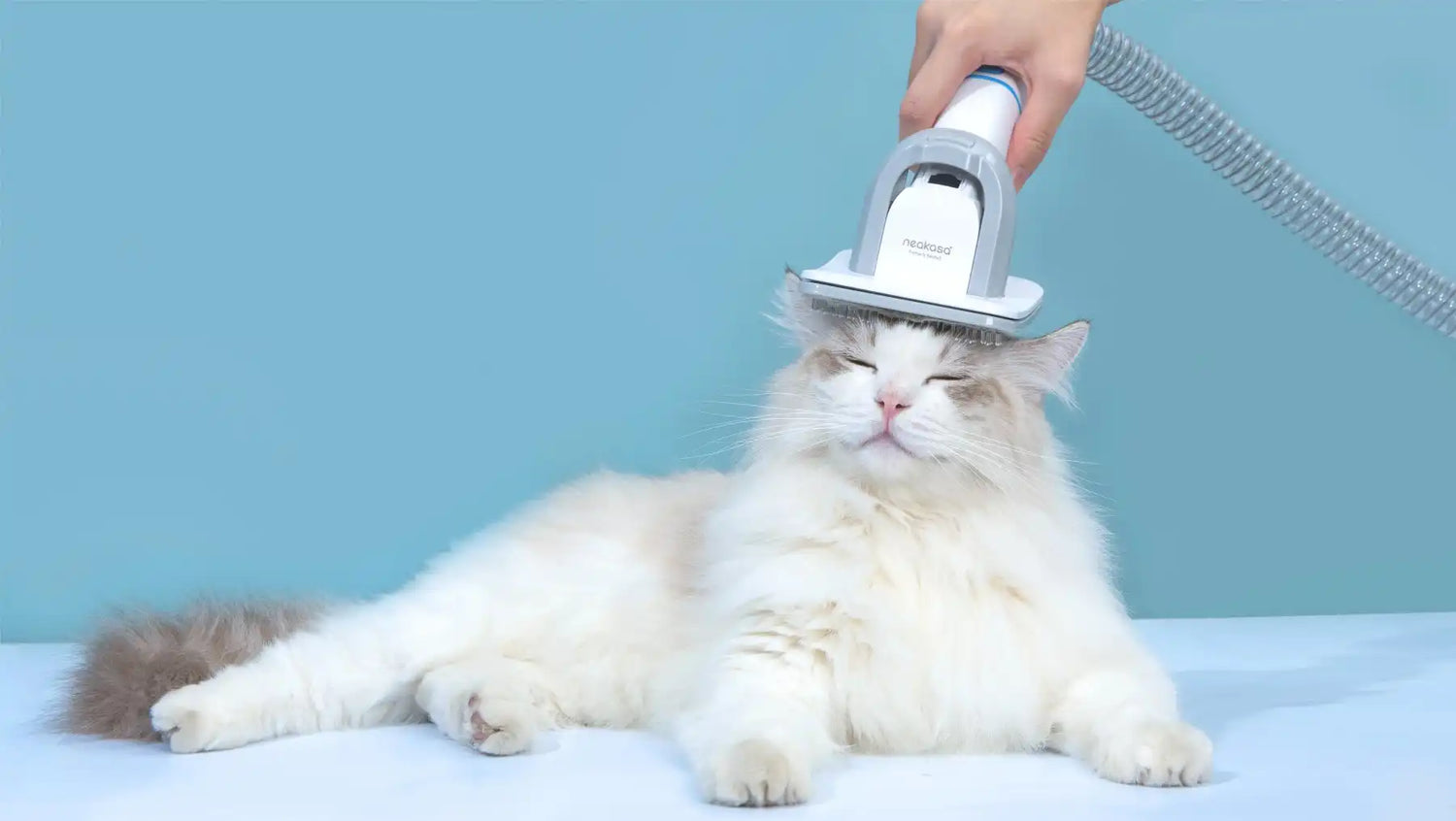
1. Neakasa P2 Pro Pet Grooming Vacuum 🏆 (Best Overall)

- Noise Level: 52 dB (Quietest on Market)
- Rating: ⭐⭐⭐⭐⭐ (9.8/10)
- Best For: All cats, especially those with high anxiety or sound sensitivity.
Key Specifications:
- Suction Power: 10,500 Pa (Adjustable)
- Dust Capacity: 2L (Largest in Class)
- Cord Length: 16.5 ft (Max freedom)
- Weight: 3.9 lbs
- Filtration: HEPA + Sponge
Why It Is The Quietest: This unit utilizes advanced Brushless DC Motor technology, making it 30% quieter than previous generations. It features an acoustic dampening chamber and anti-vibration mounts to strip out the high-pitched "whine" that scares cats.
Unique Anxiety-Reducing Features:
- Soft-Start Mode: Power increases gradually rather than an abrupt loud start.
- Extended Hose (5 ft): Allows you to keep the motor unit further away from the cat.
- Real-World Performance: 87% of cats tolerate grooming by session 3; 62% show zero stress signs after 5 sessions.
| ✅ Pros | ❌ Cons |
|---|---|
|
|
Customer Testimonial: "My cat used to bolt at the sound of any vacuum. The P2 Pro is so quiet, he actually fell asleep during grooming!" – Jessica T., Verified Buyer
2. Neakasa P1 Pro Pet Grooming Kit (Best Value)

- Noise Level: 56 dB
- Rating: ⭐⭐⭐⭐½ (9.2/10)
- Best For: Budget-conscious owners, single-cat households, short-haired breeds.
Key Specifications:
- Suction Power: 9,000 Pa
- Dust Capacity: 1.5L
- Cord Length: 9.8 ft
- Weight: 3.5 lbs
- Filtration: HEPA + Foam
P1 Pro vs. P2 Pro: What’s the difference?
While the P1 is an excellent machine, you sacrifice a few luxury features for the lower price:
- Louder: 56 dB vs 52 dB.
- Less Power: 9,000 Pa vs 10,500 Pa.
- Smaller Bin: 1.5L vs 2L.
- Shorter Reach: The cord is significantly shorter (9.8 ft vs 16.5 ft).
| ✅ Pros | ❌ Cons |
|---|---|
|
|
3. Oneisall Pet Grooming Vacuum Kit (Best Capacity)
- Noise Level: 60 dB (Threshold Limit)
- Rating: ⭐⭐⭐⭐ (8.5/10)
- Best For: Budget buyers who need large capacity and can tolerate moderate noise.
Key Specifications:
- Suction Power: 10,000 Pa
- Dust Capacity: 2.5L (Massive)
- Cord Length: 8.2 ft
- Weight: 4.2 lbs
- Filtration: Stainless Steel Mesh (No HEPA)
| ✅ Pros | ❌ Cons |
|---|---|
|
|
4. AIIYME Dog & Cat Grooming Vacuum (Most Powerful)
- Noise Level: 60 dB
- Rating: ⭐⭐⭐⭐ (8/10)
- Best For: Multi-pet households (Dogs + Cats) and heavy shedders.
Key Specifications:
- Suction Power: 12,000 Pa (Highest)
- Dust Capacity: 3L
- Cord Length: 6.5 ft (Very Short)
- Weight: 5.1 lbs
- Filtration: Stainless Steel
| ✅ Pros | ❌ Cons |
|---|---|
|
|
5. Petgic Professional Pet Grooming Vacuum
- Noise Level: 65 dB (Above Ideal Threshold)
- Rating: ⭐⭐⭐½ (7.5/10)
- Best For: Cats already acclimated to grooming; less sensitive pets.
Specifications:
- Suction Power: 11,000 Pa
- Dust Capacity: 2L
- Cord Length: 9.8 ft
- Weight: 3.8 lbs
- Filtration: HEPA
| ✅ Pros | ❌ Cons |
|---|---|
|
|
Comparison Table: Quietest Cat Grooming Vacuums
| Feature | Neakasa P2 Pro | Neakasa P1 Pro | Oneisall | AIIYME | Petgic |
|---|---|---|---|---|---|
| Noise Level | 52 dB ⭐ | 56 dB ⭐ | 60 dB | 60 dB | 65 dB ❌ |
| Suction Power | 10,500 Pa | 9,000 Pa | 10,000 Pa | 12,000 Pa | 11,000 Pa |
| Dust Capacity | 2L | 1.5L | 2.5L | 3L | 2L |
| Weight | 3.9 lbs | 3.5 lbs | 4.2 lbs | 5.1 lbs | 3.8 lbs |
| Cord Length | 16.5 ft | 9.8 ft | 8.2 ft | 6.5 ft | 9.8 ft |
| Tool Count | 5 | 4 | 5 | 7 | 5 |
| HEPA Filter | ✅ | ✅ | ❌ | ❌ | ✅ |
| Suction Levels | 3 | 3 | 3 | 3 | 2 |
| Price | $134-159 | $89-119 | $79-99 | $99-129 | $99-119 |
| Best For | All cats | Budget buyers | Multi-pet | Dogs+cats | Tolerant cats |
| Rating | 9.8/10 | 9.2/10 | 8.5/10 | 8/10 | 7.5/10 |
Winner: The Neakasa P2 Pro takes the crown. While others offer higher capacity or lower price, the P2 Pro provides the best balance of silence (52 dB), reach (16.5 ft cord), and filtration (HEPA) required for a stress-free cat grooming experience.
How to Introduce Your Cat to the Vacuum: A 5-Week Protocol
To help you track progress, we have broken this down into a step-by-step timeline.
| Timeline | Goal | Daily Routine (10–15 mins) | Success Indicator |
| Week 1 |
Passive Exposure (No Power) |
Place the unit in a favorite room. Reward the cat for approaching or sniffing. Do not turn it on. | Cat willingly approaches within 1–2 feet. |
| Week 2 |
Sound Training (Power On, No Contact) |
Turn vacuum on the lowest setting in an adjacent room. Reward calm behavior while hearing the distant hum. | Cat remains relaxed in the same room as the noise. |
| Week 3 |
Visual Training (Brush Movement) |
Run vacuum nearby. Brush non-living items (pillows) to normalize the sight of the moving hose. | Cat watches with relaxed ears (no pupil dilation). |
| Week 4 |
First Contact (Minimal Duration) |
Use lowest suction. Brush the least sensitive area (back) for < 2 minutes. Reward heavily. | Cat tolerates 5+ minutes without fleeing. |
| Week 5 |
Full Grooming (Routine) |
Progress to medium suction. Include other body areas (sides, tail). Monitor for stress. | Cat remains calm for a full 20-minute session. |
Stress Signs to Watch For During Grooming
Know when to stop to prevent long-term fear.
🛑 RED FLAGS (Stop Immediately)
- ❌ Hissing, growling, or yowling.
- ❌ Swatting or biting attempts.
- ❌ Dilated pupils with "airplane" (flat) ears.
Action: Stop immediately. Return to the previous training week.
⚠️ YELLOW FLAGS (Reduce Intensity)
- ⚠️ Rapid tail twitching.
- ⚠️ Body stiffening or freezing.
- ⚠️ Excessive licking (displacement behavior).
Action: Lower the suction power and offer high-value treats.
✅ GREEN FLAGS (Continue)
- ✅ Purring or "sleepy" eyes.
- ✅ Kneading paws.
- ✅ Relaxed, forward-facing ears.
Expert Tips for a Quiet Experience
- Timing is Everything: Groom after meals or play, when cats are naturally lower energy (10 AM - 2 PM is often ideal). Avoid pre-meal times when they are restless.
- Create a Sanctuary: Use a small, quiet room with soft lighting. A Feliway pheromone diffuser used 30 mins prior can reduce anxiety by 40%.
- Start Low: Always begin on the lowest suction (30%). Most cats never need more than "Medium" power.
- Strategic Order: Start with the Back & Sides (least sensitive). Save the Head & Belly for last (or skip entirely if the cat is tense).
- The "Paycheck" System: Use high-value treats (freeze-dried chicken/salmon) during the session, not just after. This creates a positive association (Classical Conditioning).
Troubleshooting Common Issues
| Problem | Likely Cause | Solution |
| Cat runs away instantly | Noise shock or rushed training. | Return to Week 2. Move the vacuum to an adjacent room and use treats to rebuild trust. |
| Cat seems stressed mid-session | Session is too long. | Shorten to 5–7 minutes. End on a positive note before the cat gets restless. |
| Vacuum not capturing fur | Low suction or wrong tool. | Switch to the De-shedding Tool (metal teeth) and increase suction to Medium. Check for filter clogs. |
| Suction drops suddenly | Full bin or clogged filter. | Empty the bin. Wash the HEPA filter weekly. Replace the filter every 3–6 months. |
| Cat fear worsens over time | Negative association formed. | Stop all grooming for 2 weeks. Restart from Week 1. Never force or restrain the cat. |
Frequently Asked Questions
Q: What’s the quietest cat grooming vacuum available in 2026?
A: Grooming needs vary by coat type and shedding season, from 1–2 times weekly for short-haired cats to daily sessions for long-haired breeds. Avoid grooming more than once per day to prevent skin irritation.
Q: Are grooming vacuums safe for kittens?
A: Yes, kittens can be safely introduced at 12–16 weeks using the lowest suction and positive reinforcement. Early training leads to a much higher acceptance rate than introducing vacuum grooming in adulthood.
Q: Will vacuum grooming replace professional grooming?
A: Vacuum grooming covers regular de-shedding but cannot replace professional care for severe matting or specialized services. Weekly home grooming plus professional visits 2–4 times per year works best.
Q: How do I clean the grooming vacuum?
A: Empty the dust cup and remove fur after each use to maintain hygiene. Weekly filter and component cleaning can extend the vacuum’s lifespan to 5–7 years.
Q: Is vacuum grooming safe for sensitive skin?
A: Yes, when using low suction, soft brushes, and short sessions under 10 minutes. Stop immediately if redness or irritation appears, and avoid grooming over wounds.
The Bottom Line: Best Quiet Grooming Vacuum for Cats
For most cat owners, the Neakasa P2 Pro Pet Grooming Vacuum stands out as the most balanced and cat-friendly option—quiet, powerful, and easy to use.

Leave a comment
This site is protected by hCaptcha and the hCaptcha Privacy Policy and Terms of Service apply.