
Tired of the “sand-everywhere” nightmare? While we love top-entry boxes for their mess-free look, many cats find them cramped or stressful.
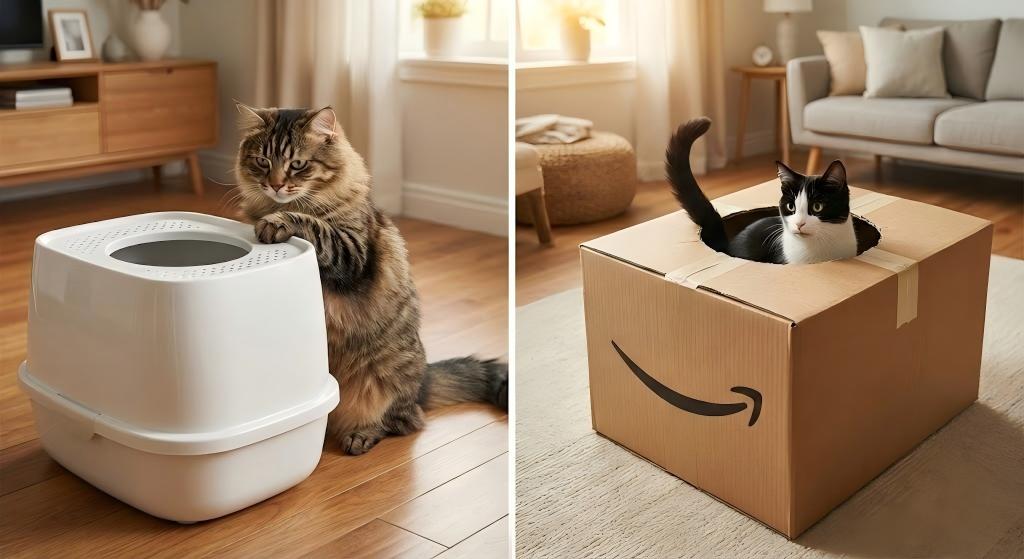
Instead of wasting money, try the “Cardboard Test”—a zero-cost DIY trick to see if your feline friend is willing to make the leap before you commit.
Whether cats like top-entry litter boxes depends entirely on the individual’s age, agility, and confidence.
- Who loves them: Young, athletic cats and “diggers” often prefer the privacy and high walls that prevent litter tracking.
- Who hates them: Senior cats with arthritis, large breeds (like Maine Coons) that need turning space, and anxious cats who fear being “trapped” without a view of their surroundings.
🐱 Mini-Quiz: Will Your Cat Fit? (Click to Test)
Answer these 3 quick questions:
- ✅ Age: Is your cat under 8 years old?
- ✅ Mobility: Can they easily jump onto a kitchen counter?
- ✅ Personality: Are they brave in tight spaces?
📊 The Verdict:
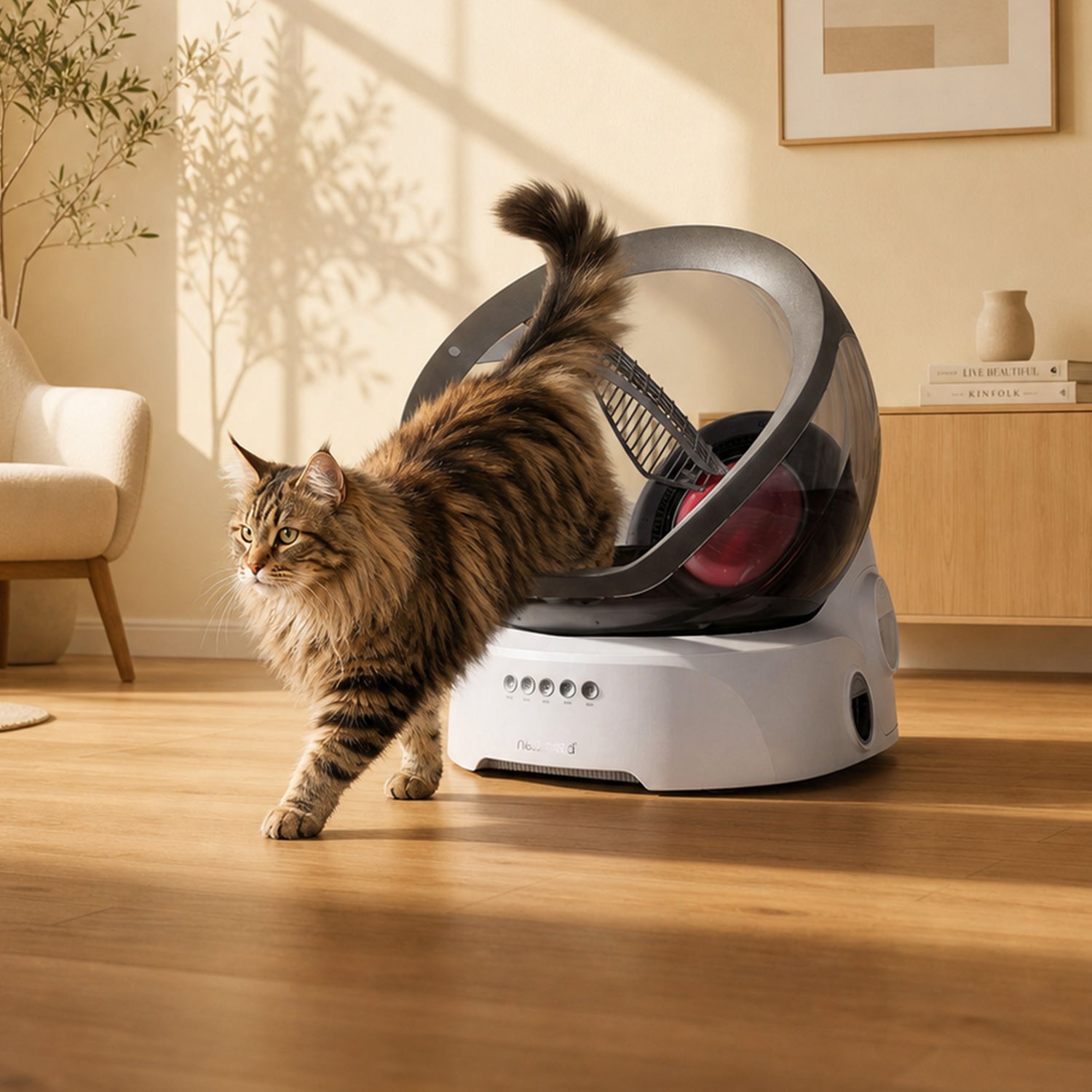
- 🔴 Any "No"? Check out the Neakasa M1 Plus Open Top instead.
- 🟢 All "Yes"? You're safe to try the Cardboard Test!
Why Some Cats Hate “The Lid” (The Predator’s Perspective)
To understand rejection, we must look at evolution. Cats are mesopredators—they hunt, but they are also hunted.
Ambush vs. Sanctuary (The Safety Factor)
In the wild, the moment of elimination is when a cat is most vulnerable.
- The Confident Cat: Sees a top-entry box as a fortified bunker—hidden and secure.
- The Anxious Cat: In multi-pet homes, this box can feel like a trap. If a dog sits on the lid, the cat is cornered. This fear often leads to “accidents” on your bed instead.
The “Scent Trap” Phenomenon
A cat’s sense of smell is 14 times stronger than ours. Because these boxes are enclosed, they create a “fume chamber” of ammonia and dust. If not scooped daily, the air quality becomes unbearable, leading to immediate rejection.
Red Flags: 3 Types of Cats Who Should Avoid Top Entry
Before switching, check if your cat falls into these high-risk categories. While these boxes solve human problems, they can create physical and behavioral issues for these specific felines:
At a Glance: Who is at Risk?
| Cat Profile | Primary Risk | Alternative |
|---|---|---|
| Seniors (10+ years) | Joint Pain: Jumping causes stress on elbows and spine | Low-entry open pan |
| Large Breeds (>12 lbs) | Claustrophobia: No room to turn or circle comfortably | XXL Jumbo Open Box |
| Vertical Sprayers | Leakage: Urine seeps through lid seams or gaps | High-sided seamless box |
1. The Senior & Arthritic (The Mobility Barrier)
Even if they seem “fine,” 90% of cats over 12 have undiagnosed arthritis. The real danger isn’t the jump up—it’s the landing impact on unstable sand. Over time, your cat will associate the litter box with physical pain, leading to sudden litter box aversion.
2. The Giants (Maine Coons & Ragdolls)
Most top-entry boxes are built for “average” 8-lb cats. For a 15-lb giant, these boxes are straitjackets. If their whiskers constantly brush the walls (Whisker Stress) or they can’t turn 360° to dig, they’ll likely find a more spacious “bathroom”—usually your living room rug.
3. The “Sprayers” (Vertical Urinators)
Many top-entry designs are two-piece units. If your cat pees standing up, urine often seeps into the connection seam, creating a permanent stench that’s impossible to scrub. In tight spaces, they also risk getting urine on their own fur because they can’t posture away from the stream.
The “Cardboard Prototype” Test: Save $50 in 10 Minutes
Don’t guess—test. Mimic the experience for free before investing in a plastic unit.
Step-by-Step DIY Guide
-
Find a Box
Locate a sturdy shipping box roughly the size of a standard litter box (approx. 15-16 inches high)
-
Cut the Hole
Tape the box shut and use a box cutter to slice a 9-10 inch diameter circle in the top.
-
Scent Transfer
Place a shallow layer of litter inside.

Crucial Step: Mix in one scoop of clean but used litter from their current box. This scent marker tells them, “This is a toilet, not a toy.”
Reading the Results
Place the prototype next to their current box (do not remove the old box yet).
- PASS: The cat investigates the hole, jumps on top, or climbs inside to use it.
- FAIL: The cat sniffs it but walks away, scratches the outside of the box frantically, or ignores it completely for 48 hours.
Comparison: Top Entry vs. Front Entry vs. Open Top
Still on the fence? Let’s look at the data. We’ve graded the three most common manual litter box types on the factors that matter most to you (cleanliness) and your cat (comfort).
| Feature | Top Entry Box | Front Entry | Open Pan |
|---|---|---|---|
| Litter Tracking | ⭐⭐⭐⭐⭐ | ⭐⭐ | ⭐ |
| Dog Proofing | ⭐⭐⭐⭐⭐ | ⭐⭐ | ⭐ |
| Odor Control (House) | ⭐⭐⭐⭐⭐ | ⭐⭐⭐ | ⭐ |
| Cat Comfort | ⭐⭐ | ⭐⭐⭐ | ⭐⭐⭐⭐⭐ |
| Ease of Cleaning | ⭐⭐ (Must remove lid) | ⭐⭐⭐ | ⭐⭐⭐⭐⭐ |
| Senior/Big Cat Friendly | ❌ NO | ⚠️ MAYBE | ✅ YES |
The “Best of Both Worlds” Solution: Neakasa M1 Plus
If your cat failed the cardboard test but you refuse to live with a messy tray, the Neakasa M1 Plus is the ultimate bridge.
- Solves Claustrophobia: Its open-top design provides 360° visibility for anxious or large cats.
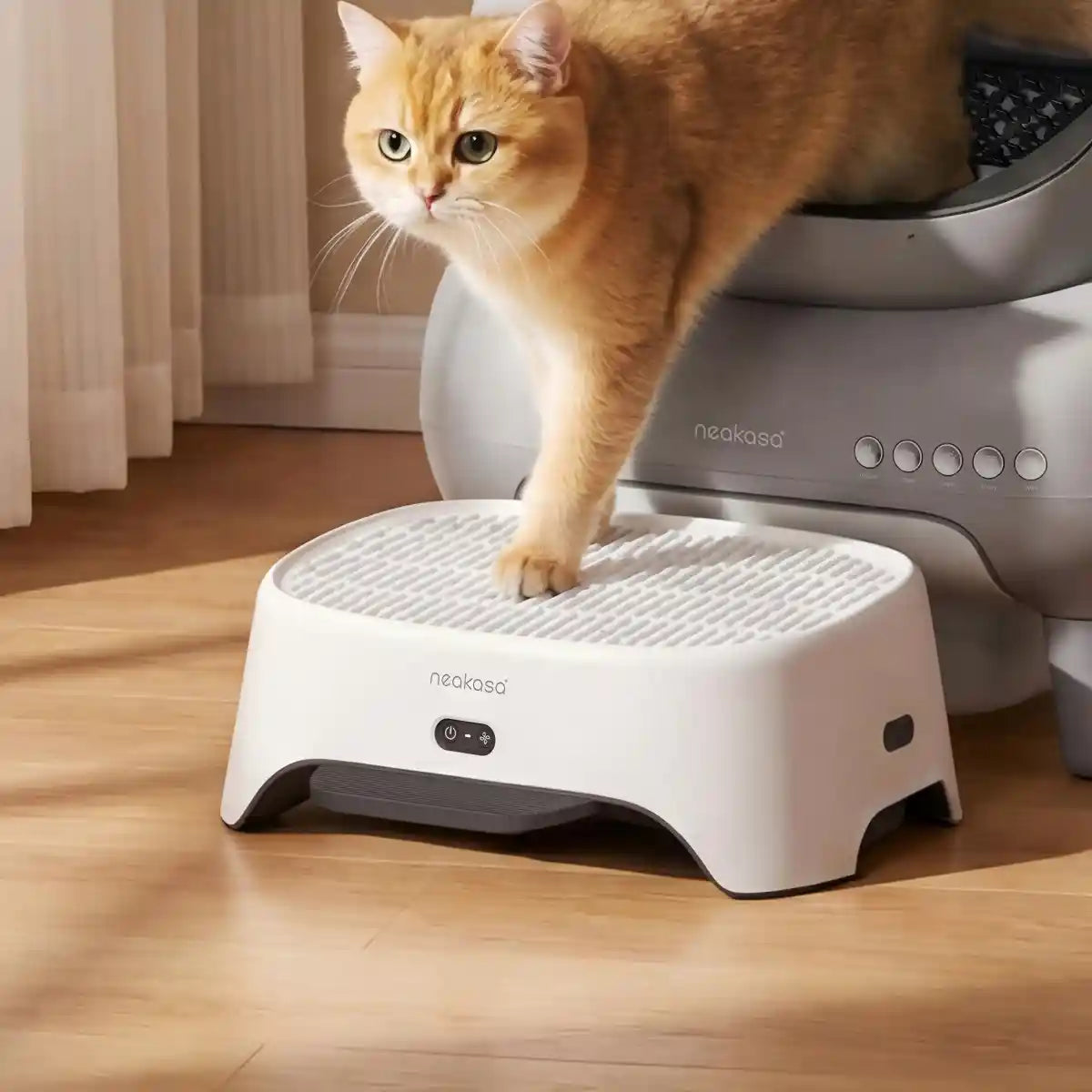
- Solves Mobility Issues: No “high jump” required—perfect for kittens and seniors.
- Self-Cleaning Magic: It doesn’t just hide smells; it automatically sifts and seals waste.
Verdict: It’s the ultimate upgrade—giving your cat the open space they need and you the scoop-free life you deserve.
How to Transition Your Cat To Use a Top Entry Cat Litter Box
If your cat passed the cardboard test and you’ve bought the real thing, don’t just swap them out. Sudden changes cause stress.
- The “Convertible” Method: Leave the lid off for the first 3-5 days.
- The Treat Trail: Place treats on the lid (never inside) to create positive associations.
- The N+1 Rule: Keep the old box available for 2 weeks until you see consistent use of the new one.
FAQs
Q1. Do top-entry litter boxes actually reduce smell?
A1. Yes and no. They trap odors effectively, keeping your room fresh. However, this creates a “stink chamber” for your cat. Without daily scooping, the concentrated smell inside can lead to litter box aversion.
Q2. Why is my cat pooping on the lid instead of inside?
A2. This is a clear protest. It usually means the box is too dirty, the opening is too small, or your cat suffers from ambush anxiety—feeling safer doing their business on a high vantage point where they can spot “threats.”
Q3. Are top-entry litter boxes safe for kittens?
A3. Rarely. Kittens under 12 weeks often lack the strength to jump in or out safely. If you use one, provide a temporary step-stool until they are fully grown to prevent panic or injury.
Conclusion: Is It Worth It?
Top-entry boxes are a lifesaver for owners of agile cats in small apartments. However, they aren’t one-size-fits-all. If your cat is a senior or a large breed, stick to open-top designs.
Ready to say goodbye to the “beach floor” forever? Try the Cardboard Test this weekend. If your cat needs more space, upgrade to the Neakasa M1 Plus—the freedom of an open pan with the cleanliness of an auto-sealing system.

- Enhanced sealing stops leaks, even for side-peeing.
- Self-cleaning removes waste without daily scooping.
- Open-top design ensures safety and easy access.
- Spacious interior fits cats, up to 33 lbs.
- Sealed bin locks odors for up to 14 days.

Leave a comment
All comments are moderated before being published.
This site is protected by hCaptcha and the hCaptcha Privacy Policy and Terms of Service apply.