

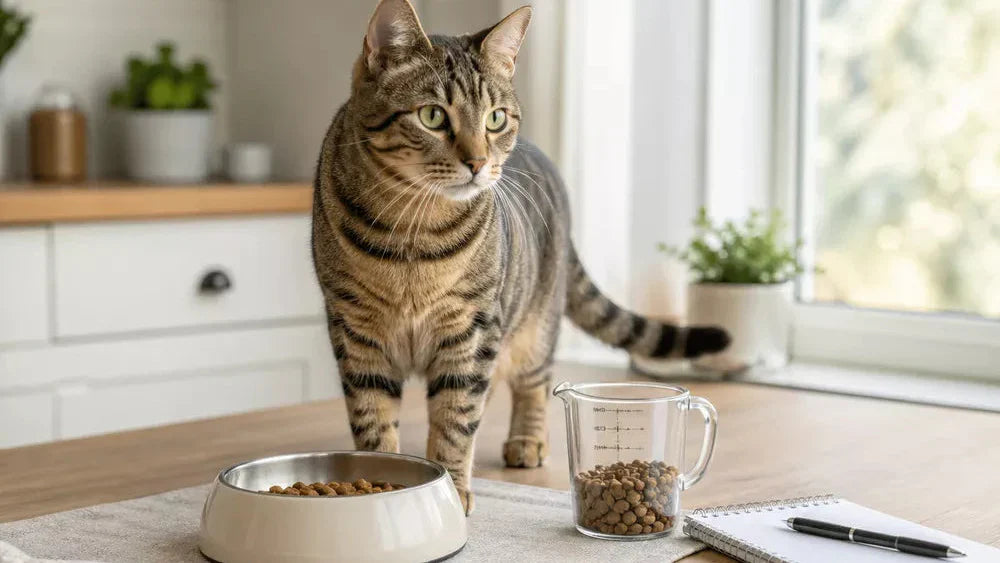
Figuring out how much to feed your adult cat each day can be confusing. The right amount depends on their weight, age, activity level, whether they’re spayed or neutered, and how many calories are in their food.
Instead of guessing with vague portions like “a few scoops” or “half a cup,” it’s better to look at your cat’s total daily calories. In this guide, you’ll learn a simple way to calculate your cat’s food needs, compare wet and dry food portions, and create a feeding routine that helps keep your cat healthy.
- Focus on Calories, Not Volume: A cup of one cat food can have double the calories of another. Always calculate by total kilocalories (kcal).
- Include Everything: Treats, meal toppers, and nutritional gels count toward your cat’s daily caloric limit.
- Weigh Regularity: Spayed, neutered, and strictly indoor cats require fewer calories than active, intact outdoor cats.
- Wet Food Benefits: High-moisture diets naturally offer larger portion sizes for fewer calories, making weight management easier.
Understanding Your Cat’s Caloric Needs
To build a proper feeding plan, it’s crucial to understand the foundation of feline nutrition: how calories work and why generic measurements often fail.
Average Daily Calories for Adult Cats
While every cat is unique, you can establish a baseline by looking at a few key factors:
- The Baseline: Most average-sized domestic adult cats (around 10 lbs) require between 200 and 250 calories per day.
- Lifestyle Impact: An active cat burns significantly more calories than a highly sedentary indoor cat.
- Breed Size: Large breeds, such as Maine Coons and Ragdolls, have significantly larger body frames and will require a much higher daily caloric baseline than standard domestic shorthairs.
The Problem with the “One Cup a Day” Rule
Many pet owners rely on the “one cup a day” rule, but this approach is deeply flawed for several reasons:
- Caloric Density Variations: One brand of dry food might contain 300 kcal per cup, while a specialised high-protein brand might pack 500 kcal into that same cup.
- Moisture Differences: Wet food is mostly water, meaning it has a much larger volume but significantly fewer calories per ounce compared to dry kibble.
- Hidden Calories: Handing out treats throughout the day without tracking them can easily push a cat over their daily calorie limit.
Cat Feeding Chart: Portions by Weight and Lifestyle

Now that you know why calories matter, let’s look at what that actually looks like. The table below provides a general estimate of daily caloric needs based on a cat’s size and daily activity.
| Cat Weight | Low Activity (Sedentary/Neutered) | Normal Activity | High Activity (Very Playful) |
|---|---|---|---|
| 7 lbs (3.2 kg) | ~140 kcal | ~170 kcal | ~200 kcal |
| 10 lbs (4.5 kg) | ~180 kcal | ~220 kcal | ~260 kcal |
| 13 lbs (5.9 kg) | ~220 kcal | ~260 kcal | ~310 kcal |
| 16 lbs (7.2 kg) | ~250 kcal | ~300 kcal | ~360 kcal |
| 20 lbs (9.0 kg) | ~310 kcal | ~370 kcal | ~440 kcal |
(Note: For extra-large breeds weighing over 15 lbs, monitor their Body Condition Score carefully rather than relying solely on the scale.)
The 3-Step Method to Calculate Your Cat’s Daily Food
While the chart above offers a great starting point, calculating your cat’s precise needs guarantees they stay at a healthy weight. Here is exactly how to do the math.
Step 1: Determine Your Cat’s Ideal Weight
You must base your calculations on your cat’s ideal weight, not their current weight. Feeding an overweight cat based on their current weight will only cause them to gain more.
Use a Body Condition Score (BCS) chart: you should be able to easily feel your cat’s ribs with a light touch, and they should have a visible waistline when viewed from above.
Step 2: Read the Calories on the Cat Food Label
Look at your cat food packaging for the caloric measurement based on AAFCO standards: kcal/cup, kcal/can, or kcal/pouch. Once you find it, use this simple formula:
Daily Calories ÷ Calories Per Serving = Servings Per Day
Example Calculation:
- Your cat’s target intake: 220 kcal/day
- Your dry food density: 440 kcal/cup
- The math: 220 ÷ 440 = 0.5 (1/2 cup per day)
Step 3: Factor in Treats (The 10% Rule)
Treats are not bonus calories. To prevent weight gain, follow the 10% Rule:
- 1. Calculate 10% of your cat’s daily calorie goal (e.g., 20 calories out of a 200-calorie diet).
- 2. Limit daily treats to this number.
- 3. Subtract those 20 calories from their main meals so the daily total remains exactly 200.
Wet Food vs Dry Food: How Portions Change
Calculations are just one part of the puzzle. The type of food you serve dramatically affects how much physical food you put in the bowl. Here is a quick comparison:
| Feature | Wet Food | Dry Food (Kibble) |
|---|---|---|
| Moisture Content | High (70% - 80%) | Low (5% - 10%) |
| Caloric Density | Low (Larger portions needed) | High (Smaller portions needed) |
| Best For | Weight loss, hydration, UTI/constipation prevention | Convenience, automatic feeders |
1. Feeding Only Wet Food
Because wet food is mostly water, the physical volume is large, but the caloric density is low. You will calculate portions based on the kcal/can measurement.
This high moisture content makes wet food an excellent option for weight loss and is highly beneficial for cats prone to urinary tract issues or chronic kidney disease (CKD).
2. Feeding Only Dry Food
Dry food has had the moisture removed, leaving behind a highly concentrated, calorie-dense kibble. Because it is so compact, it is incredibly easy to accidentally overfeed.
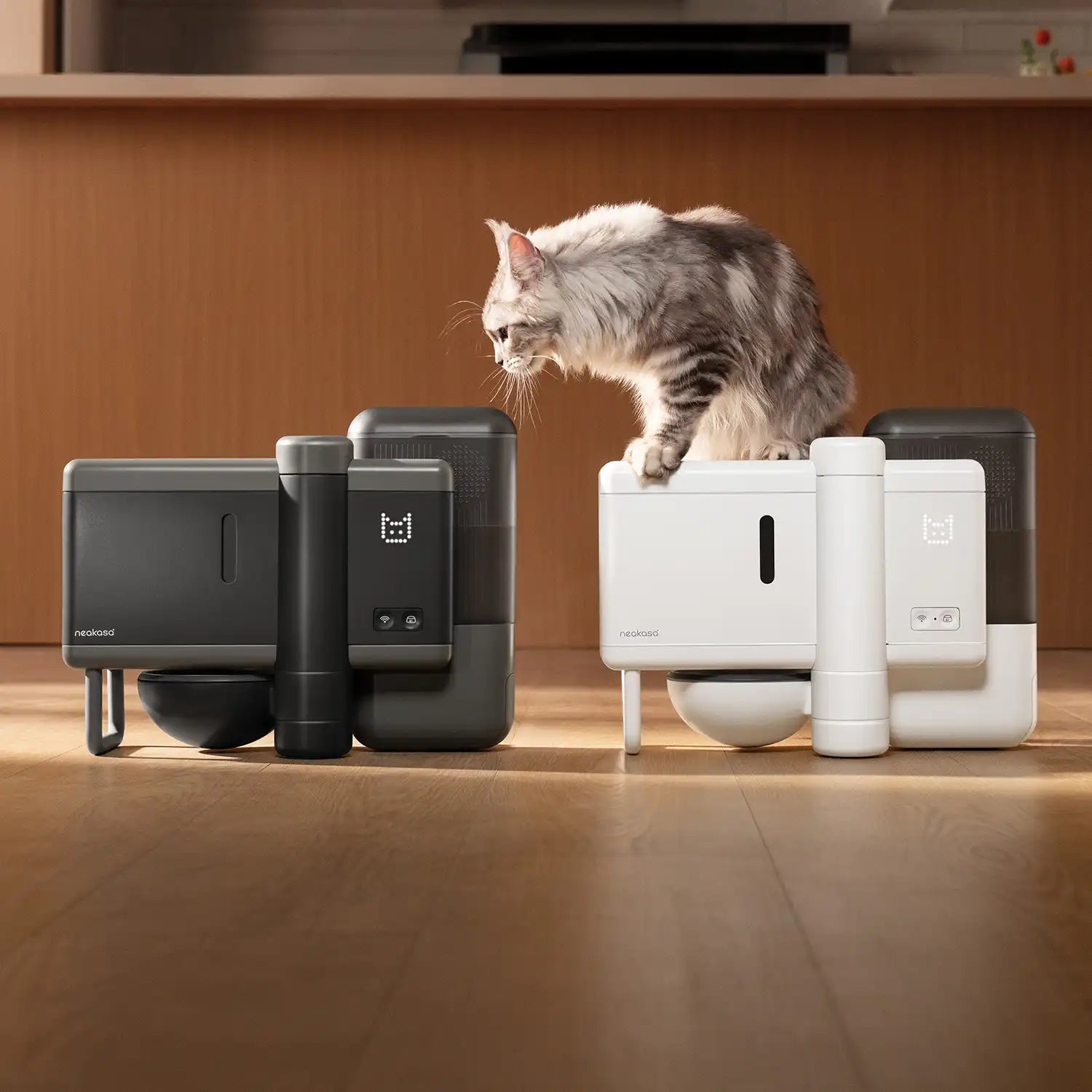
Strict portion control using precise measuring tools or an automatic feeder is absolutely necessary if your cat is on an all-dry diet.

Feeding Frequency: How Often Should Cats Eat?
Once you have the portion size figured out, the next question is when to serve it. A cat’s feeding schedule depends heavily on their life stage.
Portions for Kittens, Adults, and Seniors
- Kittens: Growing kittens have tiny stomachs and massive energy needs. They should be fed 3 to 4 times a day.
- Adult Cats: Healthy adults do best with 2 to 3 scheduled meals a day, mimicking their natural hunting rhythms.
- Senior Cats: Older cats may have slower digestion or reduced appetites. They often thrive on smaller, more frequent meals.
Free-Feeding vs. Scheduled Meals
Free-feeding (leaving a bowl full of food out all day) only works for a very small percentage of cats who excel at self-regulation. Scheduled meals are vastly superior because they:
- Prevent dangerous weight gain.
- It allows you to monitor sudden drops in appetite easily.
- Stop dominant cats from hoarding food in multi-cat households.
FAQs
Q1. Is one can of wet food enough for a cat?
A1. It depends on the can size and your cat’s caloric needs. A small 3 oz can (typically ~70 calories) means an average cat needs three or more daily. A large 5.5 oz can (~180 calories) covers most of their daily needs. Always check the label’s kcal/can.
Q2. Should cats eat once or twice a day?
A2. Feeding once a day is strongly discouraged, as it often leads to anxiety, begging, and eating too fast (which causes vomiting). Twice a day is the standard minimum for adult cats.
Q3. Why is my cat always acting hungry?
A3. Cats often beg out of boredom or habit. However, if they are eating the correct amount of calories but remain ravenous—especially if accompanied by weight loss—consult a vet immediately. This can indicate parasites, hyperthyroidism, or diabetes.
Q4. How do I help my cat lose weight safely?
A4. Feline weight loss must be slow; drastic calorie cuts can cause a fatal liver condition (hepatic lipidosis). Reduce daily calories by just 5% to 10%, encourage more playtime, and consider switching to a high-moisture wet diet to help them feel full on fewer calories.
Final Thoughts: Build a Custom Feeding Plan
Ditch the generic scoops and calculate your cat’s exact caloric needs based on their target weight.
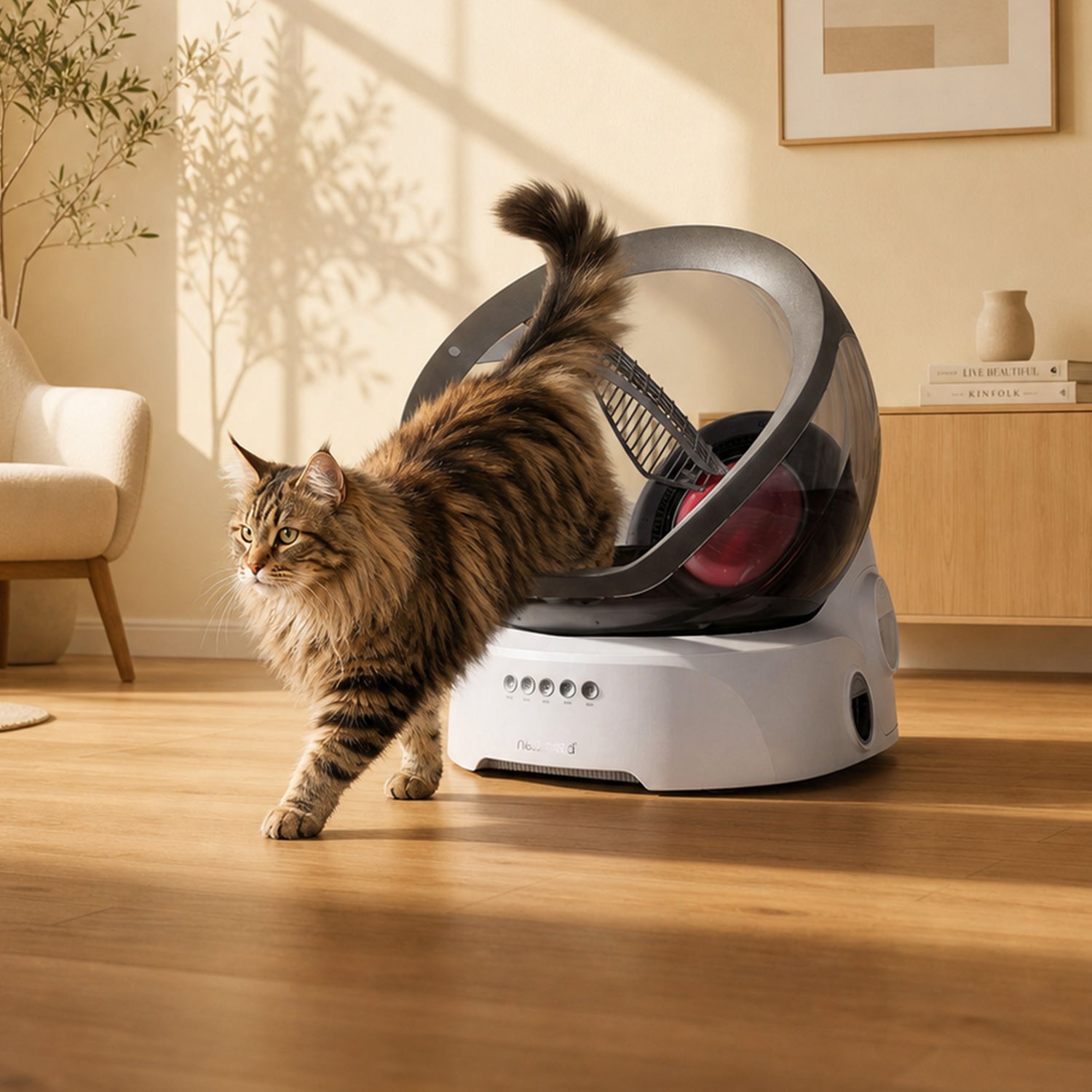
To ensure your plan works, track their weight and bathroom habits. An open-top automatic litter box like the Neakasa M1 makes monitoring waste volume and digestion effortless, while its spacious design perfectly accommodates large breeds like Maine Coons and Ragdolls.



Leave a comment
All comments are moderated before being published.
This site is protected by hCaptcha and the hCaptcha Privacy Policy and Terms of Service apply.