


You walk into the laundry room, bathroom, or apartment hallway and notice it right away: the litter box area smells stale even though you cleaned it recently. That is when many cat owners start searching for litter box ventilation, a litter box exhaust fan, a cat litter box fan, or a litter box air purifier.
In this guide, we’ll compare common litter box ventilation options, explain when a litter box exhaust fan makes sense, and introduce a simpler way to support airflow, odor control, air purification, and litter tracking protection around the litter box.
- The Core Issue: Litter box odors build up when waste, moisture, dust, and stale air get trapped in small spaces.
- Ventilation Matters: Better airflow can reduce odor, but loud fans or strong drafts may make cats uncomfortable.
- Exhaust Fans Are Not Always Practical: DIY litter box exhaust fans often require drilling, ducting, wiring, and regular maintenance.
- The Easier Alternative: Neakasa AirStep uses built-in airflow, 3 adjustable fan speeds, and a 230g activated carbon filter to help control odors while catching tracked litter.
Why Proper Litter Box Ventilation Matters
Before you start looking at fans, purifiers, or filters, it helps to know why the litter box area can smell so strong in the first place. Most odor problems are not caused by one thing. They usually come from a mix of waste, moisture, trapped air, litter dust, and not enough airflow.
Litter box odor can feel worse when:
- The box is in a tight space, such as a laundry room, bathroom, closet, or apartment hallway.
- Air does not move well, so smells stay close to the box instead of dispersing.
- The litter box is covered or enclosed, which can trap odor if there is not enough ventilation.
- Multiple cats use the same area, causing waste and moisture to build up faster.
- Litter dust spreads around the box, making the space feel less fresh.
Good litter box ventilation helps move stale air away from the immediate litter area and supports a fresher-smelling space. It works best when it is part of a simple routine: scoop regularly, use a litter that handles moisture well, keep the box in a cat-friendly spot, and add odor support such as activated carbon when needed.
Ventilation is especially helpful for homes with multiple cats, automatic litter boxes, covered boxes, or litter boxes placed in small rooms. Just remember that more airflow is not always better. Cats can be sensitive to noise, drafts, and sudden changes around their bathroom area, so any litter box fan or purifier should feel calm and comfortable for them too.
The Truth About Litter Box Exhaust Fans
A litter box exhaust fan can sound like the obvious fix: pull the odor away and problem solved. In real homes, though, it is a little more nuanced. Exhaust fans can help, but they are not the right fit for every space, every cat, or every renter.
What Is a Litter Box Exhaust Fan?
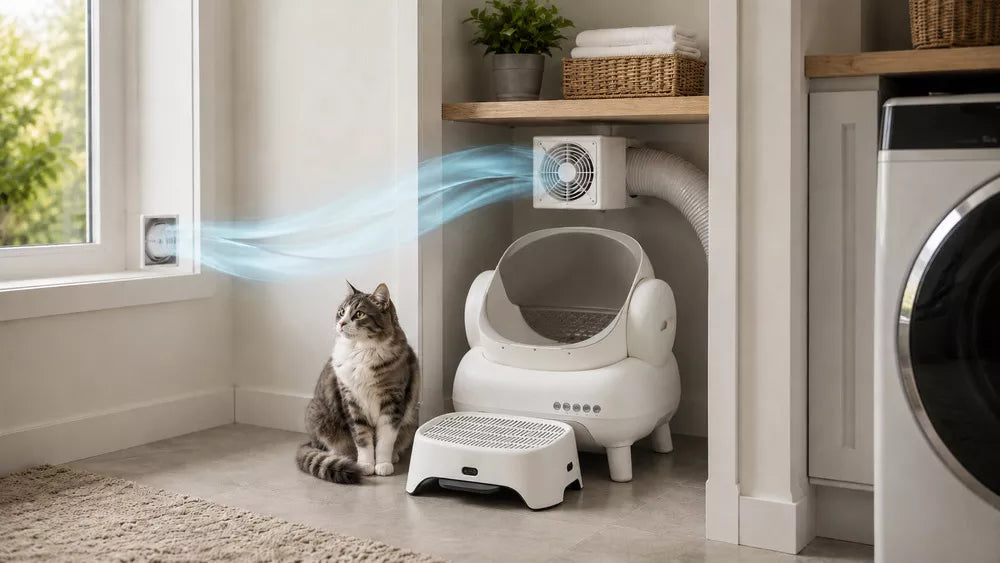
A litter box exhaust fan is usually a fan-based setup that pulls air away from the litter box area. Some people build DIY versions with ducting, cabinet fans, bathroom fan parts, window vents, or carbon filter attachments.
Most setups fall into a few common types:
- Outdoor-venting systems: move air toward a window, wall vent, or exterior outlet.
- Filtered cabinet fans: pull air through a carbon filter inside a litter box cabinet.
- Room circulation fans: help air move but do not necessarily filter odor.
- DIY hybrid setups: combine a small fan, ducting, and carbon filter material.
The goal is simple: move or filter odor-heavy air before it spreads through the room. The challenge is that outdoor-venting systems can take real work. They may involve drilling, duct routing, window modifications, careful sealing, and ongoing maintenance.

Do Litter Box Fans Actually Work?
They can, especially when the fan moves air through an effective filter or improves circulation in a stuffy area. But a fan by itself is not always enough. A basic fan pointed at the litter box may simply push odor and dust into the room.
A litter box odor fan is more likely to help when it:
- pulls air through activated carbon or another odor-focused filter;
- moves air gently instead of creating a strong draft;
- does not blow litter dust across the room;
- runs quietly enough that your cat still feels safe using the box;
- sits in a place that supports airflow without blocking your cat’s path.
Noise, placement, airflow direction, and filter quality all matter. If the setup makes the litter box feel loud, drafty, or intimidating, some cats may avoid it. That is why many cat owners start looking for a simpler litter box exhaust fan alternative.
Common Ways to Control Odor & Ventilate a Litter Box
There is no single best setup for every home. A small apartment, a multi-cat household, and a custom litter box cabinet may all need different odor-control solutions. Here are the most common options and where each one tends to fit best.
1. DIY Litter Box Exhaust Fan
A DIY litter box exhaust fan can make sense if you have a litter box cabinet, a utility room, or a custom enclosure. A well-planned setup can pull air through a carbon filter or direct air toward a window or vent. This route may be worth considering if you:
- own your home or can safely modify the space;
- are comfortable with basic tools, wiring, or ducting;
- want a custom solution for a litter box cabinet;
- do not mind replacing filters and checking fan parts regularly.
The tradeoff is effort. DIY systems can involve cutting, wiring, ducting, sealing, and regular upkeep. They can also create noise or drafts if they are not planned carefully. If you rent, move often, or simply do not want another project, this may feel like more work than you want.
2. Ventilated Litter Box Cabinet
A ventilated cabinet can help hide the litter box and make the area look cleaner. When designed well, it can also give odors somewhere to move instead of trapping them inside the enclosure. If you are comparing litter box cabinets, look for:
- an entrance that is large enough for your cat to use comfortably;
- vent panels, airflow gaps, or space for a small fan;
- room for a carbon filter if odor control is a priority;
- easy access for scooping, emptying, and cleaning;
- enough interior space so the box does not feel cramped.
The main thing to avoid is a cabinet that looks nice but traps odor. If airflow is weak or filters are not replaced, the smell can build up inside. And if your cat already dislikes covered litter boxes, a cabinet may not be their favorite upgrade.
3. Room Air Purifiers & Carbon Filters
A room air purifier can be helpful when the litter box is in a shared room, hallway, or apartment space. For litter box odor, activated carbon matters because it helps absorb odor compounds instead of only capturing dust. A room air purifier tends to work best when:
- it includes a real activated carbon filter;
- it is sized for the room where the litter box sits;
- airflow is not blocked by furniture, walls, or cabinets;
- filters are replaced on schedule;
- it is used alongside regular litter box cleaning.
The limitation is that a room purifier works at the room level. It can help freshen the surrounding air, but it may not target the litter box entrance, litter tracking zone, or immediate odor source as directly as a litter box-focused solution.
The Best Non-DIY Alternative: Introducing Neakasa AirStep
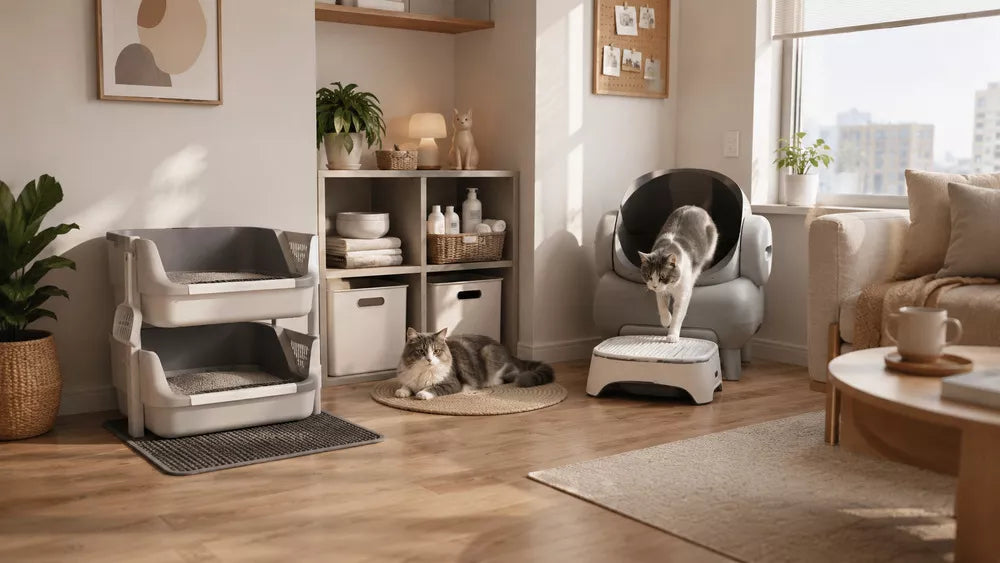
If you want better odor control without building a DIY exhaust system, Neakasa AirStep is a simpler option. This air-purifying cat litter box step supports airflow and freshness around the litter box entrance—without ducts, drilling, cabinet changes, or outdoor venting.
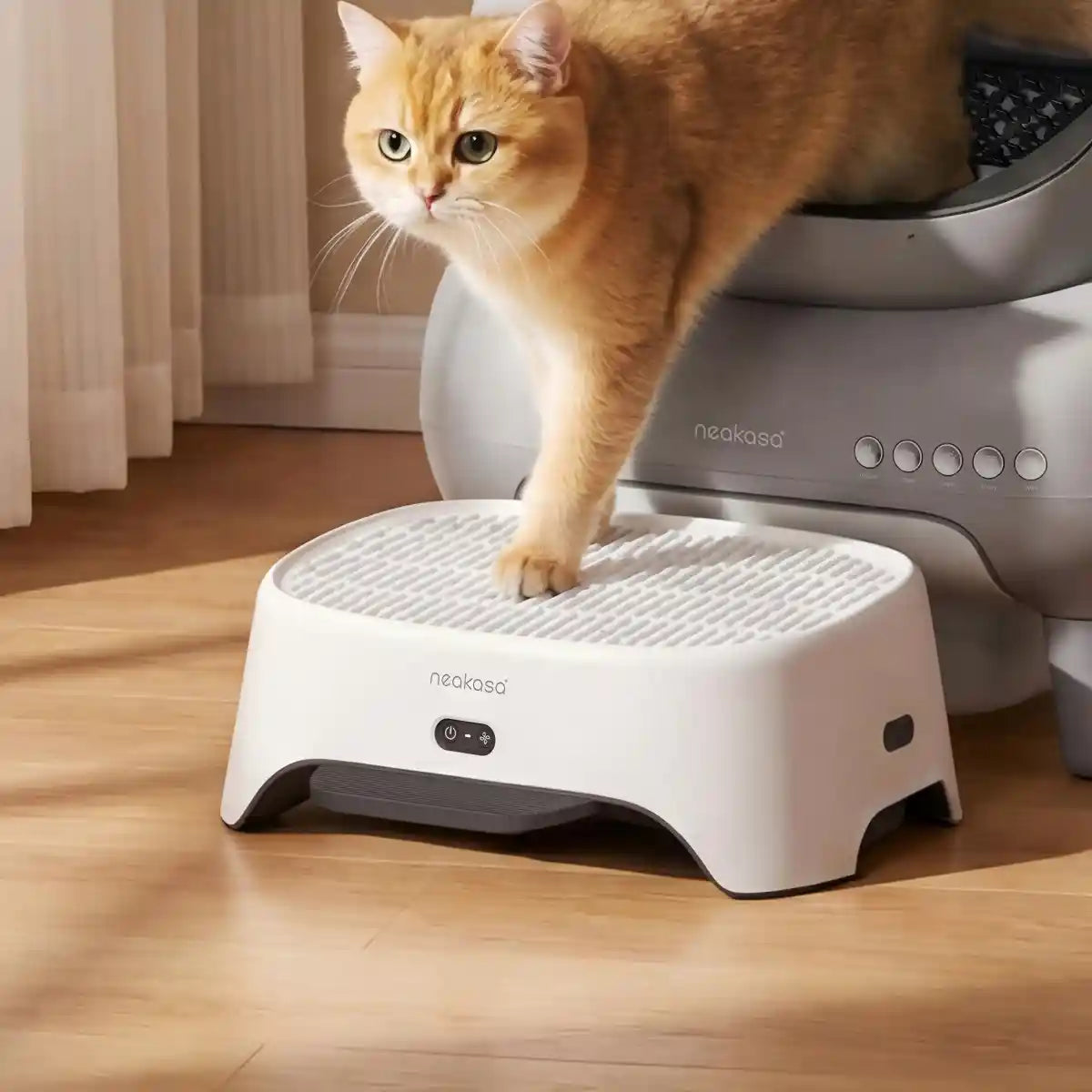
AirStep is not an outdoor-venting exhaust fan. Instead, it combines built-in airflow, 3 adjustable fan speeds, and a 230g activated carbon filter to help reduce odors near the litter box. It also helps catch litter from your cat’s paws as they step out.
What makes AirStep useful for everyday homes:
- Built-in airflow supports circulation near the litter box entrance.
- 3 adjustable fan speeds let you choose a gentle or stronger setting.
- A 230g activated carbon filter helps reduce odors around the litter box area.
- The step design helps trap litter from paws and reduce tracking.
- Compatibility with most automatic, covered, and open litter boxes makes setup easy.
For households that want extra support for odor control, airflow, and litter tracking without a complicated DIY setup, AirStep is a practical upgrade.
FAQ
Q1. Can I put a fan near a litter box?
A1. Yes, you can put a fan near a litter box, but placement matters. A fan should not blow directly into the litter, spread dust, or create a draft that makes your cat uncomfortable. A filtered airflow solution is usually better than a basic fan that only moves odor around the room.
Q2. Is a litter box exhaust fan safe for cats?
A2. A litter box exhaust fan can be safe when it is properly installed, quiet, securely covered, and positioned so your cat cannot touch moving parts or wiring. Avoid strong drafts, loud fans, exposed cords, or unstable DIY setups near the litter box.
Q3. What is the best alternative to a litter box exhaust fan?
A3. The best alternative depends on your home. For many cat owners, an air-purifying litter box step like Neakasa AirStep can be a practical alternative because it offers built-in airflow, activated carbon filtration, and litter tracking control without ducting or outdoor venting.
Q4. Does Neakasa AirStep have a fan?
A4. Yes. Neakasa AirStep has built-in airflow with 3 adjustable fan speeds, allowing you to choose the airflow level that works best for your litter box area and your cat’s comfort.
Q5. Does AirStep help with litter box odor?
A5. Yes. AirStep is designed to help reduce litter box odors with built-in airflow and a 230g activated carbon filter. It helps freshen the area around the litter box, especially when used with regular cleaning and good litter habits.

Leave a comment
All comments are moderated before being published.
This site is protected by hCaptcha and the hCaptcha Privacy Policy and Terms of Service apply.