
How many times should a cat use the litter box per day?" It is more than just a number—it is a vital health indicator. Since cats hide pain, changes in bathroom habits are often the first sign of silent illnesses like Kidney Disease or UTIs.
This guide reveals the veterinary-approved "normal" ranges for every age and explains how automated monitoring can detect life-saving health trends weeks early.
- Urination: 2-3 times daily
- Defecation: 1-2 times daily
Normal Litter Box Frequency by Age
Litter box habits change drastically as a cat matures. The frequency curve shows an exponential decline from kittenhood to adulthood, followed by a variable increase in senior years.
| Life Stage | Age Range | Urinations (Daily) | Defecations (Daily) | Total Daily Uses | Clinical Notes & Growth Milestones |
|---|---|---|---|---|---|
| Kitten (Neonatal) | 0 - 2 Months | 5 - 8 | 2 - 4 | 7 - 12 | High metabolic rate; transition from stimulation to autonomy. |
| Kitten (Junior) | 2 - 6 Months | 3 - 5 | 2 | 5 - 7 | Rapid growth; bladder and bowel control maturing. |
| Adolescent | 6 - 12 Months | 2 - 4 | 1 - 2 | 3 - 6 | Sexual maturity; behaviors and territory marking stabilize. |
| Young Adult | 1 - 6 Years | 2 - 3 | 1 | 3 - 4 | Peak Health. Baseline for lifelong monitoring. |
| Mature Adult | 7 - 10 Years | 2 - 3 | 1 | 3 - 4 | The "pre-senior" phase; watch for subtle changes in clump size. |
| Senior | 11 - 14 Years | 2 - 4 | 1 | 3 - 5 | Declining renal concentration; 30%+ risk of early CKD. |
| Geriatric | 15+ Years | 3 - 5+ | < 1 | 4 - 6+ | High risk of CKD/Diabetes (Polyuria) and constipation. |
Key Insight: The increase in frequency during senior years (10+ years) is often driven by kidney dysfunction, not just "normal aging," and warrants active monitoring.
The "Food-Frequency" Connection
What goes in determines what comes out. The moisture content of your cat's food is the #1 driver of urination volume vs. frequency.
| Diet Composition | Water Content | Urination Pattern | Risk Factor |
|---|---|---|---|
| 100% Dry Kibble | 10-12% | 2-3x (Concentrated) | High dehydration risk |
| Mixed (75% Dry / 25% Wet) | 20-25% | 2-3x (Moderate) | Moderate hydration |
| 100% Wet Food | 75-80% | 1-2x (Dilute) | Excellent hydration |
The Dehydration Link: Wild cats get 70-80% of water from prey, while kibble provides only 10-12%. Cats on dry food often suffer from chronic mild dehydration, producing concentrated urine that increases the risk of crystals.
- Practical Metric: Cats on wet food may urinate less often (1-2x) but produce larger, healthier clumps.
5 Warning Signs: Health Conditions That Alter Frequency
Sudden changes in litter box habits are often the first and only symptom of serious illness.
- Urinary Tract Infection (UTI): Frequency explodes to 6-15+ times daily. You will see multiple tiny deposits, often accompanied by straining.
- Diabetes Mellitus: Excess glucose pulls water out of the body (osmotic diuresis). Visits increase to 5-12+ times, often with massive urine volume.
- Chronic Kidney Disease (CKD): A gradual "creep" from 3 visits to 5+ visits over months. Early detection at Stage 2 can double a cat's remaining life expectancy.
- Hyperthyroidism: Common in cats 10+. Increases metabolism and thirst, leading to a 50-100% spike in frequency.
- Feline Idiopathic Cystitis (FIC): Triggered by stress (moving, new pets). Mimics UTI symptoms but is a neurological/inflammatory response.
Emergency Decision Tree: When to Seek Vet Care
Use this checklist to decide if you need the ER or a routine checkup.
| Status | Signs | Action |
|---|---|---|
| 🚨 EMERGENCY | No urine for 24h, straining/crying, bloody urine, vomiting. | Go to ER immediately. (Risk of blockage) |
| ⚠️ URGENT | Sudden 50% increase in visits, excessive thirst, lethargy. | Vet visit within 24 hours. |
| ⏰ MONITOR | Mild frequency increase, slight diet change, no pain. | Track for 3-5 days; vet if it persists. |
From Manual to Automated: The Monitoring Revolution
Effective monitoring requires consistency. While veterinarians consider litter box habits a "vital sign," tracking them accurately at home is challenging.
The Problem with Manual Tracking
- The Nighttime Blind Spot: 60% of cat activity happens while you sleep.
- The Multi-Cat Guessing Game: In a 3-cat home, identifying who produced which clump is nearly impossible.
- Observer Bias: Humans usually only notice changes when the cat is visibly in pain.
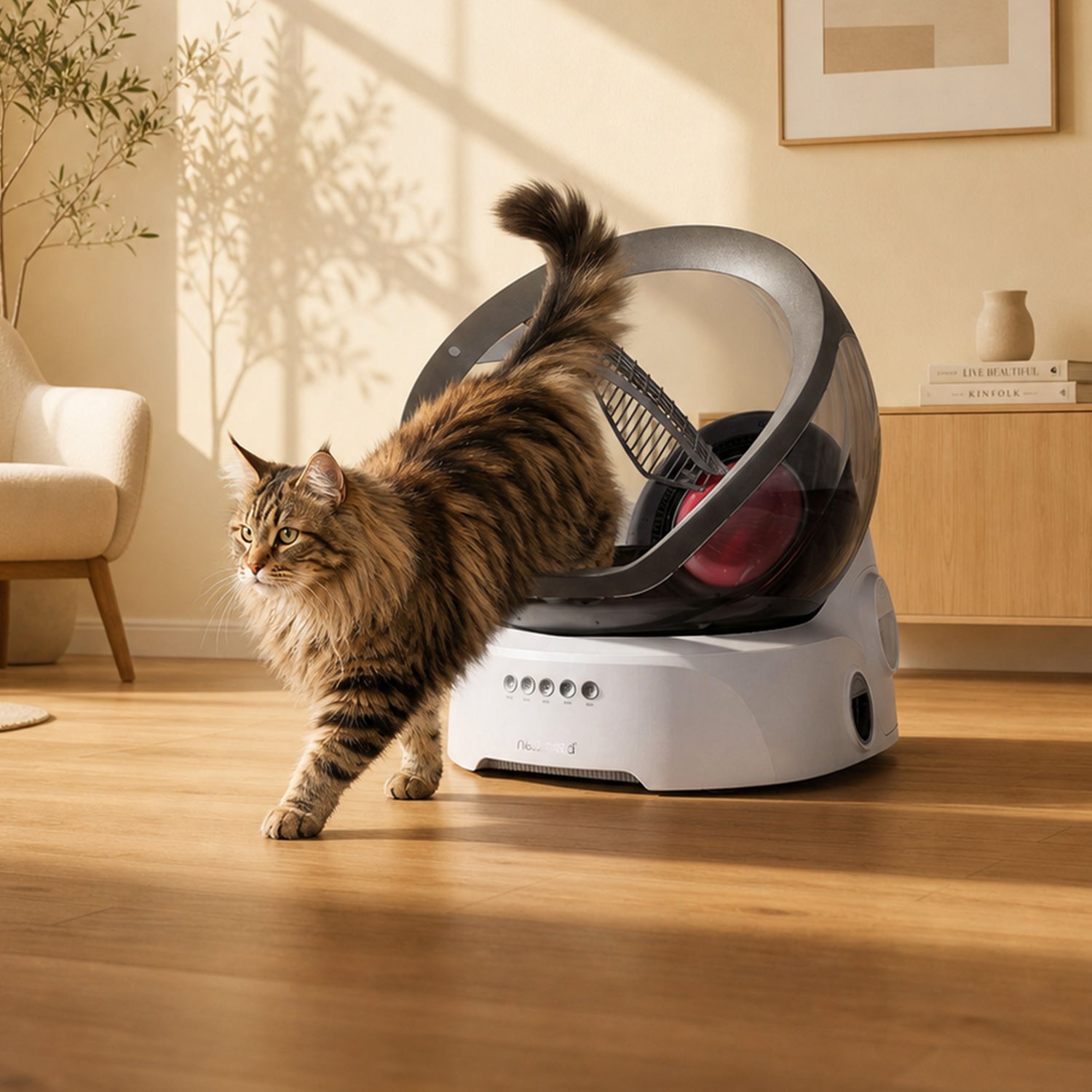
The Neakasa M1 Solution: 24/7 Digital Health Guard
The Neakasa M1 solves human limitations by using high-precision sensors to capture objective health data around the clock.
| Feature Name | What It Tracks | The Red Flag (Alert) ⚠️ | Potential Health Issue 🏥 |
|---|---|---|---|
|
1. Frequency Tracking (The CKD Detector) |
Compares daily visit counts against the cat's historical "baseline." |
+50% Increase |
|
|
2. Duration Analysis (The Blockage Guard) |
Measures exactly how long the cat stays inside the box. |
> 3-5 Minutes: Straining. |
|
|
3. Pattern Recognition (The Pain Detector) |
Detects visits clustering at odd hours (e.g., night spikes). |
Abnormal Clusters |
|
Health Monitoring Decision Matrix: What To Do?
Use this detailed checklist to interpret your cat's specific behaviors and take the right action.
| Frequency / Symptom | Context Clues | Status & Action |
|---|---|---|
|
2–5 times daily (Normal Baseline) |
Normal eating/activity | ✅ HEALTHY: Continue routine monitoring. |
| Recent diet change | ✅ NORMAL: Wait 3-5 days for adjustment. | |
| Increased thirst | ⚠️ MONITOR: Schedule vet visit within 1 week. | |
|
6–9 times daily (Elevated Risk) |
Recent stress/moving | ⚠️ STRESS: Improves in 1-2 weeks. Use pheromones. |
| Drinking lots of water | 📞 VET APPT: Possible Diabetes/Kidney Disease. | |
| Straining or crying | 🚨 URGENT: Possible UTI. Do not wait. | |
|
10–15+ times daily (Critical / High Volume) |
Straining / Pain signals | 🚨 EMERGENCY: Possible blockage. Go immediately. |
| Thirst + Lethargy | 🚨 URGENT (24h): Diabetes/CKD crisis. | |
|
0 times (24+ hours) (No Elimination) |
Refuses to use box | ⚠️ BOX ISSUE: Check cleanliness and location. |
| No recent surgery | 🚨 EMERGENCY: Life-threatening blockage. Go now. |
Special Populations: Multi-Cat & Senior Care
Managing litter box habits becomes complex in multi-cat homes or with aging pets. Here is how to handle it.
Multi-Cat Household Tracking
The Challenge: You find a clump of blood in the litter, but you have 3 cats. Who is sick?
-
Solution 1 (Manual): The "N+1" Rule.
Provide 4 boxes for 3 cats. Cons: Hard to maintain; still requires guessing. -
Solution 2 (Automated): ID Tracking.
The Neakasa M1 uses weight-based identification (94-98% accuracy) to create unique profiles. It tells you exactly: "Cat A's frequency increased 40% this week, while Cat B is stable."
Senior Cat Frequency (Age 10+)
As cats age, their "normal" shifts.
- Early Senior (10-15 years): Frequency often stays at 3-5 times. If it creeps up to 6+ times, request a blood panel (Creatinine/BUN) to screen for early Kidney Disease.
- Geriatric (15+ years): A slight increase to 3-6 times is acceptable due to aging kidneys. However, persistent frequency beyond this requires dietary changes (renal diet) or phosphate binders.
FAQs
Q1: Is it normal for my kitten to use the litter box immediately after eating?
A: Yes, this is the gastrocolic reflex. It is a normal physiological response where food entering the stomach triggers the colon to contract. It occurs in 60-70% of kittens and diminishes as they age.
Q2: My cat only poops every other day. Is this normal?
A: It is borderline normal, especially for sedentary cats or those on dry food. Dry kibble creates less waste than wet food. However, if the stool is hard, dry, or the cat strains, it is constipation. Increase water intake immediately.
Q3: Can stress affect litter box frequency?
A: Absolutely. Stress causes frequency changes in 68% of cats. Events like moving, new pets, or construction noise trigger the sympathetic nervous system, causing "stress polyuria" (frequent urination). This typically resolves in 2-4 weeks.
Q4: How accurate is automated litter box weight-based cat identification?
A: It is 94-98% accurate when cats have a weight difference of at least 1-2 lbs. For cats within 1 lb of each other, accuracy is 85-90%. The system captures 99.2% of all visits regardless of identification.
Q5: Should I track litter box frequency for a healthy cat?
A: Yes, baseline data is critical. Kidney disease detected at Stage 2 (via frequency changes) allows cats to live 2-3 years longer than if detected at Stage 4 (when physical symptoms appear).
Success Story: The Value of Data
Case Study: "Mittens" (11-Year-Old Tabby)
- Background: An indoor cat, seemingly healthy. Her owner noticed no behavioral changes, no lethargy, and no loss of appetite.
- The Silent Signal: While Mittens looked fine, her internal health was shifting.
- The Digital Alert: The Neakasa M1 app flagged a subtle but persistent trend: "Average visits increased from 4 to 7 daily over 10 days."
| Metric | Before Alert | During Alert | Change |
|---|---|---|---|
| Daily Visits | 4 times | 7 times | +75% Increase |
| Owner Observation | Normal | Normal | No visible change |
- The Action: Though skeptical because Mittens seemed "fine," the owner followed the app's warning and scheduled a vet visit.
-
The Diagnosis: Early Stage 2 Chronic Kidney Disease (CKD).
- Creatinine: 2.4 mg/dL (Normal: < 1.4)
- BUN: 52 mg/dL (High)
- The Outcome: Because the CKD was caught in Stage 2 rather than Stage 4, Mittens transitioned to a kidney-protective diet immediately. Her life expectancy extended from a predicted 18 months to 3+ years.
Owner Quote: "The automated monitoring didn't just clean the litter; it likely added two years to my cat’s life. I never would have noticed three extra trips to the box on my own."
Conclusion
Litter box frequency is not just about cleanliness—it is your cat’s most accessible vital sign. In a world where cats instinctively hide their pain, understanding the normal range and recognizing red flags is the difference between a treatable condition and a medical crisis.
Key Takeaways:
- ✅ Normal: 3-5 total uses daily.
- ⚠️ Monitor: 6-9 uses daily (Early disease sign).
- 🚨 Emergency: No urination for 24 hours (Blockage).
Neakasa M1 provides peace of mind through continuous, automated health tracking—detecting the subtle "data drifts" that save lives long before visible symptoms appear.


Leave a comment
This site is protected by hCaptcha and the hCaptcha Privacy Policy and Terms of Service apply.