
It’s 2:00 AM, and your cat is hunched in the litter box, straining in silence—but the litter stays dry. While it looks like constipation, it’s often a life-threatening urinary crisis.
Because cats instinctively hide pain, these issues can turn fatal within 24–48 hours. Recognizing subtle behavioral shifts is the key to lifesaving intervention.
In this guide, we break down the 12 signs you cannot afford to ignore and how technology can help you act before it's too late.
Urinary issues can become fatal within 24–48 hours. Early detection saves lives.
- Behavior: Straining, crying while peeing, excessive genital licking, or urinating outside the box.
- Urination: Blood in urine, frequent small trips (5+ daily), stays in box >3 minutes, or dribbling/leaking.
- Physical: Cloudy/foul-smelling urine, tense/painful belly, lethargy, and loss of appetite.
Why Urinary Problems Turn Deadly for Cats: The 48-Hour Countdown
Understanding feline anatomy explains the urgency. A cat's urethra—especially in males—is remarkably narrow, making it susceptible to rapid, life-threatening obstructions.
A cat’s urethra is only about 1–2mm wide in some areas. It can be easily blocked by inflammatory debris, crystals, or mucus plugs. When a blockage occurs, the bladder swells, and toxins that should be excreted begin to re-enter the bloodstream.
The Physiological Timeline of a Crisis
- ✅ 0–24 hours: 95% recovery rate with antibiotics/anti-inflammatories alone
- ⚠️ 24–48 hours: Requires catheterization + hospitalization; 30% develop chronic kidney disease
- ❌ 48+ hours: Survival rate drops below 50%; survivors often need lifelong management
This isn't alarmism—it's physiology. Every extra minute your cat spends straining in the litter box could be counting down to organ failure.
The Top 12 Warning Signs of Feline Urinary Issues
While every cat is different, urinary distress typically manifests through a combination of behavioral and physical symptoms.
Sign #1 – Straining in the Litter Box With Little or No Output
You'll notice your cat assuming the urination posture repeatedly but producing minimal or no urine. A single visit may last 5–15 minutes (normal: 30–180 seconds), with visible tension, tail twitching, or abandoned attempts mid-stream.
Clinical significance:
- 40–50% of cases: Urinary tract infection (UTI)
- 30–35%: Crystalluria (urinary crystals)
- 20–25%: Feline idiopathic cystitis (FIC)
- 5–10%: Partial or complete obstruction (EMERGENCY)
Critical distinction: Brief straining occasionally is normal. But persistent straining (>3 minutes) with little/no output—especially in male cats—requires same-day veterinary evaluation. Never confuse this with constipation; urinary blockage demands entirely different (and urgent) intervention.
Sign #2 – Blood in Urine (Hematuria)
You spot pink-tinged, red, or brownish urine in the litter box—or blood droplets on your cat's fur or nearby surfaces. This visible blood (hematuria) signals bladder or urethral irritation.
Severity spectrum:
| Severity | Appearance | Cause | Urgency |
|---|---|---|---|
| Trace | Slight pink tint | Minor irritation, crystals | 48-hour vet visit |
| Mild | Visible blood streaks | UTI, early cystitis | 24-hour vet visit |
| Moderate | Noticeably red urine | Active UTI, stones | Same-day vet visit |
| Severe | Heavily blood-colored | Severe infection, trauma | Emergency vet |
Important caveat: Absence of blood does not rule out serious disease. Up to 30% of obstructed cats show no visible hematuria early on.
Sign #3 – Frequent Urination (5–6+ Times Daily)
Your cat visits the litter box 5–6+ times per day (normal: 2–4), often producing only small volumes each time. Visits may cluster within short periods or occur at unusual hours (e.g., repeatedly overnight).
Progression pattern:
- Mild (4–5 visits): Stress, diet change—monitor 3–5 days
- Moderate (6–8 visits): Early kidney disease, diabetes, active cystitis—vet this week
- Severe (9–15+ visits): Advanced kidney disease, uncontrolled diabetes—vet within 24 hours
- Critical (15+/day + no output windows): Possible partial blockage—EMERGENCY
Differentiate from litter aversion: True polyuria shows consistent small volumes; litter aversion shows avoidance behavior (sniffing then leaving box, refusing to bury waste).
Sign #4: Urinating Outside the Litter Box (New Behavior)
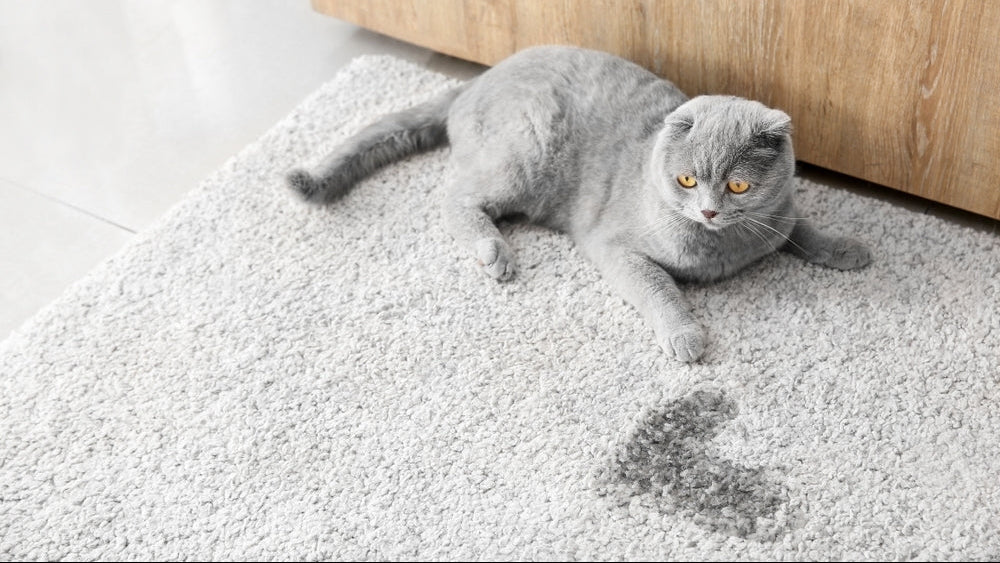
Your previously reliable cat suddenly leaves urine puddles on beds, carpets, or corners. This isn't "spite"—it's often a medical cry for help.
Critical distinction:
| Type | Pattern | Likely Cause | Solution |
|---|---|---|---|
| Medical | Sudden onset, correlates with frequent box visits | UTI, kidney disease, urgency | Veterinary treatment |
| Litter aversion | Avoids box entirely, sniffs then leaves | Dirty box, wrong litter, poor location | Environmental adjustment |
| Behavioral | Spraying (backing up, tail quivering) | Territorial stress | Behavior modification |
Urgency rule: Sudden onset + other urinary signs = vet within 24 hours. Gradual onset may be behavioral—but still warrants vet check within 3–5 days to rule out medical causes.
Sign #5 – Crying or Vocalizing During Urination
Your cat emits sharp yowls, meows, or hisses while in the litter box—especially mid-stream or after attempting to urinate. This is a direct pain signal (dysuria).
Pain-source correlation:
- UTI: Moderate pain → short yowls during/after urination
- Crystals: High pain → repeated distressed cries
- Blockage (EMERGENCY): Severe pain → continuous vocalization + visible distress
- Cystitis: Mild-moderate → occasional meowing
Action guide: Isolated vocalization → same-day vet appointment. Repeated throughout the day → urgent vet call within hours. Continuous crying + no urine output → EMERGENCY—go immediately.
Sign #6 – Excessive Genital Licking
Your cat spends 5+ minutes daily obsessively grooming his genital area, sometimes causing dampness, redness, or hair loss around the urethral opening. This is self-soothing behavior triggered by post-void discomfort.
Interpretation guide:
- Licking only after urination → post-void irritation (vet within 24 hours)
- Continuous licking throughout day → persistent inflammation (urgent vet)
- Licking + swelling/discharge → active infection (same-day vet)
Risk multiplier: Combined with straining or blood in urine, this strongly suggests UTI or crystalluria requiring prompt treatment.
Sign #7 – Lethargy and Decreased Appetite
Your cat sleeps excessively, refuses favorite foods, grooms less, and withdraws socially. While not a direct urinary sign, this indicates systemic involvement—infection has likely spread beyond the bladder.
Dangerous combinations:
- Lethargy + frequent urination + poor appetite → kidney involvement or systemic infection (urgent vet within 24 hours)
- Lethargy + vomiting + urinary signs → possible uremic crisis (EMERGENCY)
- Lethargy + fever + straining → pyelonephritis (kidney infection) (EMERGENCY)
When urinary symptoms pair with whole-body illness signs, disease severity escalates immediately.
Sign #8 – Strong Ammonia Odor in Urine
Urine smells overwhelmingly of ammonia—noticeable even in well-ventilated rooms and intensifying rapidly after elimination.
Odor interpretation:
- Strong ammonia: Dehydration, early kidney dysfunction, concentrated urine (vet within 3 days)
- Sweet/fruity: Possible diabetes/ketoacidosis (urgent vet within 24 hours)
- Foul/putrid: Serious bacterial infection or advanced kidney disease (urgent vet within 24 hours)
- Metallic: Blood or crystal presence (vet within 24 hours)
One-time strong odor after exercise may be normal dehydration. Persistent or suddenly changed odor warrants investigation.
Sign #9 – Cloudy or Discolored Urine
Urine appears turbid/cloudy instead of clear pale yellow, or shows abnormal colors (brown, orange, dark amber).
Appearance guide:
| Appearance | Pattern | Likely Cause |
|---|---|---|
| Cloudy white | Crystals, pus, active infection | Vet within 24 hours |
| Dark amber/brown | Dehydration, blood breakdown, kidney issues | Vet within 24 hours |
| Red/pink | Fresh blood (hematuria) | Vet within 24 hours |
| Orange/yellow | Bilirubin (liver involvement) | Vet within 3 days |
| Very pale/clear | Loss of kidney concentrating ability | Vet within 1 week |
Urgency multiplier: Cloudy urine + straining OR blood = same-day vet visit.
Sign #10 – Prolonged Time in Litter Box (>3 Minutes)
A single elimination attempt lasts 3–10+ minutes (normal: under 3 minutes). Your cat may stand up, sit down repeatedly, or exit and return within minutes.
Duration risk scale:
- <1 minute: Normal
- 1–3 minutes: Normal variation
- 3–5 minutes: Borderline—monitor closely
- 5–10 minutes: Abnormal—vet within 24 hours
- 10+ minutes: Severe abnormality—urgent vet same day
- Continuous straining + zero output: COMPLETE BLOCKAGE—EMERGENCY NOW
This subtle sign is often missed visually but detectable via smart litter boxes that flag visits >3 minutes—enabling intervention 24–48 hours earlier than waiting for obvious symptoms.
H3: Sign #11 – Abdominal Pain or Tension
Your cat arches his back excessively ("praying position"), flinches when you touch his lower abdomen, avoids jumping/climbing, or holds a hunched posture.
Pain assessment:
- Mild flinching when touched → minor irritation (vet within 24 hours)
- Actively avoids abdominal contact → moderate inflammation (same-day vet)
- Vocalizes/cowers when touched → severe pain (urgent vet)
- Hard, distended abdomen + pain → possible bladder rupture risk (EMERGENCY)
Abdominal pain combined with urinary signs strongly suggests bladder distension from partial blockage or kidney infection.
H3: Sign #12 – Urinary Incontinence or Leakage
Urine leaks between litter box visits—damp spots where your cat sleeps, dribbling while walking, or inability to reach the box in time.
Leakage types:
- Urgency incontinence: Can't hold urine long enough to reach box (mild)
- Overflow incontinence: Bladder overfull from partial blockage → leaks around obstruction (HIGH RISK)
-
True incontinence: No voluntary control (neurological or end-stage disease)
Critical insight: Overflow incontinence is dangerously misleading—it looks like "too much urine" when actually the bladder can't empty properly. Combined with straining or lethargy, this requires immediate veterinary attention.
Decision Tree: How Many Signs = What Urgency Level?
└─ Monitor for 3–5 days; call vet if it persists.
└─ Vet appointment SAME DAY.
- No urination for 24+ hours
- Straining with zero output
- Continuous crying + inability to urinate
Real Cases: How Timing Changed Three Cats' Fates
Below are three common scenarios that demonstrate the critical importance of early detection.
Case #1: “Whiskers” - Classic UTI Presentation
- Day 1: Owner noticed 6–7 litter box visits (normally 3)
- Day 2: Slight pink tint in urine observed; vet appointment scheduled immediately
- Day 3: Urinalysis confirmed mild UTI; 7-day antibiotic course prescribed
- Outcome: Full recovery in 5 days; zero complications; total cost ~$150
Lesson: Catching signs at Stage 1 enabled simple, low-cost treatment.
Case #2: “Tiger” - Delayed Recognition
- Day 1-3: Tiger straining occasionally; owner thinks constipation
- Day 4-6: Blood in urine observed; still no vet visit
- Day 7: Cat becomes lethargic, refuses food; emergency vet visit
- Diagnosis: Advanced UTI with possible kidney involvement
- Treatment: IV fluids, aggressive antibiotics, 2-week recovery
Lesson: Early intervention prevents complications
Case #3: “Mittens” - Blockage Emergency
- Hour 0: Mittens strains in box; no urine produced
- Hour 1: Continuous yowling; cat clearly in distress
- Hour 2: Owner calls emergency vet
- Diagnosis: Complete urinary blockage (male cat risk)
- Emergency treatment: Catheterization, sedation, urine unblocking
- Outcome: Survived; prevented death
Lesson: Straining without output = EMERGENCY
Neakasa M1 Plus Advantage: Catching Problems with AI Precision
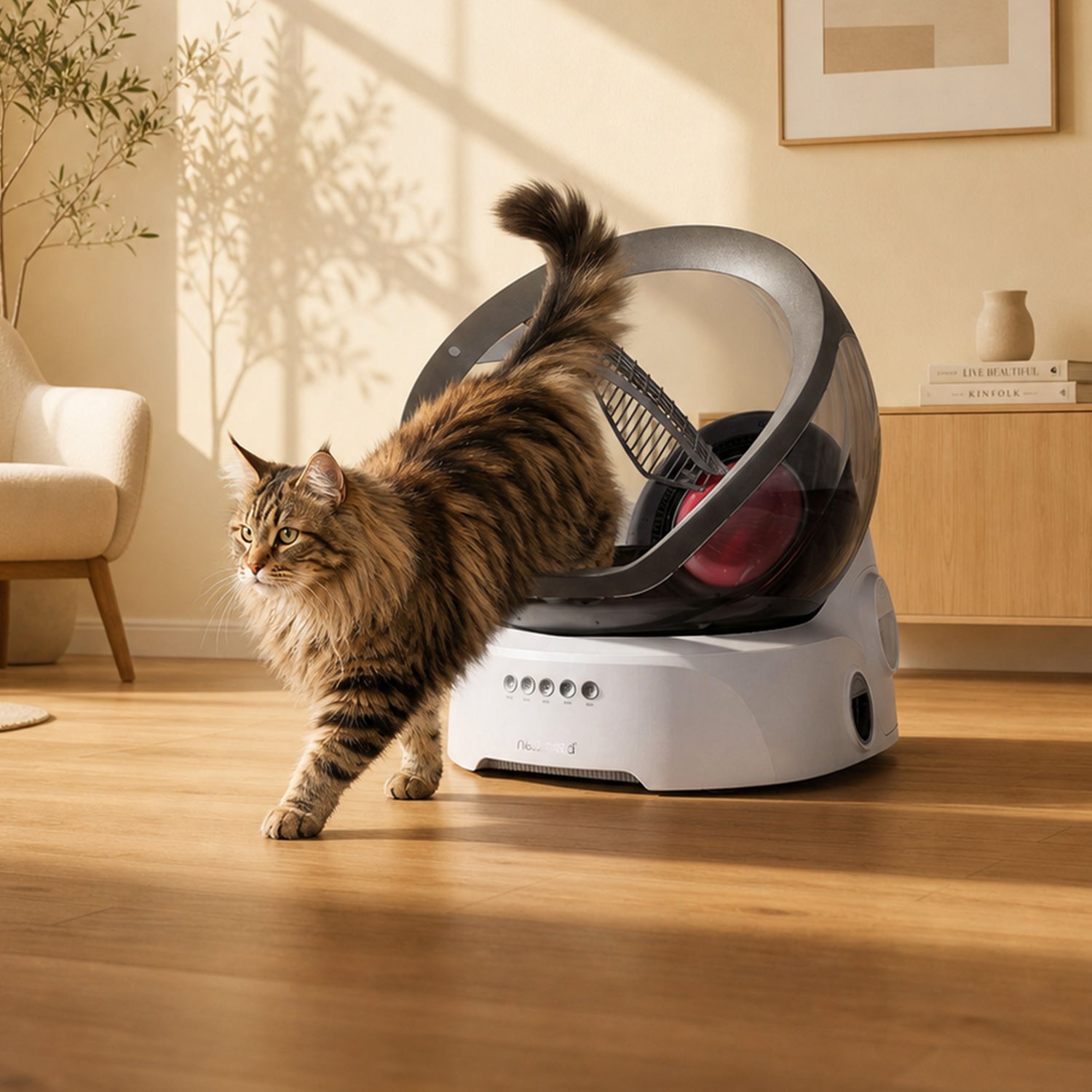
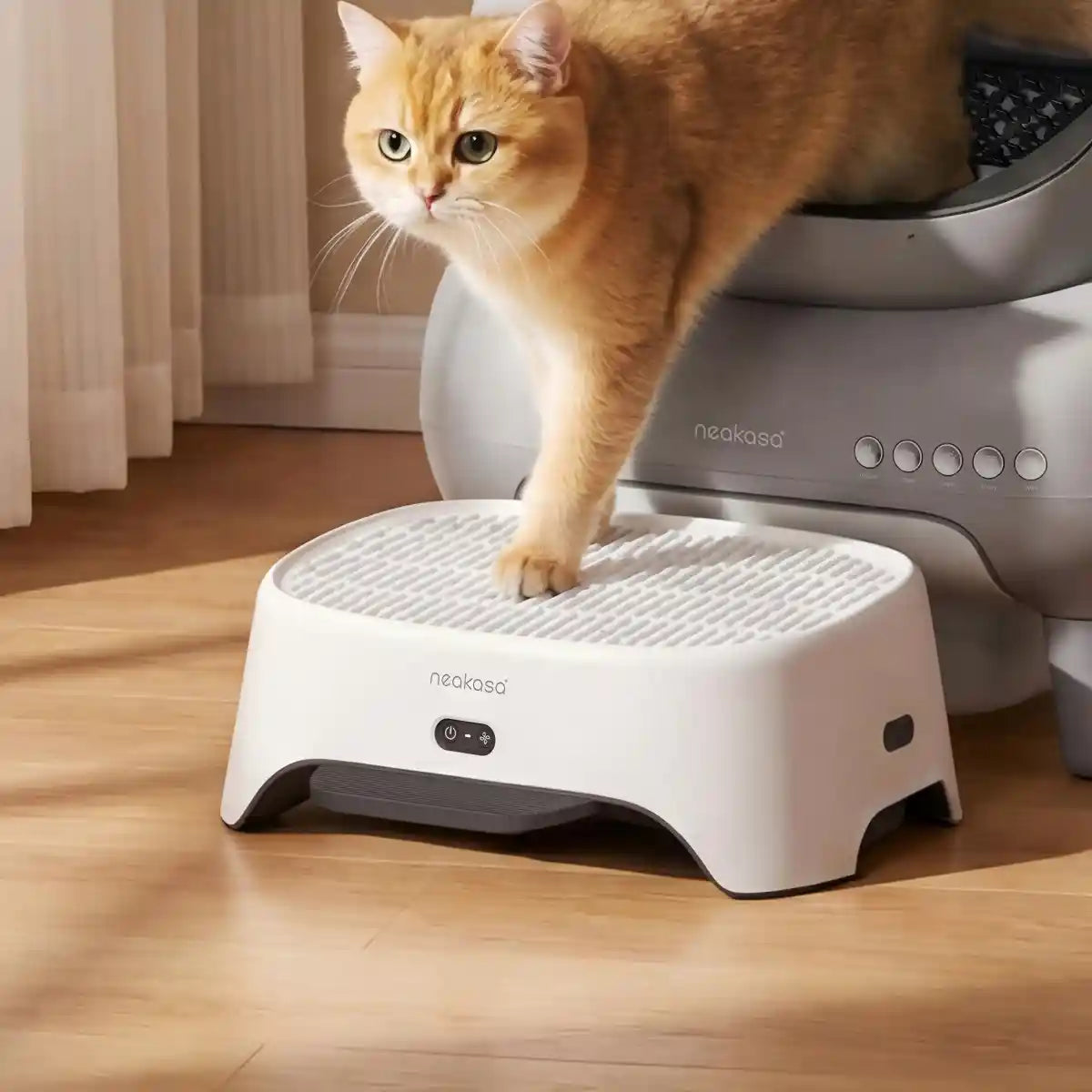
Smart systems like the Neakasa M1 Plus act as a 24/7 digital health monitor, identifying the "silent" shifts in behavior that human observation often misses until Day 3 or 4.
How Automated Monitoring Outperforms Manual Observation
While a pet owner typically notices symptoms between Days 2 and 5, the Neakasa M1 Plus identifies anomalies as early as Day 1.
| Detection Method | Symptom | Detection Time | Intervention Time | Success Rate |
|---|---|---|---|---|
| Visual observation | Visible straining/crying | Day 2-4 | Delayed | Moderate |
| M1 Duration Alert | Visit duration >3 min alert | Day 1-2 | Early | High (95%+) |
| M1 Frequency Alert | Visit count +50% | Day 0-1 | Immediate | Prevents progression |
Real-World Comparison: The 3-Day Recovery Difference
- Without Smart Monitoring: The owner notices "heavy straining" on Day 3 → Appointment on Day 4 → Starting antibiotics on Day 5. The cat suffers longer, and the risk of a life-threatening blockage increases.
- With Neakasa M1 Plus: The app sends a "Duration Alert" on Day 1 → Owner calls the vet immediately → Treatment begins on Day 2.
- The Result: 3-day earlier intervention leads to a 50% faster recovery and significantly lower veterinary costs.
Conclusion: Know the Signs, Act with Confidence
Recognizing the 12 warning signs is the difference between a simple antibiotic course and a traumatic medical crisis. Every minute counts.
Your Action Plan for Feline Urinary Health
- Memorize the Signs: Know what distress licking and vocalizing look like.
- Daily Checks: If using a manual box, inspect clumps for size and blood daily.
- Trust the Data: If your Neakasa M1 Plus flags a behavior change, call your vet immediately.
By combining your awareness of feline behavior with the precision of the Neakasa M1 Plus, you provide your cat with the strongest possible defense against urinary disease.


Leave a comment
This site is protected by hCaptcha and the hCaptcha Privacy Policy and Terms of Service apply.