
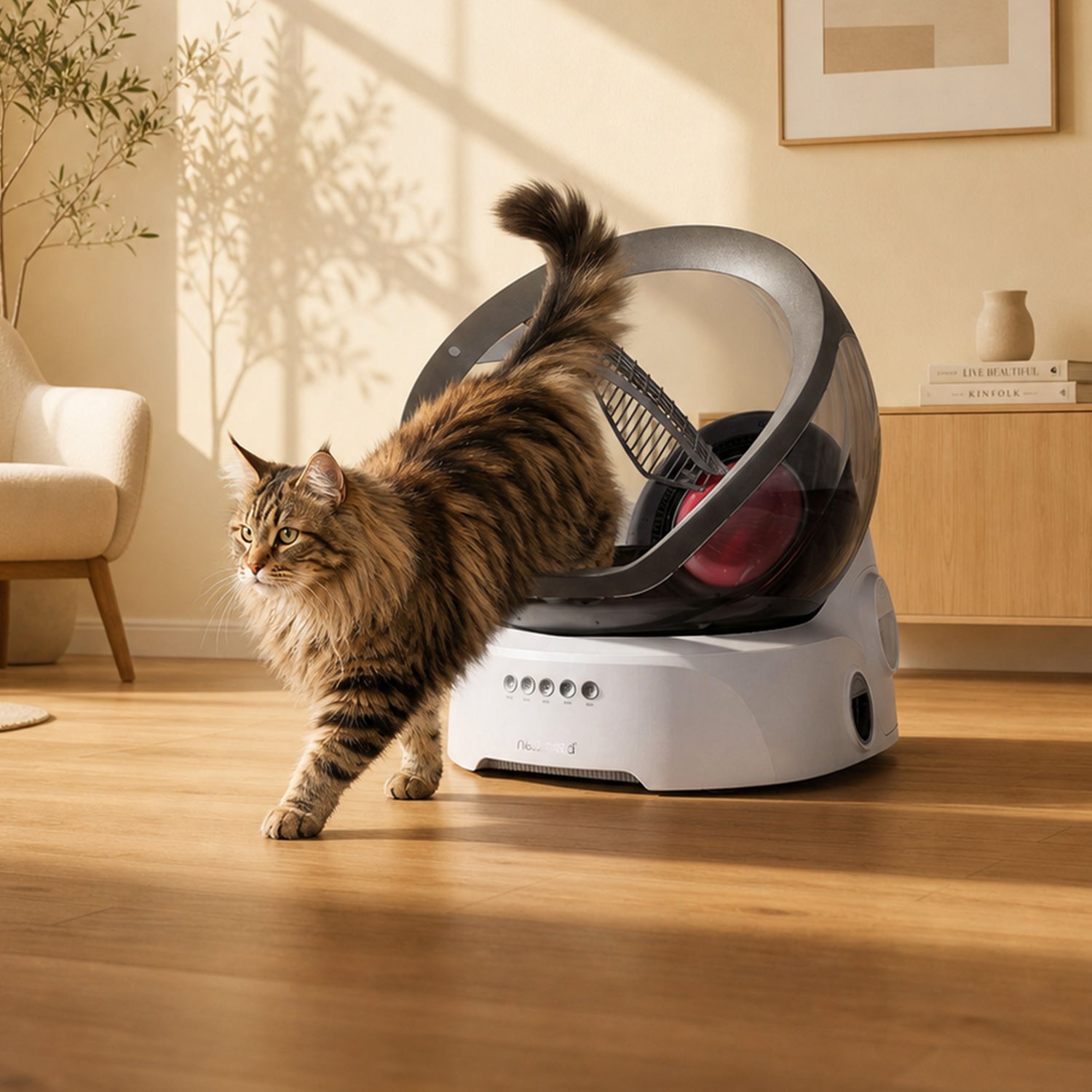
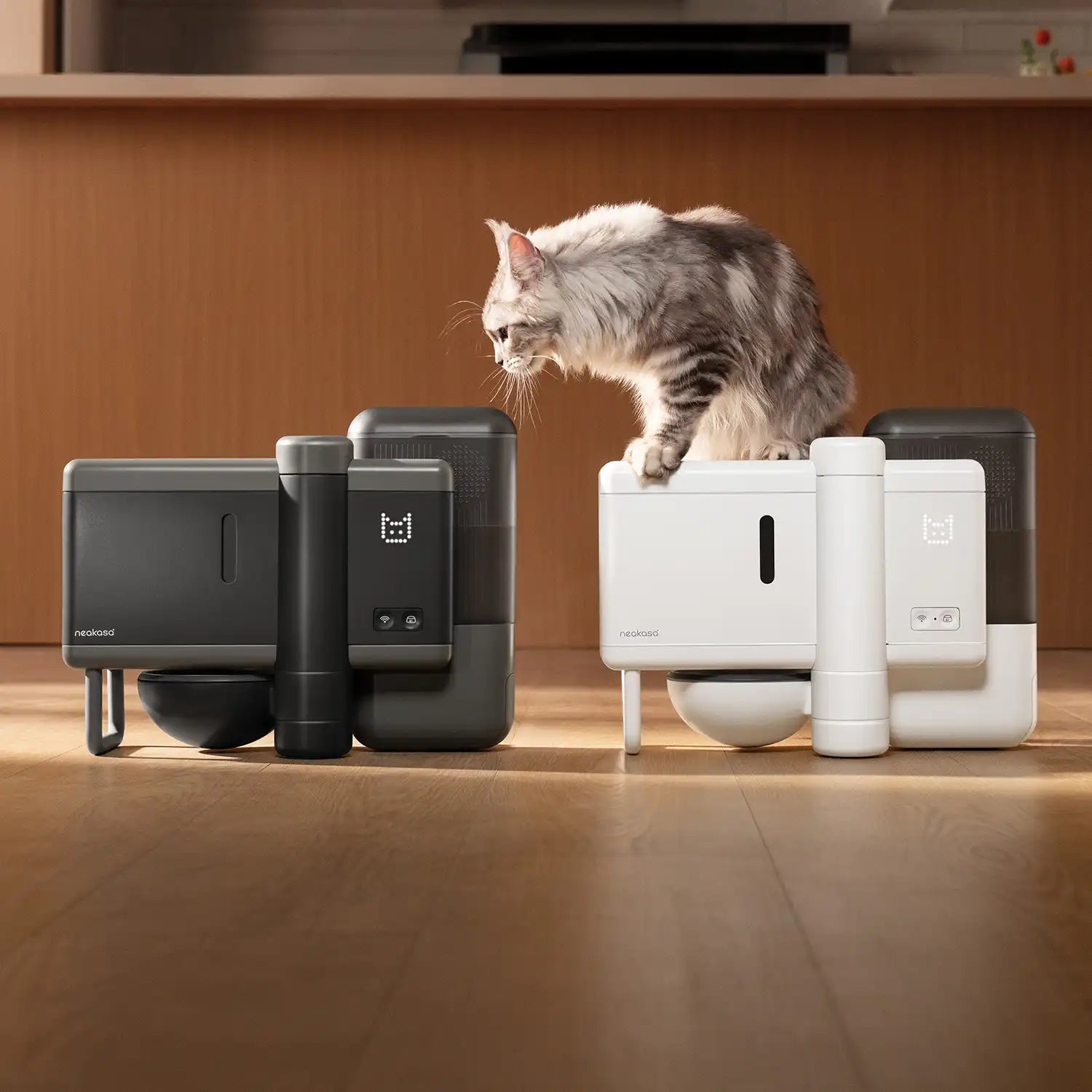
For cat owners, keeping the litter area fresh is a daily challenge. Even with regular scooping, odors and dust often linger. A litter box air purifier removes ammonia, sulfur compounds, and dander at the source.
This guide reviews eight top cat litter box air purifiers, comparing odor control, noise, and maintenance to help you find the right one.
What Is a Cat Litter Box Air Purifier and Why You Need One
A cat litter box air purifier is a compact device made to keep the area around your litter box clean and odor-free.
It works by drawing in nearby air, capturing odor molecules like ammonia and hydrogen sulfide, and filtering out the dust and dander that cats scatter while digging.
Why You’ll Love Having One
- Stops Smells Before They Spread: It removes odors right at the source, keeping your home fresh no matter where the litter box is placed.
- Keeps the Air Healthier: HEPA filter traps fine dust and allergens, helping you and your cat breathe easier.
- Perfect for Multi-Cat Homes: More cats mean more litter use — and more odor. A purifier keeps the air balanced and clean.
- Better Than Quick Fixes: Unlike candles or sprays that only hide smells, an air purifier actively removes them from the air.
- Quiet and Low Maintenance: Most models operate silently and require only occasional filter changes, making them easy to live with every day.
Key Features to Consider Before Buying a Litter Box Air Purifier
Before purchasing your best air purifier for a cat litter area, it’s wise to evaluate key specs and features so the model truly fits your space and use case.
Features 1: Filtration Technology (HEPA, Carbon, UV)
High-efficiency particulate air (HEPA) filters remove fine particles like litter dust and dander. Activated carbon filters absorb gaseous odours (ammonia, sulphur compounds).
Some models add UV or photocatalytic modules for microbial control. A combination of HEPA + carbon is most relevant for Odor removal from cat litter.
Features 2: Room Size and Coverage Area
The purifier’s rated coverage (CADR or equivalent) must match the space around the litter box.
If the area is large or open plan, a unit with higher airflow and coverage is needed. A mismatch may result in ineffective Odor control.
Features 3: Noise Level and Maintenance
Since the device may be located near a cat’s litter box (possibly near human-occupied spaces), look for low noise (particularly in “quiet” mode) and easy maintenance of filter modules.
Filters for pet environments often need more frequent replacement, so ease of service matters.
Neakasa Airstep – Best High-Performance Odor Control System
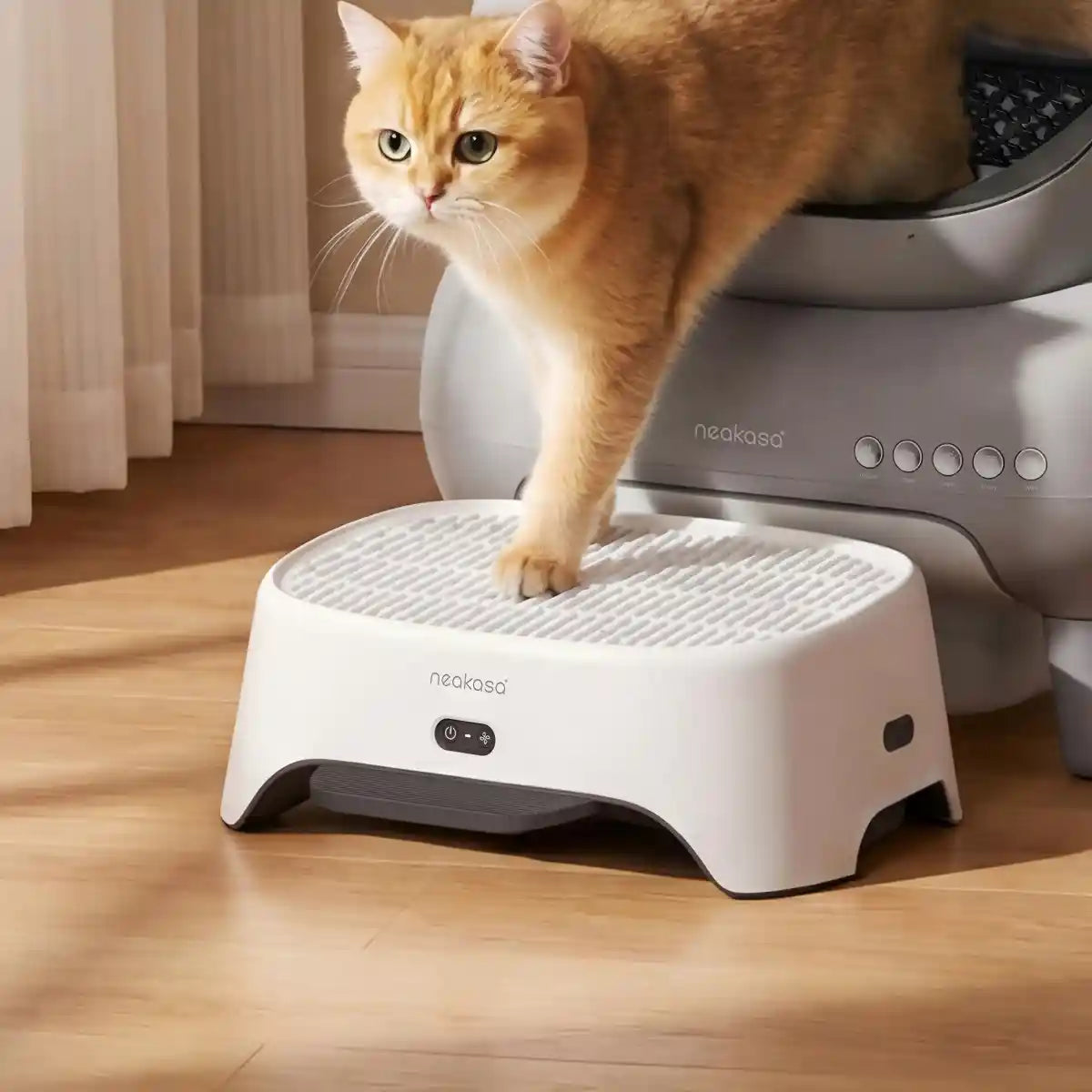
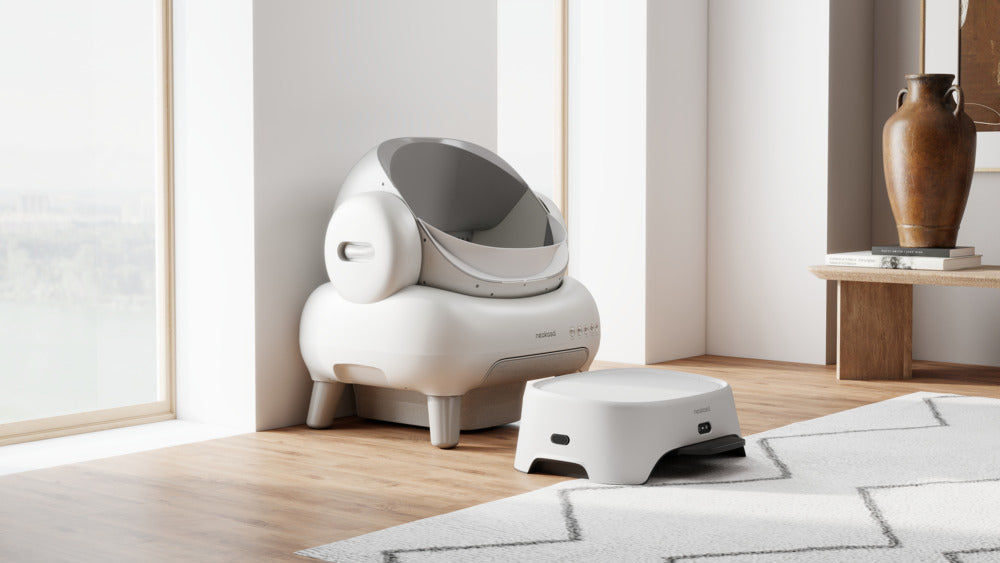
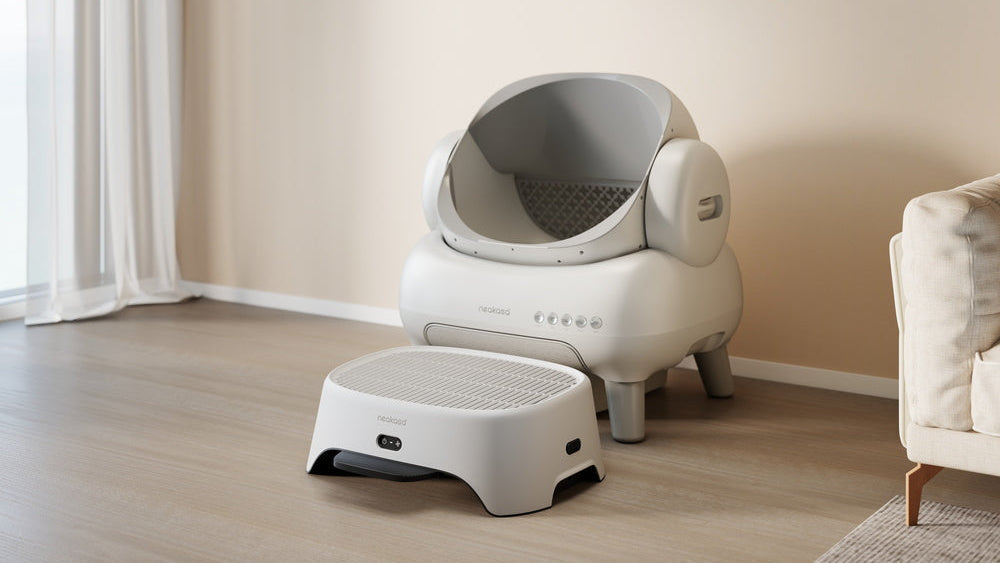
The Neakasa AirStep is a specialized 2-in-1 solution combining a litter trapping step with a high-powered odor purifier. Unlike standard air purifiers that dilute smells across a room, the AirStep creates an "Odor Firewall" directly at the litter box exit.
Packed with 230g of high-density activated carbon, it targets and neutralizes stubborn litter box gases (like ammonia) at the source before they can spread.
📘 Specifications (Click to view)
- Filtration Power: 230g Activated Carbon (High Iodine Value: 800mg/g)
- Performance (CADR): 127 m³/h (Sleep) to 216 m³/h (Turbo)
- Control: One-touch Manual Control (3 Speeds)
- Litter Management: Built-in hidden litter catch tray
- Size & Weight: 17.4" × 12.6" × 6.5" · 6.0 lbs (Net)
| Pros | Cons |
|---|---|
|
|

- 230g Activated Carbon helps eliminate ammonia odors.
- Honeycomb grate effectively traps litter off paws.
- 20dB Ultra-Quiet fan ensures your cat is never scared.
- 3 adjustable speeds balance powerful airflow and silence.
- Universal 17.4" width pairs with Neakasa M1 & most boxes.
Maintenance Tips for Odor-Free Cat Areas
Keeping the litter area fresh goes beyond using an air purifier. Proper maintenance ensures lasting odor control and a healthier home.
- Scoop Daily: Remove waste at least once a day to prevent ammonia buildup.
- Replace Litter Regularly: Change all litter every 7–10 days, depending on usage.
- Clean the Box Weekly: Wash with mild soap and warm water; avoid strong detergents.
- Use a Litter Mat: Helps trap scattered litter and reduces dust.
- Ventilate the Area: Keep the space open or near a window for better air circulation.
- Check Filters Often: Replace or clean purifier filters as recommended.
- Choose Odor-Absorbing Litter: Combine the purifier with quality clumping litter for best results.
FAQs about Litter Box Air Purifiers
Q1. Do air purifiers actually help with litter smell?
A1. Yes, but only if they use Activated Carbon. Standard HEPA filters trap dust, but you need carbon to absorb gases like ammonia.
Q2. What is the best filter type for cat odors?
A2. High-density Activated Carbon is essential. It physically traps odor molecules, whereas standard filters simply circulate the smell.
Q3. Can one purifier cover multiple litter boxes?
A3. It's difficult. For the best results, we recommend placing a dedicated unit near each high-traffic box to tackle the odor source directly.
Q4. Where is the best place to put the purifier?
A4. As close as possible. Ideally, place it at the litter box exit (like the Neakasa AirStep) to intercept smells before they drift into the room.
Q5. How often should I change the filters?
A5. Every 2–3 months. Litter box odors are concentrated, so carbon filters saturate faster than they would in a normal living room.
The Bottom Line
For a fresh home, prioritize carbon capacity and proximity to the source. The Neakasa AirStep excels at both. It’s a 2-in-1 solution that stops litter tracking and neutralizes ammonia instantly at the exit—saving you space, money, and the hassle of bad odors.


Leave a comment
All comments are moderated before being published.
This site is protected by hCaptcha and the hCaptcha Privacy Policy and Terms of Service apply.