
Is wet food better for cats? It can be a useful choice when you want to add more water to your cat’s meals. But moisture is only one part of choosing a suitable diet. The food’s nutritional balance, your cat’s health and the amount they eat also matter. A cat doing well on dry food does not automatically need a complete change.
This guide compares wet and dry cat food and explains the pros and cons of each. It also helps you choose a feeding routine that suits your cat’s needs and your household’s schedule.
Wet food provides more dietary water and may suit cats that prefer softer meals. A complete and balanced dry food can also meet nutritional needs. Neither format is automatically best for every cat. Choose food that suits your cat’s life stage and health needs, and measure each portion. Always provide fresh drinking water, whether you feed wet food, dry food or a mix of both.
Wet vs Dry Cat Food at a Glance
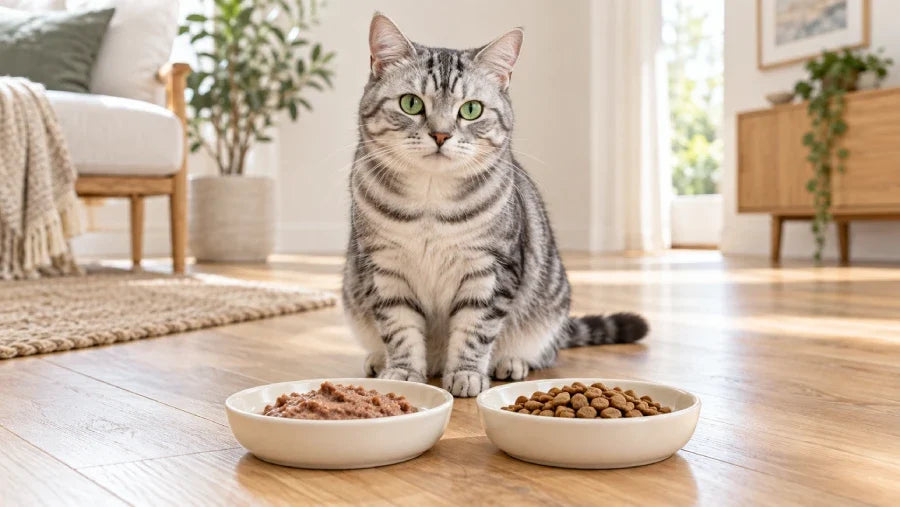
Wet cat food includes canned food, pouches and trays. “Canned” describes the packaging, not a separate nutritional standard. Dry cat food usually means kibble. Both categories contain many recipes, so compare specific products rather than judging everything by format.

| Factor | Wet food | Dry food | What to check |
|---|---|---|---|
| Dietary moisture | High moisture content | Low moisture content | Moisture information on the label |
| Calories | Often fewer calories per gram | Usually more calories per gram | Kcal per serving and actual portion size |
| Texture | Pâté, chunks, shreds or gravy | Firm pieces in different shapes | Your cat’s preference and eating comfort |
| Opened storage | Unused portions need prompt refrigeration | Usually stored in a cool, dry place | Package storage instructions |
| Daily cost | Often higher | Often lower | Cost of the daily ration, not the package |
| Convenience | Requires timely serving and cleanup | Works with suitable puzzle or timed feeders | Food compatibility and cleaning needs |
Cornell describes dry food as containing about 6–10% water and canned food as at least 75% water. Actual products vary. Check their labels instead of assuming all wet foods have the same moisture content.
Wet and Dry Cat Food Pros and Cons
Both formats offer practical benefits. Their drawbacks often become easier to manage once you know what to plan for.
Wet Cat Food
Pros
- Adds water through meals, making food a useful source of daily moisture.
- Offers soft textures that some cats find easier or more appealing to eat.
- Comes in different consistencies, giving you options if your cat has strong preferences.
Cons
- Often costs more for a full day’s feeding.
- Needs more attention to opened-food storage and leftovers.
- Can leave unused portions when the package size does not match your cat’s meals.
Dry Cat Food
Pros
- Is often a more affordable everyday option.
- Is convenient to weigh and divide into several meals.
- Can work with compatible puzzle toys and automatic feeders.
Cons
- Supplies relatively little water through food.
- Can be easy to overportion because a small quantity may contain substantial calories.
- Makes individual intake harder to track when several cats share a constantly refilled bowl.
When Wet Food May Be a Better Fit

More Water in Each Meal
Wet food can contribute water as your cat eats. This can help your cat get more water through food, especially if they already enjoy wet meals.
However, the water bowl tells only part of the story. A cat eating moisture-rich food may drink differently from one eating kibble. Consider food and drinking water together rather than judging hydration only by how often you see your cat drink.
Wet food alone does not guarantee protection against kidney disease, urinary crystals or constipation. If your cat has a diagnosed condition, ask your veterinarian which diet is appropriate. A therapeutic diet involves more than its water content.
Texture and Food Preferences
Some cats readily eat pâté but leave chunks behind. Others prefer pieces in gravy. Start with a small quantity of a suitable food so you can observe what your cat actually eats before buying a large supply.
A soft texture may help a cat with chewing difficulties, but dental pain needs assessment. Likewise, a new loss of appetite should not simply be treated as pickiness. Changing flavors is not a substitute for understanding why eating has become difficult.
Portion Size and Calorie Awareness
Compare kcal per serving rather than judging by bowl size. A large-looking wet meal and a small dry portion can provide similar energy. Wet food can still be overfed, especially when treats and dry snacks are added throughout the day.
Is Dry Cat Food Bad for Cats
Not inherently. The useful question is whether a particular dry food, served in an appropriate amount, suits your cat. Food format alone cannot tell you whether the diet is nutritionally adequate.
Where Dry Food Can Be Practical
Dry food can make measured feeding straightforward. You can weigh the day’s allowance, divide it into meals and use some in a compatible puzzle feeder. If different household members feed the cat, a premeasured daily container can also help prevent accidental extra servings.
Automatic feeders can support scheduled portions, but check the device’s food requirements. Kibble size and shape may affect compatibility. Check how much food the feeder dispenses per portion. It may differ from the serving size listed on the food label.
What Owners Need to Monitor
Watch intake rather than repeatedly topping up the bowl. Refilling without measuring makes it difficult to know how much your cat has eaten. In a multi-cat home, an empty shared bowl does not show which cat ate the food.
Keep drinking water available and discuss changes in appetite, weight or drinking with your veterinarian. Avoid assuming those changes are simply consequences of eating dry food.
Ordinary kibble should not be treated as a replacement for dental care. Dental benefits depend on the product and supporting evidence. The Veterinary Oral Health Council accepts specific diets and products that help control plaque or tartar. This acceptance applies only to those products, not to all dry cat food.
How to Choose a Complete and Balanced Cat Food
Read the Nutritional Adequacy Statement
AAFCO sets nutritional standards for cat food. When buying wet or dry cat food in the US, check the label for “complete and balanced.” Make sure the nutritional adequacy statement also matches your cat’s life stage. Check this statement rather than an “AAFCO-approved” claim, as AAFCO does not approve individual pet foods.
Compare the Whole Diet
Look beyond the first ingredient or attractive packaging. Check the calorie content, feeding directions and manufacturer’s contact information. WSAVA also recommends considering the company’s formulation expertise and quality-control processes.
Do not directly compare protein percentages on wet and dry labels without accounting for moisture. The different water content changes the basis of that comparison. Ask the manufacturer for comparable nutrient information if needed.
Finally, use the label’s feeding guide as a starting point. Review your cat’s actual intake and body condition with your veterinarian, then adjust the plan when appropriate.
Should I Feed My Cat Wet or Dry Food
Start with your cat’s needs, then choose a routine you can maintain. Being an indoor cat does not automatically determine the answer. Age, body condition, eating comfort, food preferences and health history all deserve consideration.
| Situation | What matters most | Feeding approach to discuss |
|---|---|---|
| Healthy adult with stable weight | Nutritional adequacy and consistent intake | Suitable wet, dry or mixed feeding with measured portions |
| Cat that appears to drink little | Total water intake, including food | Whether adding a suitable wet meal would be useful |
| Cat with chewing difficulty | Cause of discomfort and ability to eat | Veterinary assessment and an appropriate texture |
| Multi-cat household | Each cat’s intake and access to food | Separate feeding spaces and individually measured meals |
| Cat on a therapeutic diet | The purpose and formulation of the prescribed diet | Approved food formats and any permitted combinations |
Bring the food label and a brief feeding record to the appointment. Include treats, toppers and food given by other family members. This makes the discussion more concrete than comparing “wet” and “dry” in isolation.
Can You Feed Both Wet and Dry Food
Yes. Mixed feeding can fit households that want wet meals alongside the convenience of measured kibble. Cats do not generally need both formats simply for variety.
The main planning step is to count everything together. A wet meal should replace some of the existing daily calories rather than being added on top of the full dry ration. Use each food’s label to calculate its contribution.

Here is a simple layout to fill in with your cat’s agreed feeding plan:
| Feeding time | Amount to record | Calories to record |
|---|---|---|
| Morning | Wet food served in grams or part of a can | Kcal in that portion |
| Later meal or meals | Measured dry food in grams | Kcal in the total dry portion |
| Treats and extras | Every additional serving | Combined extra kcal |
| Daily total | All food offered, with leftovers noted | Total daily kcal offered |
Check with your vet before adding other foods to a therapeutic diet. These additions may reduce the diet’s effectiveness.
Making Your Choice Work at Home
Introduce a new food gradually, following your veterinarian’s or the manufacturer’s guidance. Measure portions and observe your cat’s acceptance before changing the whole routine.
Wash bowls and serving utensils after use. Promptly refrigerate or discard unused canned or pouched food, and follow the label’s instructions. Store dry food in its original bag in a cool, dry place. A timed feeder does not keep food cold. How long food can safely sit out depends on the product and room temperature.
Make Scheduled Wet Meals Easier with Neakasa Riko
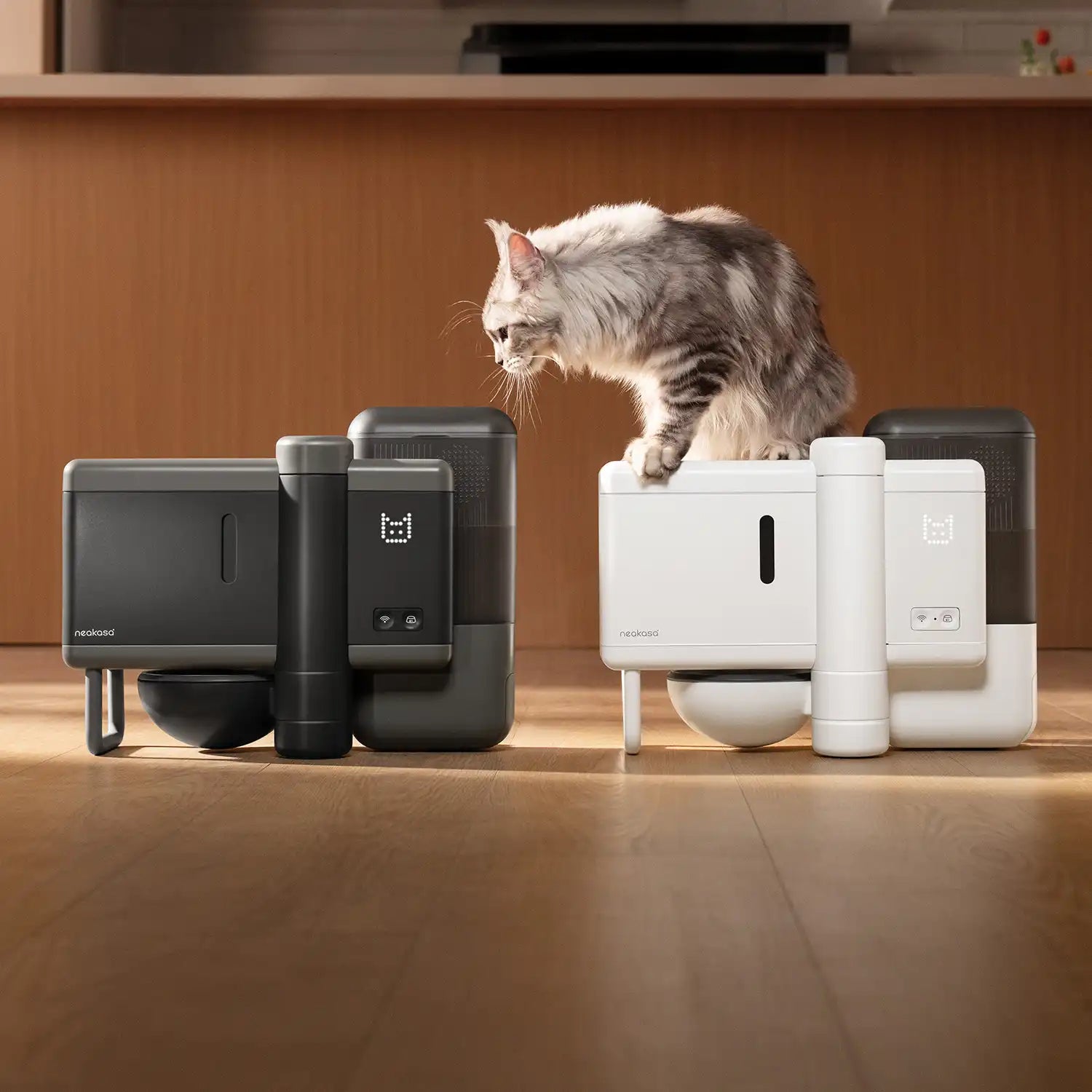
The Neakasa Riko Fresh-Made Wet Foode Feeder makes meal prep easier. It stores the food dry, then grinds a measured portion and adds water at mealtime. App scheduling and adjustable portions can reduce the manual preparation involved in a regular wet-meal routine.

- Prepares fresh-made wet meals by grinding and rehydrating compatible freeze-dried food at mealtime.
- Customizes meal texture with an adjustable 1:1–1:5 water-to-food ratio.
- Supports precise 1–20 g portions and 20+ scheduled feedings per day through the app.
- Reduces frequent refilling with a sealed 3 L food container and 2.4 L water tank.
Frequently Asked Questions
Do Cats Need Wet Food
Not every cat needs wet food as a separate part of the diet. What matters is adequate nutrition and water intake. Wet food offers one way to add dietary moisture, but the right choice depends on your cat. Keep drinking water available regardless of which format you feed.
Can Cats Eat Only Dry Food?
Yes. Many healthy cats can eat only dry food if it is complete and balanced for their life stage. Measure each serving and always provide fresh drinking water. If your cat has a health condition, ask your vet which diet is suitable. Contact your vet if your cat’s appetite, water intake or weight changes.
Can I Feed My Cat Only Wet Food
Yes, provided it is complete and balanced for your cat’s life stage and you feed an appropriate amount. Check the label carefully: a can or pouch may contain a topper or supplemental food. Packaging alone does not show whether the product can serve as the entire diet.
Is Wet Food Bad for Cats?
No. Wet food can be a healthy choice when it is complete and balanced for your cat’s life stage. Measure portions to avoid overfeeding, and follow the storage instructions after opening. If your cat becomes unwell after eating a food, contact your vet and share the product details and symptoms.
Is Canned Food Better for Cats Than Dry Food
Canned food offers more dietary water and a texture some cats prefer. Dry food may be easier to store and portion within your routine. Neither package type guarantees better nutrition. Compare complete diets that fit your cat’s needs, then consider feeding amounts, daily cost and how reliably your cat eats them.
Choosing a Feeding Plan That Fits Your Cat
Is wet food better for cats? It may be the better fit for adding dietary moisture or offering a preferred texture. Dry or mixed feeding can also work. Choose a suitable complete diet, measure meals and watch how your cat responds. A consistent routine matters more than choosing a format based on a single claim.


Leave a comment
All comments are moderated before being published.
This site is protected by hCaptcha and the hCaptcha Privacy Policy and Terms of Service apply.