
Cat owners know the struggle: that sharp, pungent scent that seems to soak into the very walls of your home. But getting rid of the smell requires more than just air freshener—it requires an understanding of urine chemistry.
⚡ Quick Summary
- The Ammonia Clock: Urine becomes toxic ammonia in just 2–4 hours.
- 10x Concentration: Cats produce ultra-concentrated urine—10x stronger than humans.
- Stop vs. Mask: Automatic boxes (Neakasa M1) stop odor by removing waste instantly; manual scooping only manages it.
- Enzymes Only: Use enzymatic cleaners to destroy uric acid; regular soap won't work.
The Chemistry Behind the Odor: Urea vs. Ammonia
The primary reason cat urine is so offensive isn't the urine itself, but the chemical transformation that happens after it leaves the body.
The Culprit: Urea & Ammonia
When a cat urinates, it eliminates:
- Urea: A relatively odorless nitrogen compound.
- Urobilin: A breakdown product of hemoglobin that provides color and slight odor.
- Bacteria: These begin metabolizing the urea immediately.
The Chemical Reaction
Within hours, bacteria break down urea into Ammonia—a volatile compound with an intensely pungent smell.
- The Math: 1 unit of cat urine produces ~3 units of ammonia.
- The Intensity: Ammonia is 17x more odorous than urea.
- Volatility: Ammonia becomes airborne at room temperature, filling a room quickly.
Why Cat Urine Smells Worse Than Other Animals (Evolutionary Secrets)
Cats are biological marvels of water conservation. Descended from desert-dwelling ancestors, their kidneys concentrate urine to an extreme degree.
Comparative Odor Analysis
| Feature | Dog Urine | Human Urine | Cat Urine |
| Concentration | Diluted | Moderate | Highly Concentrated |
| Ammonia Levels | Baseline | 1x | 10x Higher |
| Odor Impact | Moderate | Low | Exponentially Stronger |
Evolutionary Reason: Cats evolved in arid environments, concentrating urine for water conservation. This survival advantage came with an odor disadvantage that now plagues our homes.
4 Key Biological Factors That Intensify Cat Odor
Not all cat odors are equal. Several factors can intensify ammonia production:
Age Factor
- Kittens: Milder odor (immature urine concentration).
- Adult cats: Maximum odor intensity.
- Senior cats: Intensified odor due to kidney changes.
Health Status
- Kidney disease: 5x intensified odor as concentration increases.
- Diabetes: Altered urine composition, creating a sweetish/ammonia blend.
- Urinary infections: Bacterial overgrowth intensifies the smell immediately.
- Obesity: Metabolic changes can increase odor markers.
Diet Impact
- High protein diet: Increased urea production leads to more ammonia.
- Fish-heavy diets: Additional sulfur compounds add a unique pungency.
- Hydration level: Lower water intake leads to more concentrated urine.
Sex Differences
- Intact males: 10x stronger odor due to testosterone-driven mating territory marking.
- Spayed/neutered: Significantly milder odor.
24-Hour Ammonia Clock: Why Quick Action Matters
Manual scooping often fails because it cannot keep up with the bacterial clock:
- 0–2 Hours: Minimal odor (Urea stage).
- 3–4 Hours: Strong ammonia smell emerges.
- 6–12 Hours: Peaks in intensity.
- 24+ Hours: Continues intensifying as bacteria saturate the litter.
Why Manual Scooping Falls Short: Daily scooping catches visible waste, but urine soaks into the litter and evaporates. Even "clean" boxes often contain 24+ hours of accumulated ammonia.
5 Effective Solutions to Stop Cat Urine Odor Permanently
Solution #1: Automatic Litter Boxes + Active Purification
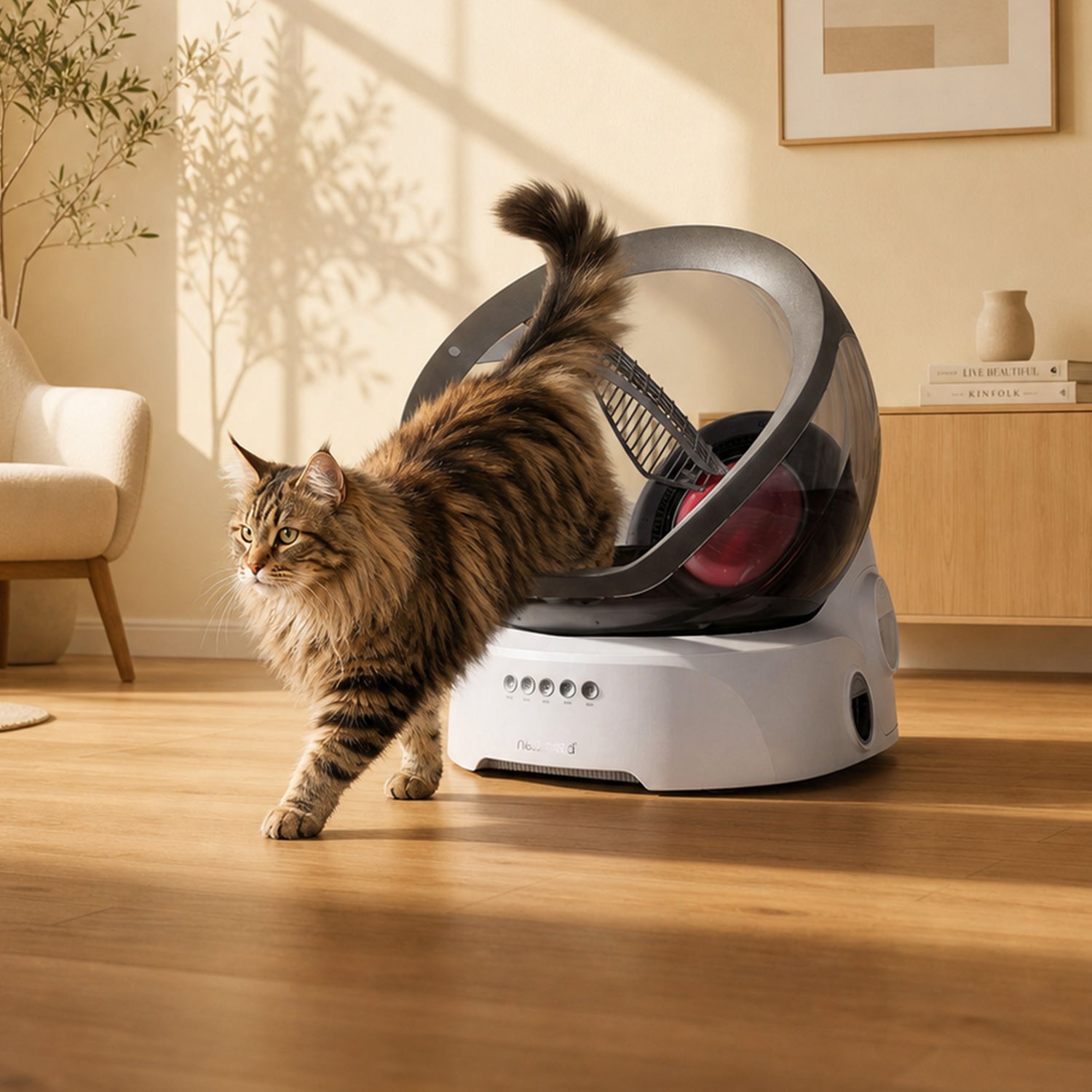
The Neakasa M1 utilizes advanced Pull & Wrap sealing technology to automatically clean up seconds after your cat uses the box, effectively blocking the formation of ammonia at the source.
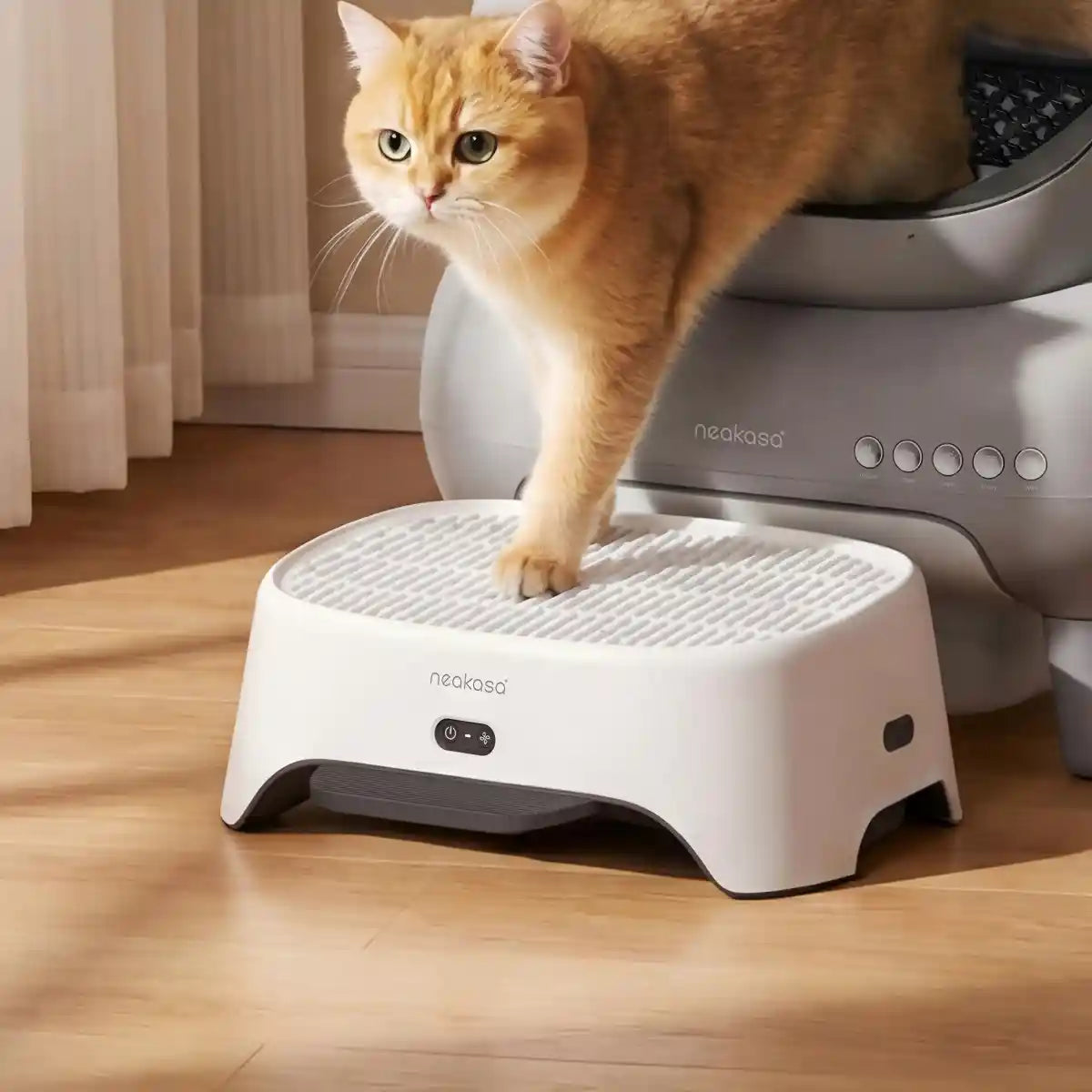
When paired with the Neakasa AirStep purification step, which contains 230g of industrial-grade activated carbon, the system intercepts and neutralizes 95% of the escaping ammonia gas.
Result: A 95% reduction in odor and an effective solution to litter tracking issues.
Solution #2: Specialized Litters
- Clay/Mineral: Best for clumping and neutralizing ammonia.
- Activated Charcoal: Specifically designed to absorb volatile odor molecules.
Solution #3: Enzyme-Based Cleaners
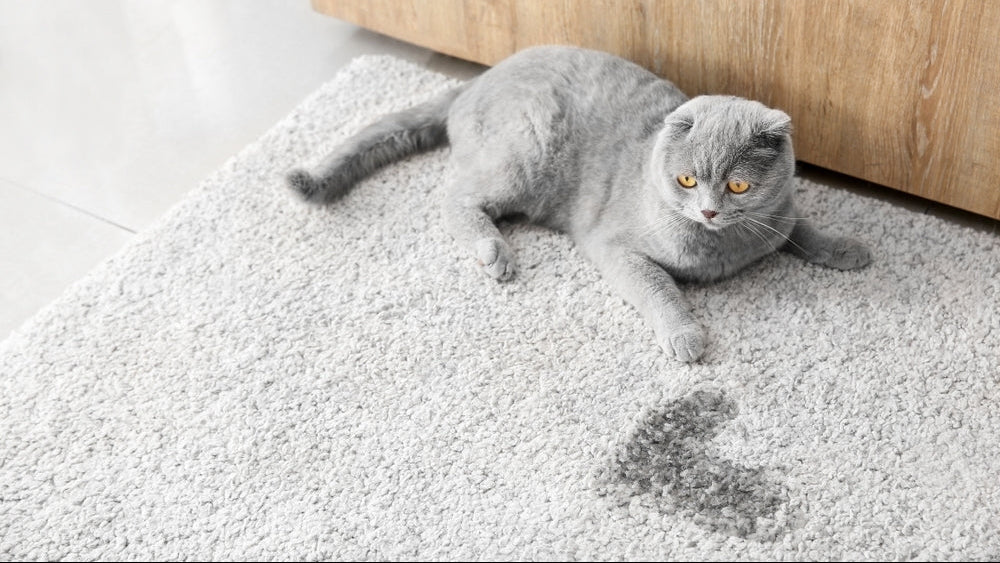
Standard soaps cannot break down uric acid. You need enzymatic cleaners (e.g., Nature’s Miracle, Rocco & Roxie) that "eat" the odor-causing proteins at a molecular level to prevent re-soiling.
Solution #4: Strategic Litter Box Placement
Maximize ventilation by placing boxes near windows or doors. Avoid closed spaces like small bathrooms, which trap odors.
Comparing Advanced Odor Control Technologies
For persistent issues, integrating specialized technology can significantly lower ammonia concentrations.
| Technology | Mechanism | Effectiveness | Estimated Cost |
| Sealed Compartments | Airtight waste storage (e.g., Neakasa M1) | 90-95% | Included in Auto-Boxes |
| Enzymatic Additives | Biological breakdown of precursors | 70-80% | $10 - $20 |
| Charcoal Filters | Porous absorption of molecules | 60-70% | $5 - $10 (Monthly) |
| Negative Ion Units | Ionization of ammonia molecules | 40-50% | $30 - $100 |
Is Cat Urine Odor Dangerous? Health Risks for Cats & Humans
High levels of ammonia (above 25 ppm) are not just a nuisance; they are a health hazard.
- For Cats: Chronic exposure to levels above 25 ppm causes respiratory irritation and inflammation.
- For Humans: It is a respiratory irritant that can trigger asthma or exacerbate COPD. Guests are often the first to notice due to resident's "nose blindness."
- For Homes: Ammonia is corrosive; it can damage paint finishes and permeate furniture, lowering home resale value. Professional remediation can cost between $500–$2000.
Best Practices for Odor-Free Living: Maintenance Checklist
Consistency is key to preventing the "cat house" smell.
- Daily: Visual inspection, basic litter stirring, and immediate removal of visible clumps.
- Weekly: Complete litter replacement and sanitize the box interior with an enzyme cleaner.
- Monthly: Deep clean with hot water and disinfectant; replace charcoal filters.
- Quarterly: Inspect the box for physical degradation and assess if the placement remains effective.
Automatic vs. Manual Litter Boxes: Which Is Better for Odor?
If you are experiencing persistent odors despite daily scooping, it is a "Red Flag" that your manual system is failing.
Red Flags for Manual Box Failure
- Persistent odor despite daily scooping.
- Guests commented on the smell.
- Litter box avoidance (your cat finds "other" spots)
Real Impact: Before & After the Neakasa M1
- Before: Constant faint smell, daily scooping chores, and respiratory discomfort.
- After: Odor virtually eliminated, 5-minute weekly maintenance, and a home that feels "normal" again.
User Testimonial: "The difference in odor with the Neakasa M1 is astounding. I didn’t realize how much I smelled it daily until it was gone. Best investment ever." — Verified Owner Review
Final Verdict: The Best Way to Maintain an Odor-Free Home
If you are struggling with persistent smells, it is time to switch from management to prevention.
- Best Overall Solution: Automatic Litter Box (Neakasa M1). It prevents ammonia from forming, offers 95% odor reduction, and improves both human and feline health.
- Best Budget Solution: High-quality charcoal litter combined with a strict weekly deep-cleaning schedule and enzyme sanitizers.


Leave a comment
This site is protected by hCaptcha and the hCaptcha Privacy Policy and Terms of Service apply.