

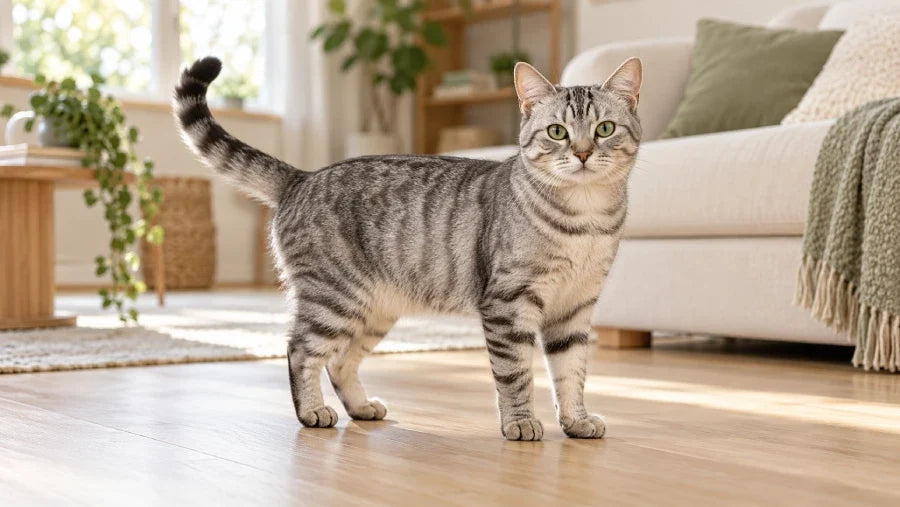
The average cat weight is around 8–12 pounds (3.6–5.4 kg) for many adult domestic cats. However, a healthy weight depends on your cat’s breed, age, frame, and muscle mass. The number on the scale is only part of the picture.
Tracking your cat’s weight and body condition helps you notice gradual changes and gives your vet useful information. This guide covers typical weight ranges, factors that affect them, and simple ways to help your cat maintain a healthy weight.
Average Cat Weight
What Is the Average Weight of a Cat?
The average weight of a cat is around 10 pounds (4.5 kg). Many adult domestic cats weigh 8–12 pounds (3.6–5.4 kg). This estimate is useful as a starting point, but it does not account for every breed or body type.
For example, a cat with a small frame may carry excess body fat at a weight that suits a larger cat. Equally, a large, muscular cat may weigh more than the general range without being overweight.
Instead of aiming for a universal number, consider three things together:
- Your cat’s current weight and how it changes over time.
- Their body condition, including fat coverage and waist shape.
- Their muscle condition, assessed with help from your veterinarian.
These provide a more useful picture than weight alone.
Average Weight for Adult Cats
Average adult cat weight varies with sex, breed, and natural build. Male cats tend to be larger than females, but there is considerable overlap. Many adult cats of either sex weigh between 8 and 12 pounds.
The average male cat weight is therefore not a separate target that applies to every male. A small male cat may naturally weigh less than a large female.
Likewise, the average female cat weight depends on more than sex. Breed and frame size can make a substantial difference.
A veterinarian can help establish an individual target range once your cat has reached maturity.
Average House Cat Weight
The average house cat weight is commonly estimated at around 8–12 pounds. However, “house cat” describes a broad group rather than a single breed.
Domestic shorthair and domestic longhair cats have varied ancestry. Some have compact frames, while others are naturally tall, long, or muscular.
Living indoors also does not determine a cat’s ideal weight. An indoor cat’s diet and activity should match their individual needs, as there is no single ideal weight for all indoor cats.
Average Weight for Female Domestic Cats
If you are looking for the average weight for a female domestic cat, the general adult range can offer context. However, it should not be treated as a strict minimum or maximum.
A female cat with a delicate frame may be healthy below that range. A larger female may naturally weigh more. What matters is whether her weight suits her build and whether her body condition remains appropriate.
Avoid increasing or reducing food simply to match an online average. First, ask your veterinarian to assess her body condition and confirm a suitable weight range.
Factors Influencing Cat Weight
Age and Breed
A kitten’s weight should be assessed differently from an adult cat’s. Kittens are growing, so their weight needs to be interpreted alongside age and growth progress. An adult weight chart is not suitable for judging whether a young kitten is developing normally.
Breed also affects the pace of growth. Maine Coons, for example, can take up to three years to reach full size, according to the Cat Fanciers’ Association.

The average weight of a Maine Coon cat is higher than that of many other breeds. Mature males may reach or exceed 20 pounds (9.1 kg), while females are generally smaller. However, a large breed can still become overweight. Breed size does not replace a body condition assessment.
Older cats also need careful monitoring. Unexpected weight loss may signal kidney disease or hyperthyroidism. It should not be treated as a normal part of ageing.
Diet and Lifestyle
Daily routines influence how much energy your cat consumes and uses. Food portions, treats, activity, and access to other pets’ meals all matter.
Common habits that make portions harder to track include:
- Topping up the bowl without measuring.
- Offering treats throughout the day without counting them.
- Allowing one cat to finish another cat’s food.
- Changing foods while keeping the same serving size.
Different foods contain different amounts of energy. The same weight or volume of two foods may provide very different calorie totals.
Neutering can also change energy needs and appetite. Ask your veterinarian whether your cat’s feeding amount should be adjusted after surgery.
Healthy Weight for Cats
Healthy weight for cats is best assessed using both the scale and a hands-on body condition check.
Veterinarians commonly use a body condition score, or BCS. On a nine-point scale, a score of 4–5/9 generally describes an ideal body condition. The assessment considers fat coverage and body shape.
Signs of a healthy body condition usually include:
- Ribs that are easy to feel beneath a light layer of fat.
- A visible waist behind the ribs when viewed from above.
- A slight upward tuck of the abdomen when viewed from the side.
A thick coat can hide these features, so looking alone is not enough. Gently feeling your cat’s ribs and waist helps provide a clearer picture.
Your veterinarian can demonstrate the technique and assess muscle condition separately.
Obesity in Cats
Obesity involves excess body fat. It cannot be diagnosed simply because a cat weighs more than the average.
Excess weight can increase the risk of diabetes, joint problems, and other health complications. It may also make grooming and movement more difficult.
If your cat needs to lose weight, work with your veterinarian on a feeding plan. Simply cutting a large amount of their usual food may leave them short of essential nutrients. A suitable diet and measured portions support safer weight management.
Never use fasting as a weight-loss method. Cats that stop eating, particularly overweight cats, are at risk of hepatic lipidosis, a serious liver condition. Contact your veterinarian promptly if your cat stops eating.
Cat Weight Chart
Overview of Weight Ranges by Breed
The following cat weight chart provides general adult reference ranges. These are approximate breed descriptions, not personalised ideal weights.
| Breed or cat type | Adult female reference range | Adult male reference range |
|---|---|---|
| Domestic shorthair | 8–12 lb / 3.6–5.4 kg* | 8–12 lb / 3.6–5.4 kg* |
| Siamese | 5–8 lb / 2.3–3.6 kg | 8–12 lb / 3.6–5.4 kg |
| Persian | 7–11 lb / 3.2–5.0 kg | 9–14 lb / 4.1–6.4 kg |
| Maine Coon | 10–14 lb / 4.5–6.4 kg | 12–20+ lb / 5.4–9.1+ kg |
The domestic shorthair range is a general reference for both sexes, rather than a separate sex-specific estimate. Sources: PetMD for domestic shorthair and Maine Coon ranges, TICA for Siamese ranges, and Purina for Persian ranges. Kilogram conversions are rounded.
Breed ranges can differ between references and populations. Use this table to understand broad size differences, then ask your veterinarian to assess your own cat.
Visual Representation of Average Cat Weights
A weight comparison shows how much cats can differ in size. However, body shape helps explain whether that weight is appropriate.
Use the following guide alongside the breed chart:
| Body condition | Rib check | View from above |
|---|---|---|
| Below ideal | Ribs feel unusually prominent with little fat coverage | Waist may look very pronounced |
| Ideal | Ribs are easy to feel beneath light fat coverage | Waist is visible behind the ribs |
| Above ideal | Ribs are harder to feel through excess fat | Waist is less distinct or absent |
These are simplified descriptions of body condition assessment, not a diagnosis. Ask your veterinarian to confirm your cat’s score if you are unsure.
Two cats can weigh exactly the same and have different body conditions. A 10-pound cat with a small frame may carry extra fat, while a larger-framed cat at that weight may be too thin.
Maintaining a Healthy Weight
Tips for Monitoring Your Cat’s Weight
A consistent routine makes weight changes easier to spot and discuss with your veterinarian.
1. Use the same scale.
A pet or baby scale can help you track small changes. Place it on a stable, level surface and weigh your cat under similar conditions each time.

If you use a bathroom scale, you can weigh yourself while holding your cat and subtract your own weight. However, this method may miss small changes.
2. Keep a simple record.
Write down the date, weight, and any changes in appetite or activity. For a healthy adult cat, a monthly reminder can be a practical starting point. Ask your veterinarian whether your cat needs more frequent checks.
3. Measure daily food portions.
Use a kitchen scale to measure food in grams. Include treats and any additional food when tracking daily intake.
4. Monitor each cat separately.
In a multi-cat home, watch for food sharing or stealing. Separate feeding areas can make it easier to see how much each cat eats.
5. Encourage regular play.
Offer short play sessions using toys your cat enjoys. Adjust activity to their age, mobility, and comfort.

6. Record more than weight.
Note changes in jumping, grooming, thirst, appetite, or litter box habits. These observations give your veterinarian context that a number alone cannot provide.
Weight management often requires adjustments over time. Regular weigh-ins and body condition checks help your veterinary team decide when to change portions or the feeding plan.
Regular Vet Check-ups
Veterinary visits help establish a reliable baseline for your cat’s weight, body condition, and muscle condition.
For adult cats, annual check-ups provide an opportunity to review changes over time. Ask your veterinarian whether age, health conditions, or a weight-management plan make more frequent visits appropriate.
Do not wait for a routine appointment if your cat has unexplained weight loss or a noticeable change in appetite. Arrange an assessment so your veterinarian can investigate the cause.
What to Discuss with Your Vet
Bring your weight records and the names of the foods your cat eats. Include portion sizes, treats, and supplements.
Useful questions include:
- What is a healthy weight range for my cat?
- What are their current body condition and muscle condition scores?
- How much of this specific food should they eat each day?
- Should their food or portions change?
- How often should I weigh them?
- If weight loss is needed, what pace is appropriate?
- Could a health problem explain the change?
A clear plan makes home monitoring easier and helps everyone in the household follow the same feeding routine.
How to Help Your Cat Lose Weight
If your cat is overweight, start by asking your vet to set a target weight and daily calorie allowance. Weight loss should be gradual, with enough nutrients to keep your cat healthy.
- Measure each meal. Use a kitchen scale to weigh portions rather than estimating or topping up the bowl.
- Count treats and extras. Include them in your cat’s daily calorie allowance.
- Prevent food stealing. Feed cats separately so you can track how much each one eats.
- Encourage gentle activity. Offer short play sessions with wand toys or food puzzles. Use part of the daily food portion for puzzles.
- Track progress. Weigh your cat regularly and review the results with your vet before adjusting portions.
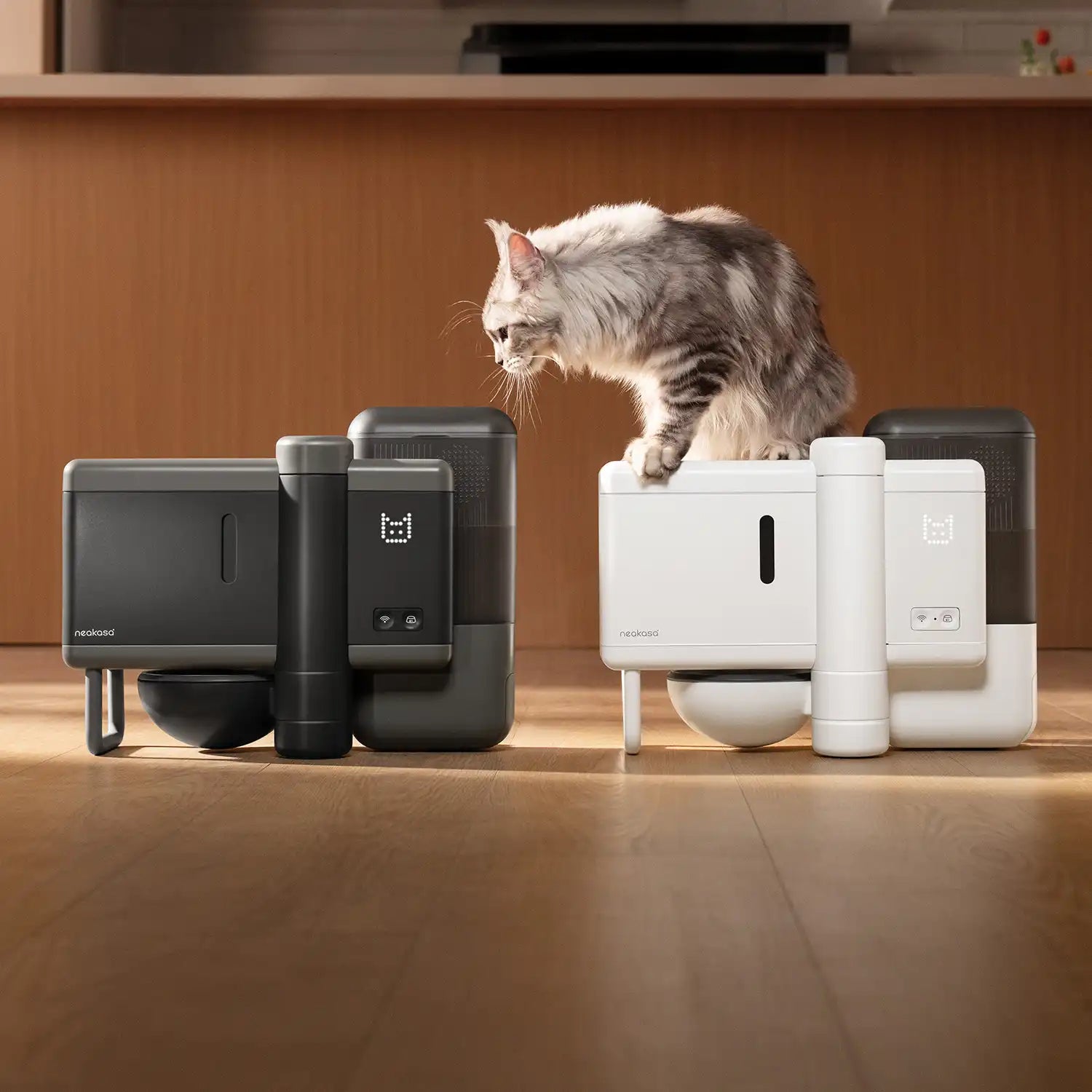
For a more consistent feeding routine, the Neakasa Riko Fresh-Made Wet Meal Feeder lets you set meal times and portions through the app. It grinds compatible freeze-dried food and adds water at mealtime. Choose complete and balanced food suited to your cat’s needs. Adjust daily portions to match the calorie intake recommended by your vet.

- Three flexible modes: Mix mode grinds compatible freeze-dried food and adds water at mealtime. Food Only mode serves ground freeze-dried food without water. Water Only mode dispenses water.
- Customizes meal texture with an adjustable 1:1–1:5 water-to-food ratio.
- Supports precise 1–20 g portions and 20+ scheduled feedings per day through the app.
- Reduces frequent refilling with a sealed 3 L food container and 2.4 L water tank.
From $214.99
Avoid fasting or sharply cutting food. If your cat stops eating, contact your vet promptly.
Frequently Asked Questions
Is a 15 lb Cat Considered Large?
A 15 lb (6.8 kg) cat is heavier than many adult domestic cats. However, this may be a suitable weight for a large-framed breed such as a Maine Coon. For a smaller cat, it could indicate excess weight. Your cat’s body condition helps determine whether their weight is healthy.
Is 6 lb Too Light for an Adult Cat?
Not necessarily. 6 lb (2.7 kg) can be a healthy weight for a small-framed adult cat. Female Siamese cats, for example, may weigh around 5–8 pounds. However, if your cat has lost weight unexpectedly or their bones feel unusually prominent, arrange a vet check.
Is a 20 lb Cat Overweight?
A 20 lb (9.1 kg) cat may be overweight, but the number alone is not enough to tell. Some large male Maine Coons naturally reach this weight. For a smaller-framed cat, it could be well above their healthy range. Ask your vet to assess body condition before starting a weight-loss plan.
Is a 10 lb Cat Underweight?
For many adult domestic cats, 10 lb (4.5 kg) is within a typical weight range. However, a larger-framed cat could be underweight at this size. Contact your vet if your cat’s bones become more noticeable or they lose muscle or weight unexpectedly. These changes matter even if their weight is within the average range.
How Can I Tell If My Cat Is Overweight?
Gently feel your cat’s ribs and look at their waist from above. You should be able to feel the ribs beneath a light layer of fat and see a waist behind the rib cage. If the ribs are difficult to feel or the waist is hard to identify, your cat may be overweight. A loose belly pouch alone does not indicate excess weight.
Why Is My Cat Gaining Weight So Quickly?
Larger portions, extra treats, and reduced activity can cause weight gain. However, a suddenly swollen belly may be caused by pregnancy, fluid buildup, or another medical problem. If your cat’s weight or belly size increases quickly without a clear reason, contact your vet rather than simply reducing their food.
Conclusion
Recap of Average Cat Weight
The average weight of a house cat is commonly described as around 8–12 pounds, but that range is only a starting point. Breed, sex, age, frame size, and muscle mass all influence what is healthy for an individual cat.
Use a cat weight chart for general context. Combine it with regular weigh-ins, body condition checks, and veterinary advice to understand your cat’s needs.
Final Thoughts on Cat Health
A healthy weight supports your cat’s comfort and daily activity. Measured meals, regular play, and consistent monitoring can make weight management easier.
Focus on the cat in front of you. Their weight trend, body condition, appetite, and behaviour tell you far more than an average number on its own.



Leave a comment
All comments are moderated before being published.
This site is protected by hCaptcha and the hCaptcha Privacy Policy and Terms of Service apply.