
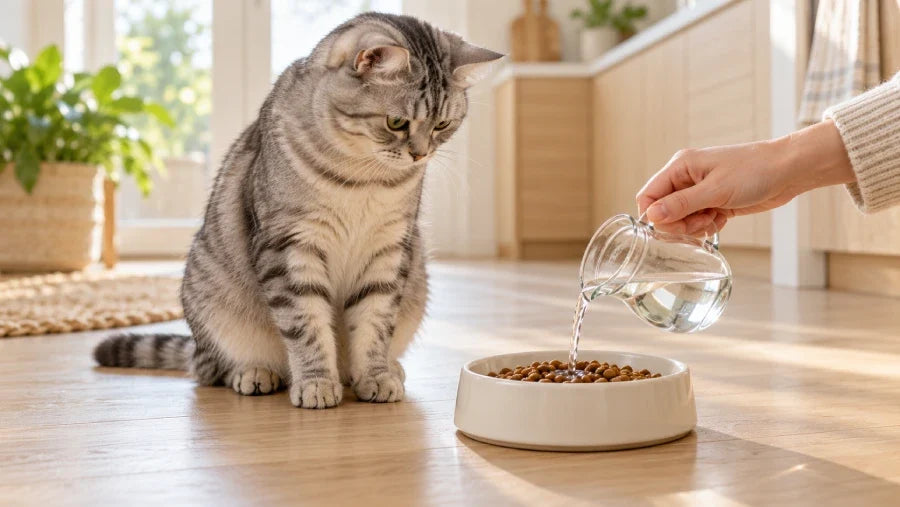
Yes, you can add a little water to most ordinary dry cat foods. It can make a meal softer and provide some extra moisture, as long as your cat eats it. Start with a small amount of plain water, prepare one meal at a time, and follow any instructions on the food packaging.
Learn why adding water to dry cat food may help, how to do it safely, and what to watch for as your cat adjusts.
Benefits of Adding Water to Dry Cat Food
Extra moisture with a familiar meal. Adding water gives your cat another way to consume fluid without immediately changing their usual food. However, the benefit depends on how much of the food and liquid they actually finish. Some cats dislike the new texture, so a wetter meal is only useful if it remains appealing.
A softer texture. Water gradually softens kibble, which some cats prefer. This can make meals more comfortable to eat, but a sudden reluctance to chew deserves a veterinary check. Softening food should not hide tooth or gum pain.
A simple change to the feeding routine. You can try a small dampened portion of your cat’s current food before deciding whether it suits them. Keep the dry-food portion measured: adding water increases the meal’s weight and volume, but does not add calories.
Should I add water to my cat’s dry food? It can be a useful option for a cat who enjoys softened food and eats regular meals. Always provide fresh drinking water, and seek veterinary care if your cat is dehydrated.
How to Add Water to Dry Cat Food
Begin with the instructions for the specific product. Ordinary kibble, freeze-dried meals and dehydrated foods are not interchangeable. Some foods need water added before serving, while others can be fed dry. Follow the preparation instructions on the label.
The Best Way to Add Water to Dry Cat Food
For ordinary kibble, aim first for a texture your cat accepts. There is no single water-to-food ratio that works for every recipe, portion size or cat.
- Measure the usual food portion before adding water. This keeps the calorie allowance consistent.
- Place a small part of that portion in a clean bowl for the first trial.
- Stir in a little clean drinking water at room temperature or lukewarm temperature. Avoid hot water.
- Let it stand briefly if you want a softer texture, checking the kibble rather than relying on a fixed soaking time.
- Serve promptly and watch whether your cat eats both the food and the surrounding liquid.
Start by adding one teaspoon (5 ml) of water to a small portion of dry food, unless the label recommends otherwise. This is a texture trial, not a prescribed hydration dose or a universal recipe. Add more only if your cat accepts it. Manufacturer guidance also supports preparing individual servings and allowing a few minutes for softening.

If you are asking how much water to rehydrate dried cat food, check what “dried” means on the label. For freeze-dried or dehydrated meals, use the manufacturer’s stated amount and waiting time. Do not apply a kibble-softening suggestion to a product with specific rehydration instructions. Also check that the food is a complete diet rather than a treat or topper.
Make Rehydrated Meals Easier with Neakasa Riko
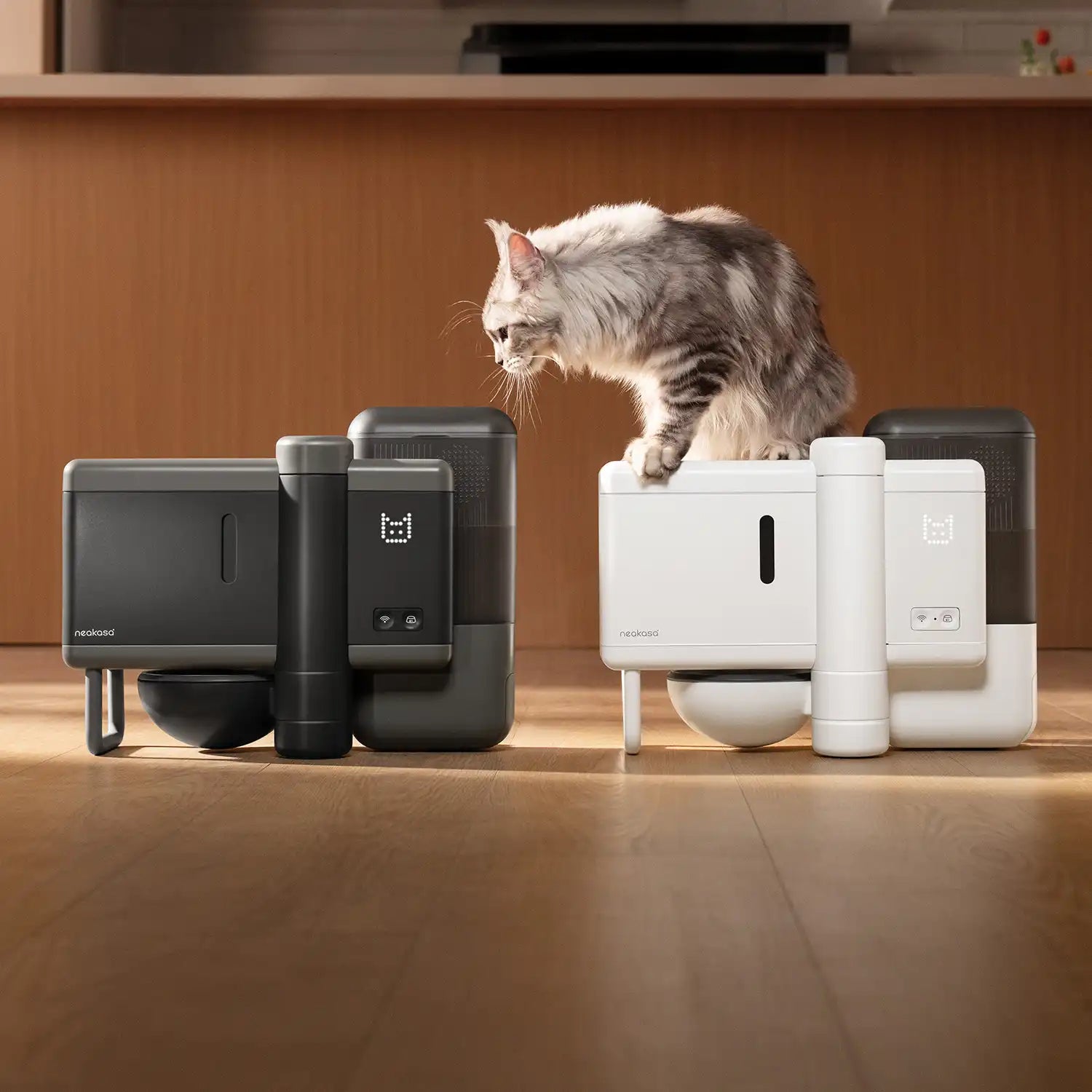
Make daily feeding easier with the Neakasa Riko Fresh-Made Wet Meal Feeder, designed for cats who enjoy rehydrated freeze-dried meals. It grinds compatible freeze-dried food and mixes it with water at mealtime. Use the app to schedule meals and adjust portions to fit your cat’s routine.

- Three flexible modes: Mix mode grinds compatible freeze-dried food and adds water at mealtime. Food Only mode serves ground freeze-dried food without water. Water Only mode dispenses water.
- Customizes meal texture with an adjustable 1:1–1:5 water-to-food ratio.
- Supports precise 1–20 g portions and 20+ scheduled feedings per day through the app.
- Reduces frequent refilling with a sealed 3 L food container and 2.4 L water tank.
From $214.99
Riko is designed for compatible freeze-dried food. For main meals, choose a complete and balanced freeze-dried food that meets your cat’s needs. Follow the food and feeder instructions, introduce the meals gradually, and keep the bowls and water tank clean.
How to Add Water to Dry Cat Food Safely
Use a clean spoon and bowl, and wash your hands before and after handling pet food. Wash bowls and utensils with hot water and a pet-safe cleaner after each meal, then rinse thoroughly. Keep the remaining dry food dry, with the original bag properly closed.
Plain water is the simplest choice. Do not add milk, salty stock or seasoned cooking liquids. Check the ingredients before adding a topper. If your cat is on a therapeutic diet, ask your vet whether it’s suitable.
Never pour water into the bag of kibble or a dry-food feeder hopper. Prepare the moistened portion separately at serving time. A dispenser intended for dry kibble should only hold the food specified in its instructions.
Adding water does not sterilise food. This is especially important for raw freeze-dried food. Adding water does not cook the food or kill harmful bacteria.
Tips for Keeping Moistened Dry Food Fresh
Wetting dry cat food changes how you should handle the serving. It should no longer be treated as dry kibble that can sit out for extended grazing. Hill’s advises handling softened dry food like opened canned food.
- Prepare only what your cat is likely to eat in one sitting.
- Serve the meal as soon as it reaches a comfortable temperature and texture.
- Discard uneaten moistened food after the meal.
- Do not leave soaked kibble out overnight or rely on its smell to judge whether it is safe.
- Keep unopened portions and dry-food storage containers separate from wet utensils.

Making each serving fresh is easier than preparing a large batch and guessing its storage life. If advance preparation is necessary, ask the manufacturer for refrigeration and use-by guidance for that exact food.
Common Misconceptions About Adding Water to Dry Cat Food
❌ More water is always better.
Too much may put your cat off the meal. Begin with a small change and focus on how much they consume, rather than how much liquid you pour into the bowl.
❌ Moistened kibble is the same as canned food.
Adding water changes moisture and texture. Adding water does not change the food’s ingredients or make it nutritionally equivalent to canned food.
❌ Water removes the calories.
The original portion still contains the same calories if it is all eaten. Weigh the kibble before moistening it, and avoid increasing the food portion simply because the softened serving looks different.
❌ It will prevent kidney disease or cure urinary problems.
Adding water to food can help with hydration, but it cannot prevent all health problems or replace veterinary care.
❌ My cat no longer needs a water bowl.
Always provide fresh drinking water, even when food contains added moisture.
When Not to Add Water to Dry Cat Food
Avoid the change if your cat refuses the moistened food or starts eating less. A familiar meal that they finish is preferable to repeatedly offering a new texture they reject. Offer their usual food and reconsider the approach.
Check first if the label says to feed the food dry, or if it is a dental or therapeutic diet. Changing texture may conflict with its intended use. Ask the manufacturer or prescribing vet whether moistening is appropriate.
Seek veterinary advice before changing a medically managed feeding or fluid plan. If your cat vomits repeatedly, has trouble swallowing or seems dehydrated, contact your vet. Adding water to food is not enough.
Should I put water in my cat’s dry food if they suddenly stop drinking? Do not assume a feeding adjustment will solve the problem. A clear change in thirst or appetite can signal illness and should be discussed with your vet.
How to Help Your Cat Transition to Moistened Dry Food
Keep the first trial small and predictable. Use the same food, bowl location and mealtime, changing only the moisture. This makes it easier to see whether the texture is the problem.
Start by offering a lightly dampened sample alongside the familiar meal. Include that sample within the normal daily food allowance. If your cat eats it willingly, gradually moisten more of the serving over the following days.
Increase either the amount of moistened food or the water added, rather than both at once. Some cats prefer kibble with a little surface moisture; others accept a softer consistency. There is no need to make it soupy if that reduces interest.

If your cat walks away, return to the last texture they accepted. Avoid adding several new toppers at the same time, since that makes it harder to identify what they like or tolerate. Never withhold familiar food to force the transition.
Contact your vet if your cat stops eating or eats substantially less. Do not let a healthy adult cat go beyond 24 hours without food before seeking help; kittens and unwell cats need advice sooner. A diet transition should not become a prolonged fast.
How to Monitor Your Cat After Adding Water to Dry Food
For the first several days, keep a simple record of the dry-food weight, water added and how much remains. Record the food before moistening it so comparisons are meaningful. A bowl that looks emptier does not always mean the cat ate more food; they may have lapped up the liquid.
Watch appetite, energy, stool consistency and litter box habits. Check body weight regularly if you can do so without stress. In a multi-cat home, feed cats separately long enough to see who eats each portion.
Drinking from the bowl may decrease when food supplies more water. Look at the whole routine rather than judging hydration by bowl visits alone. A sustained or sudden change in drinking still deserves veterinary advice.
If vomiting or diarrhoea appears, pause the new routine and contact your vet if symptoms persist or your cat seems unwell. Note when the food was prepared, how it was stored and whether any other ingredients changed.
Straining to urinate, repeated attempts with little or no urine, or obvious distress requires urgent veterinary care. Do not wait to see whether extra water in food helps.
FAQ
What Affects Your Cat’s Hydration Needs?
Hydration depends on water consumed in both food and drinks, balanced against water lost from the body. Body size, diet, health and environmental conditions all affect the picture. A cat eating moisture-rich food may visit the water bowl less often than one eating kibble.
Think of moistened food as one part of the daily routine. Keep fresh water within easy reach. If your cat has a medical condition, ask your vet how much water they need each day.
What Are the Signs of Dehydration in Cats?
Possible signs include dry or tacky gums, low energy, weakness and poor appetite. Sunken eyes can occur in more severe cases. These symptoms need attention, especially with vomiting or diarrhoea. They are not specific enough to diagnose dehydration at home.
How Does Adding Water to Dry Cat Food Affect Digestion
Water softens the food before it is eaten, but a softer texture does not prove that every cat will digest it better. It does not remove ingredients that trigger a food sensitivity or turn an unsuitable diet into a suitable one.
Supporting hydration may be helpful for some cats prone to constipation, as part of a veterinary plan. Persistent hard stools, straining, vomiting or diarrhoea need investigation rather than repeated changes to the water ratio.
Does Adding Water to Cat Food Help Hydrate My Cat
It can contribute extra water if your cat consumes it. For example, if you add 10 ml and the cat finishes the whole meal and liquid, that serving provides 10 ml of added water. If liquid or food remains, you cannot count all of it as consumed.
This is useful for everyday feeding, but a cat who is already dehydrated may need treatment. Do not rely on a dampened meal to correct a significant fluid deficit.
Why Is Water So Important for Cats
Water supports circulation, temperature regulation, digestion and normal electrolyte balance. Maintaining hydration helps these processes work properly. The body continually loses water, so cats need a dependable daily supply from food and drinking water.
Why Do Some Cats Not Drink Enough Water on Their Own
Sometimes a cat drinks little because food supplies much of their moisture. In other cases, the water’s freshness, bowl location or access to it may discourage drinking. Another cat may also make a shared drinking area uncomfortable.
Offer clean water in several quiet, accessible locations, away from litter trays. Try a different bowl or a well-maintained fountain if your cat has a preference. Do not assume that every cat will drink more from running water.
How Much Water Should My Cat Have Each Day
According to the Cornell Feline Health Center, cats need about 4 fl oz of water per 5 lb of lean body weight each day. For a 10 lb cat, that’s roughly 1 cup (240 mL), including moisture from food.
Cats eating wet or rehydrated food may drink less from their bowl. Always provide fresh drinking water, and ask your vet about individual needs if your cat has a medical condition.
How Can I Tell Whether My Cat Is Dehydrated
Look for changes in appetite, energy and gum moisture, but do not rely on one home check. Skin that is slow to return after a gentle lift may suggest dehydration. However, skin elasticity varies, so this check alone cannot tell you whether your cat is hydrated.
A vet can assess hydration alongside the cat’s history and examination. Seek prompt help for suspected dehydration, and urgent care for collapse, marked weakness or inability to keep water down.
What Health Problems Can Dehydration Cause
Significant dehydration can impair circulation, temperature control and organ function. Dehydration can also result from an illness that causes fluid loss, not just from drinking too little.
Finding the cause matters. Ongoing symptoms need veterinary care, even if your cat accepts extra water in their food.
Conclusion
Adding water to dry cat food can be a simple way to offer extra moisture and a softer texture. Start with a small amount, prepare each serving fresh, and check that your cat continues eating well. Keep clean drinking water available and follow the preparation instructions for your chosen food.
Neakasa Riko makes daily feeding easier by preparing compatible freeze-dried food with water at scheduled mealtimes. Whether you moisten kibble by hand or choose a freeze-dried feeding routine, the goal is a fresh, balanced meal your cat enjoys.

Leave a comment
All comments are moderated before being published.
This site is protected by hCaptcha and the hCaptcha Privacy Policy and Terms of Service apply.