

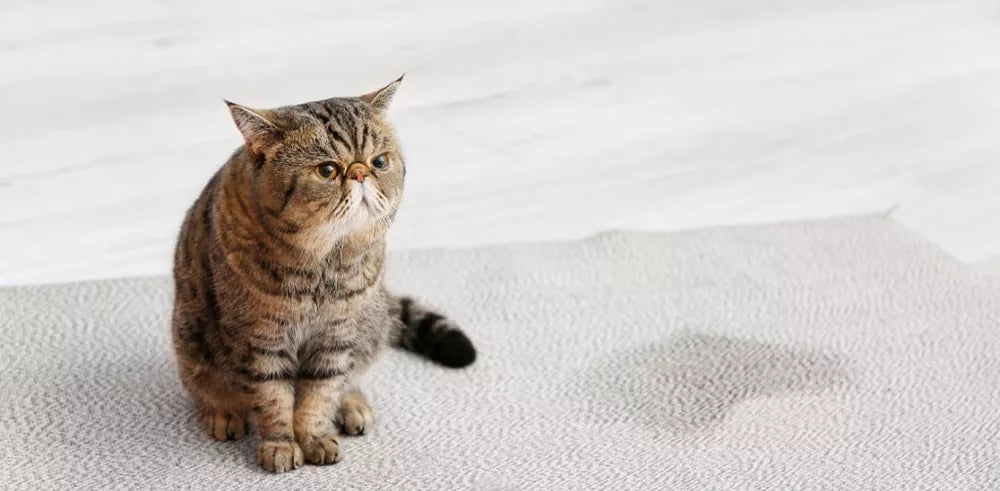
If a sharp ammonia smell hits you when walking indoors, you’re dealing with a bacterial colony, not just an odor. A smelly litter box means harmful microbes are actively multiplying, and air fresheners won't protect your family or your feline friend.
Rather than simply telling you to “scoop more,” this guide reveals exactly how to prevent cat litter bacteria growth. We'll show you how to break the breeding cycle, upgrade your materials, and use smart tech for genuinely sanitized air.
- Odor equals bacteria: The smell of ammonia is a byproduct of bacteria breaking down the urea in your cat’s urine.
- Moisture is the enemy: High-quality clumping litter is essential because it instantly locks away the moisture that bacteria need to survive.
- Beware of biofilms: Micro-scratches at the bottom of traditional plastic litter boxes harbor a bacterial shield known as a biofilm, causing persistent odors even after washing.
- Automation is the ultimate defense: For multi-cat households, pairing an open-top automatic litter box with a tracking mat is the most reliable way to sever the bacterial growth chain.
Why Does Litter Breed Bacteria?
To defeat bacteria, you have to understand how they thrive. The traditional litter box environment is practically a five-star resort for microbes.
The 48-Hour Bacteria Boom
When your cat eliminates, they trigger a rapid biological countdown in the litter box:
- The Perfect Trifecta: Fresh waste instantly provides moisture, warmth, and organic nutrients—the exact conditions bacteria need to thrive.
- Exponential Multiplication: Within just 48 hours, the bacterial population in a soiled, unscooped litter box multiplies out of control.
- The Odor Reality Check: As microbes feast on cat urine, they release harsh ammonia gases. By the time you actually smell the odor, millions of bacteria have already established their territory.
What is a “Litter Box Biofilm”?
Here is a secret that most litter box hygiene guides miss: your daily scooping routine might be creating a permanent bacterial home.
- The Hidden Damage: Aggressively scraping the bottom of a plastic litter box with a hard scoop creates microscopic gouges over time.
- The Infiltration: Liquid waste and bacteria seep deep into these tiny scratches where scoops cannot reach.
- The Invincible Shield: Once inside, microbes form a “biofilm”—a slimy, protective matrix that is highly resistant to standard soap, water, and regular scrubbing.
Why Covered Boxes Make It Worse
Many cat owners buy enclosed, hooded litter boxes, thinking they will trap the smell. In reality, they are creating a dangerous “Humidity Trap.”
Traditional Enclosed Box vs. Open-Top Smart Box
| Feature | Traditional Enclosed Box | Open-Top Smart Box |
|---|---|---|
| Airflow & Ventilation | Poor (Traps moisture inside) | Excellent (Keeps litter dry & fresh) |
| Ammonia Build-up | High (Toxic for cats to breathe) | Low (Gases dissipate naturally) |
| Bacterial Growth Rate | Rapid (Thrives in humid, dark areas) | Slow (Hostile, dry environment) |
| Odor Control Method | Traps smell inside with the cat | Instantly isolates and seals waste away |
Step 1: Upgrade Your Litter Material
If you want to know how to prevent cat litter bacteria growth, you must cut off their water supply. Bacteria cannot multiply rapidly in a bone-dry environment.
Your choice of litter is a critical health decision. You should exclusively use high-performance clumping cat litter. When urine hits a high-quality clumping litter, it instantly forms a tight seal around the moisture, suffocating the waste.
- Best choices for bacteria control: Premium Bentonite (Clay), Tofu Litter, and Cassava.
- Worst choices for bacteria control: Non-clumping clay and cheap wood pellets (unless used with a specialized sifting system, these allow urine to pool and stagnate at the bottom of the pan).
Step 2: Establish the Ultimate Cleaning Frequency
When bacteria are doubling every few hours, time is of the essence.
How Often to Clean Litter Box 2 Cats?
If you are using traditional manual litter boxes, you need to follow the “N+1 rule” (3 boxes for 2 cats). To beat the bacterial boom, adhere to this strict schedule:
- Daily: Scoop all boxes at least twice a day.
- Weekly: Top off with fresh litter to maintain a depth of 3-4 inches (preventing urine from reaching the bottom plastic).
- Every 2-4 Weeks: Completely dump the litter, scrub the box, and dry it completely before refilling.
The Danger of Bleach (Toxic Gas Warning)
When it is time for that deep clean, never use bleach. Cat urine contains high levels of ammonia.
When bleach mixes with ammonia, it creates toxic chloramine gas, causing severe respiratory damage. Always use a pet-safe, bio-enzymatic cleaner that literally digests odor-causing bacteria.
Step 3: Automate Your Defense (The Neakasa M1 & AirStep Combo)
For busy professionals, manually scooping 2-3 times a day is often unrealistic. The most scientifically sound way to stop bacteria is to remove the waste immediately after the cat steps out—long before the microbes can multiply.
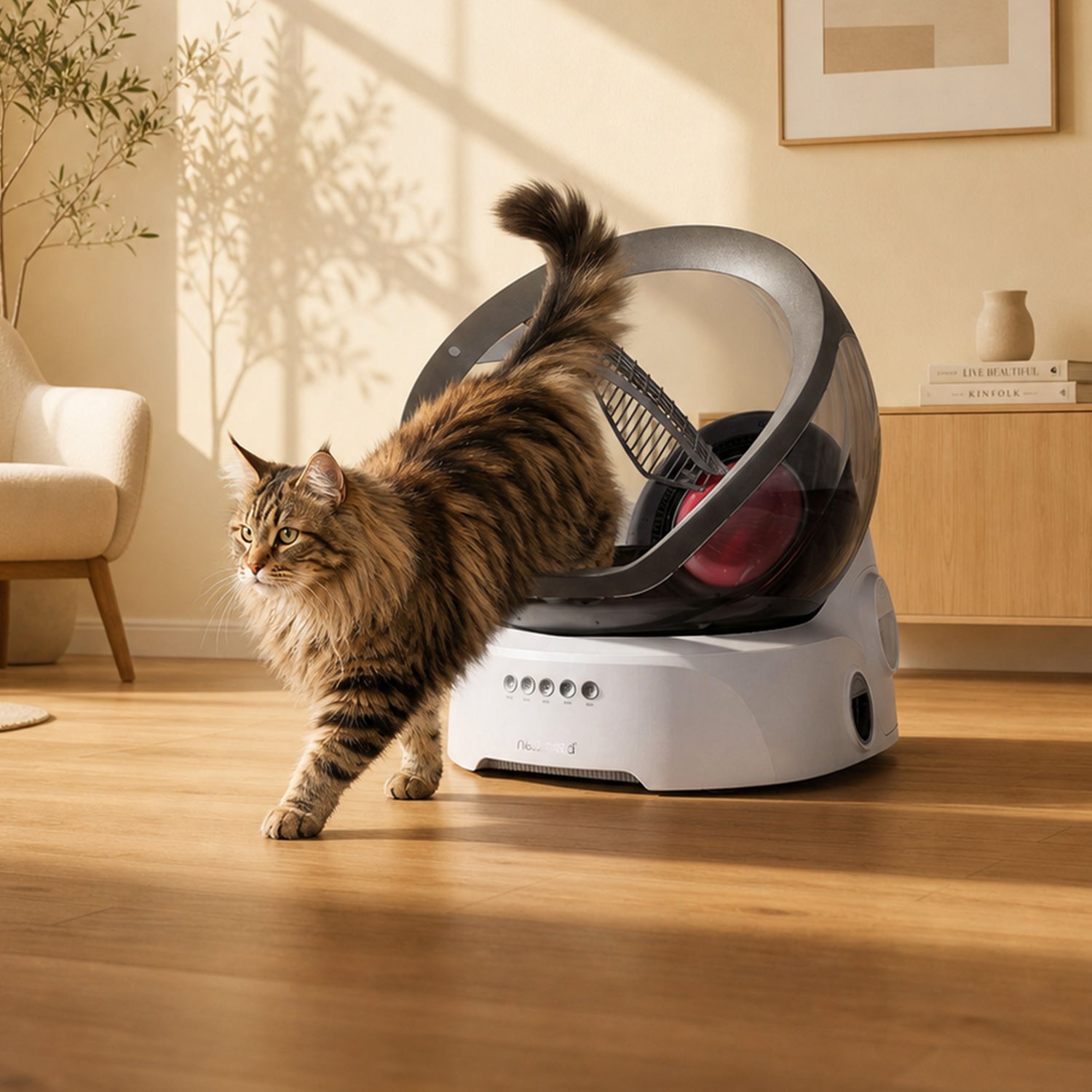
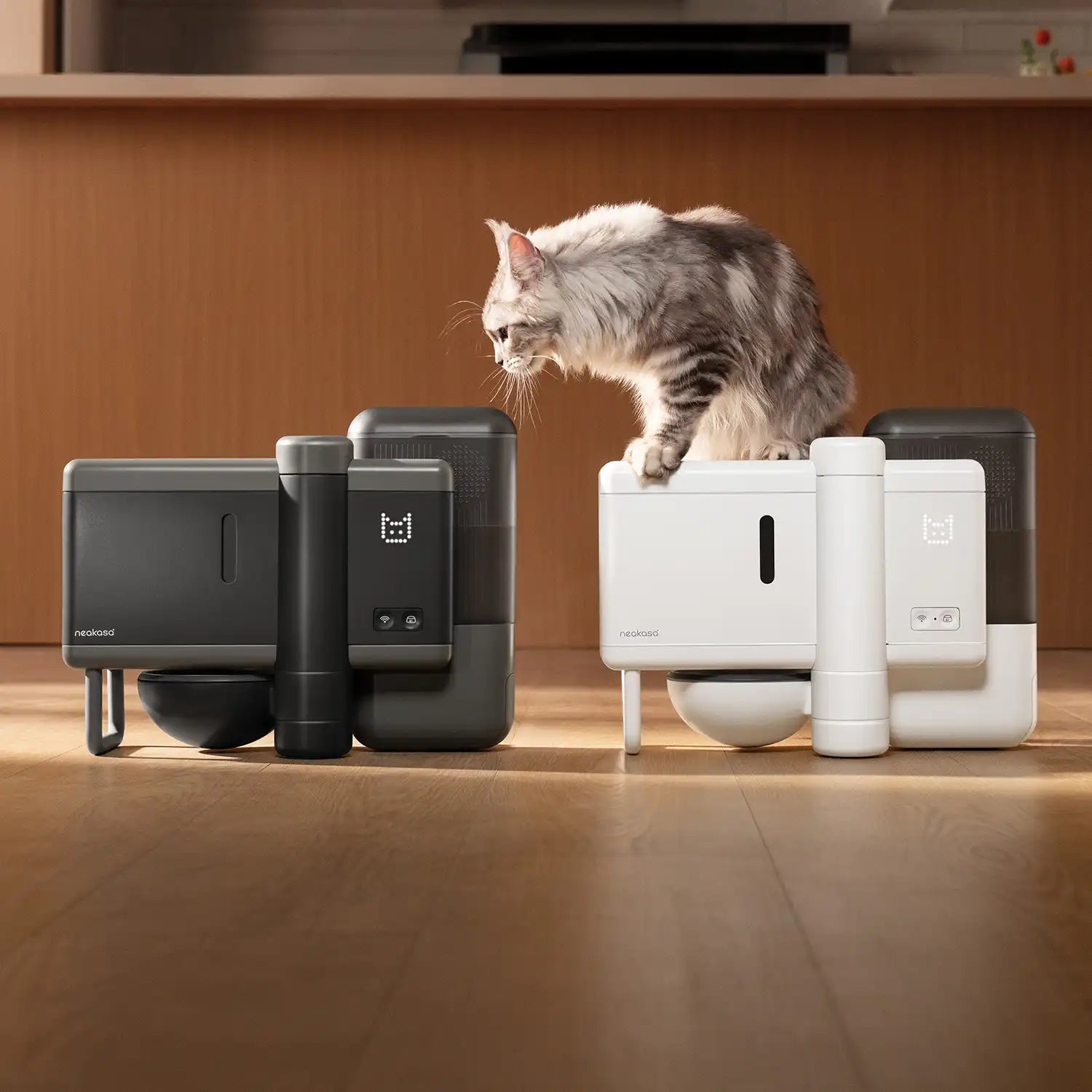
This makes a self-cleaning cat litter box for multiple cats a household hygiene necessity. Pairing the Neakasa M1 Self-Cleaning Litter Box with the Neakasa AirStep offers a complete hygienic overhaul:
- Open-Top Airflow (Severing the Humidity Trap): The M1’s spacious, open-top design allows for superior ventilation, keeping the litter bed dry and naturally hostile to bacteria.
- Instant Waste Isolation (The Ultimate Odor Eliminator): It automatically sifts and separates clumps shortly after your cat leaves, dropping them into a fully sealed, odor-blocking trash receptacle. This kills the bacterial life cycle at the root.
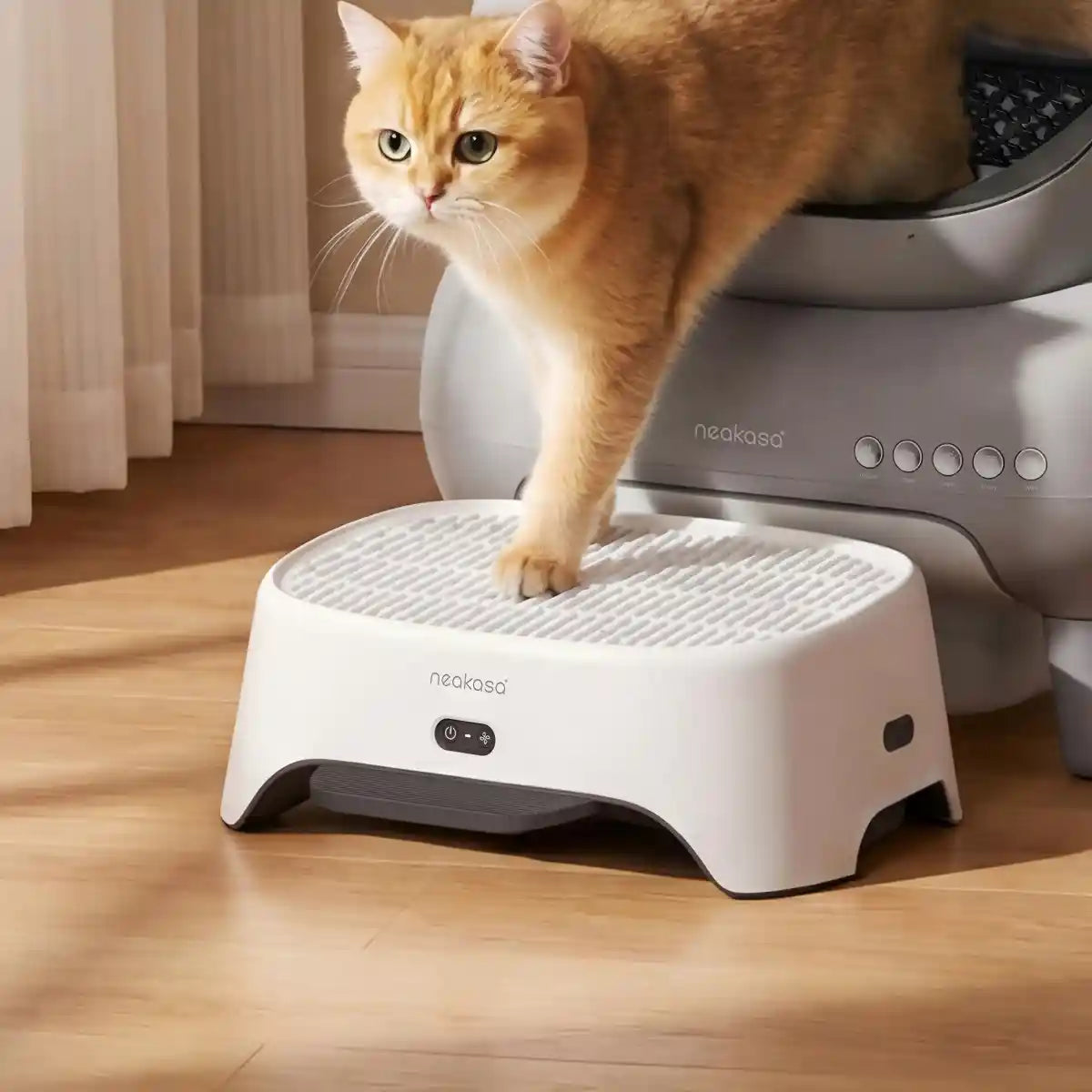
- The AirStep Microbiome Barrier: Bacteria hitch a ride on your cat’s paws. The AirStep gently opens its paw pads as they exit to catch stray litter and dust, ensuring contaminated particles aren’t tracked onto your carpets or bed.

Neakasa M1: Smart Scooping
- Auto-Cleaning: No more scooping; safe open-top design.
- 2-Week Freedom: Sealed bin locks waste and odors for 14 days.
- Fits All Cats: Spacious interior, supports up to 33 lbs.
Neakasa AirStep: Air Purification
- Instant Action: Neutralizes odors the moment your cat leaves.
- 99% Efficiency: High-performance filter stops smells from spreading.
- Total Freshness: The perfect companion for a 100% odor-free home.
FAQs
Q1: Can litter box bacteria make humans sick?
Yes. A bacteria-ridden litter box can transmit zoonotic pathogens such as Salmonella, Campylobacter, and Toxoplasma gondii. Immunocompromised individuals, pregnant women, and young children are particularly at risk.
Q2: What is the best litter box odor eliminator?
The best odor eliminator is immediate waste removal, not a scented spray. Heavily perfumed powders just mask the smell and can irritate your cat’s lungs. The most effective solution is a bio-enzymatic cleaner or an automatic litter box that seals waste away instantly.
Q3: Exactly how often to clean the litter box for 2 cats?
If doing it manually, scoop at least 2 times a day and wash the boxes every 2 weeks. With a high-capacity smart system like the Neakasa M1, it handles the scooping automatically, meaning you only need to tie up and throw away the sealed waste bag once every 10 to 14 days for two cats.
Conclusion
Learning how to prevent cat litter bacteria growth comes down to outsmarting the microbes. You can reclaim your home’s air quality by following this quick hygiene checklist:
- [ ] Assess your current litter’s clumping speed.
- [ ] Inspect your plastic box for deep scratches (biofilms).
- [ ] Ditch covered boxes to eliminate the humidity trap.
- [ ] Switch to a bio-enzymatic cleaner.
If you are tired of the endless scooping cycle and want to guarantee a hygienic environment, it’s time to let technology do the heavy lifting. Explore the Neakasa M1 and AirStep combo today, and experience the peace of mind that comes with a genuinely clean, odor-free home.


Leave a comment
All comments are moderated before being published.
This site is protected by hCaptcha and the hCaptcha Privacy Policy and Terms of Service apply.