
As cat lovers, we adore our furry friends, but coming home to pungent odors or stepping barefoot on scattered litter pellets is easily the most frustrating part of cat ownership.
If you are looking for exactly how to keep a cat litter area clean, you are in the right place. This guide gives you a systematic approach to tackling smells and tracking directly at the source.
- Stick to the “2-Minute Rule”: Scoop clumped litter at least once a day.
- Target odors specifically: Use an enzymatic cleaner for cat urine to break down smells instead of just covering them up.
- Upgrade physical barriers: Keep floors clean by using high-sided boxes paired with the best cat litter mat for tracking.
- Optimize your space: Utilize hidden cat litter box furniture to blend aesthetics with function.
1. Odor Control System: Eliminate Smells at the Source
Cat urine contains high concentrations of ammonia and uric acid, which spread quickly if left untreated. Here are four steps to building an odor-free litter zone:
Follow the “2-Minute Daily Scoop” Rule
The easiest and most effective way to control odor is consistency. Spend one minute in the morning and one in the evening scooping out waste and urine clumps.
This prevents bacterial growth and keeps your cat happy (cats love cleanliness and may start peeing elsewhere if the box is too dirty).
Use Enzymatic Cleaners to Break Down Urine Odor
When your cat accidentally pees over the edge or on the floor, standard household cleaners only mask the smell. You must use a dedicated enzymatic cleaner for cat urine.
Enzymes break down uric acid crystals at the molecular level, completely removing the lingering scent that causes cats to repeatedly mark the area.
Deep Clean the Litter Box Monthly (Reset the System)
Even with daily scooping, micro-particles and odors stick to the bottom of the plastic pan.
- Empty: Dump all the old litter into the trash.
- Wash: Scrub the inside and outside with warm water and unscented dish soap.
- Dry: Let it air dry completely (in the sun for extra sanitization if possible) before pouring in fresh litter.
Upgrade to a Sealed or Self-Cleaning Litter Box
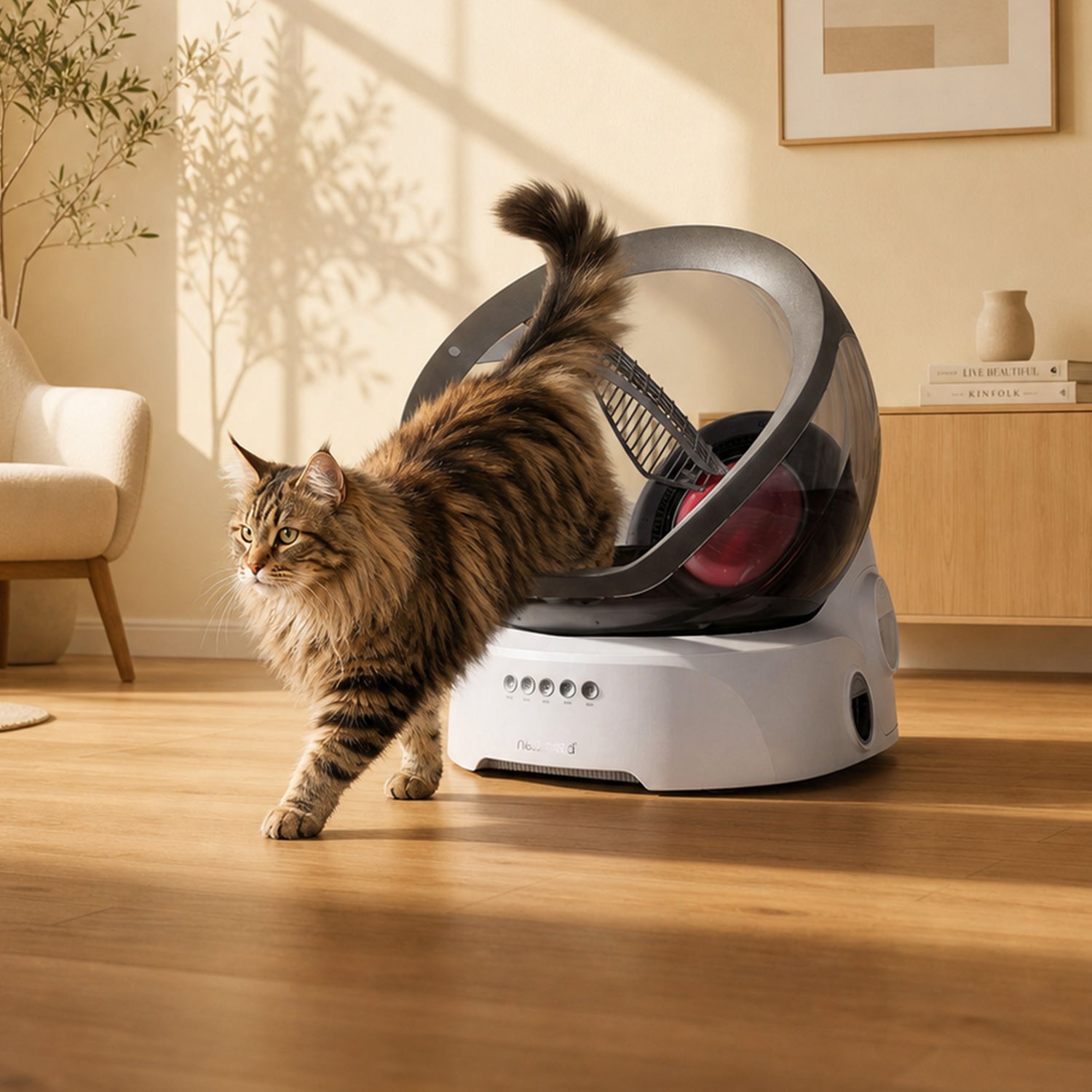
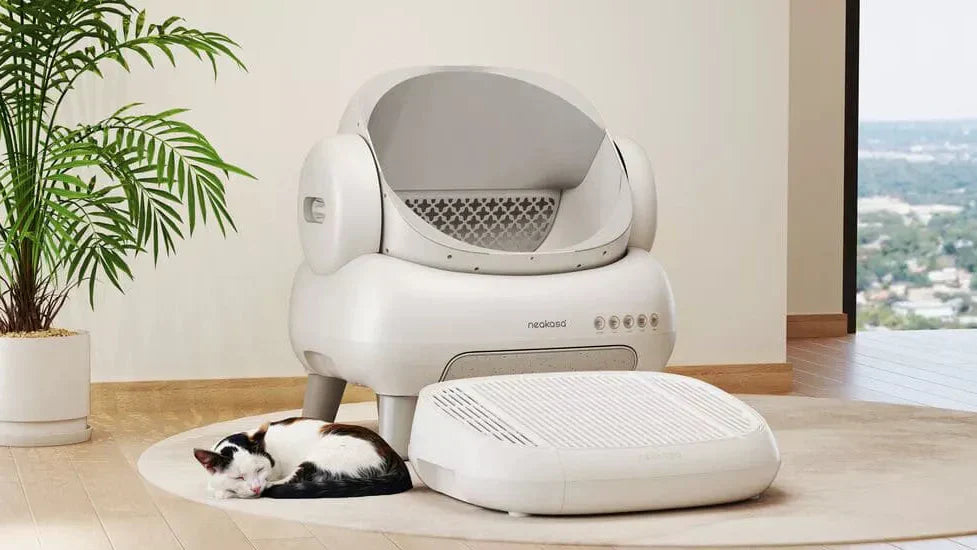
If you have a busy schedule, automating the process is the ultimate fix. Upgrade to an open-top self-cleaning litter box like the Neakasa M1 Plus, which auto-sifts waste and securely seals it away with a "Pull and Wrap" design, giving you up to 14 scoop-free days.
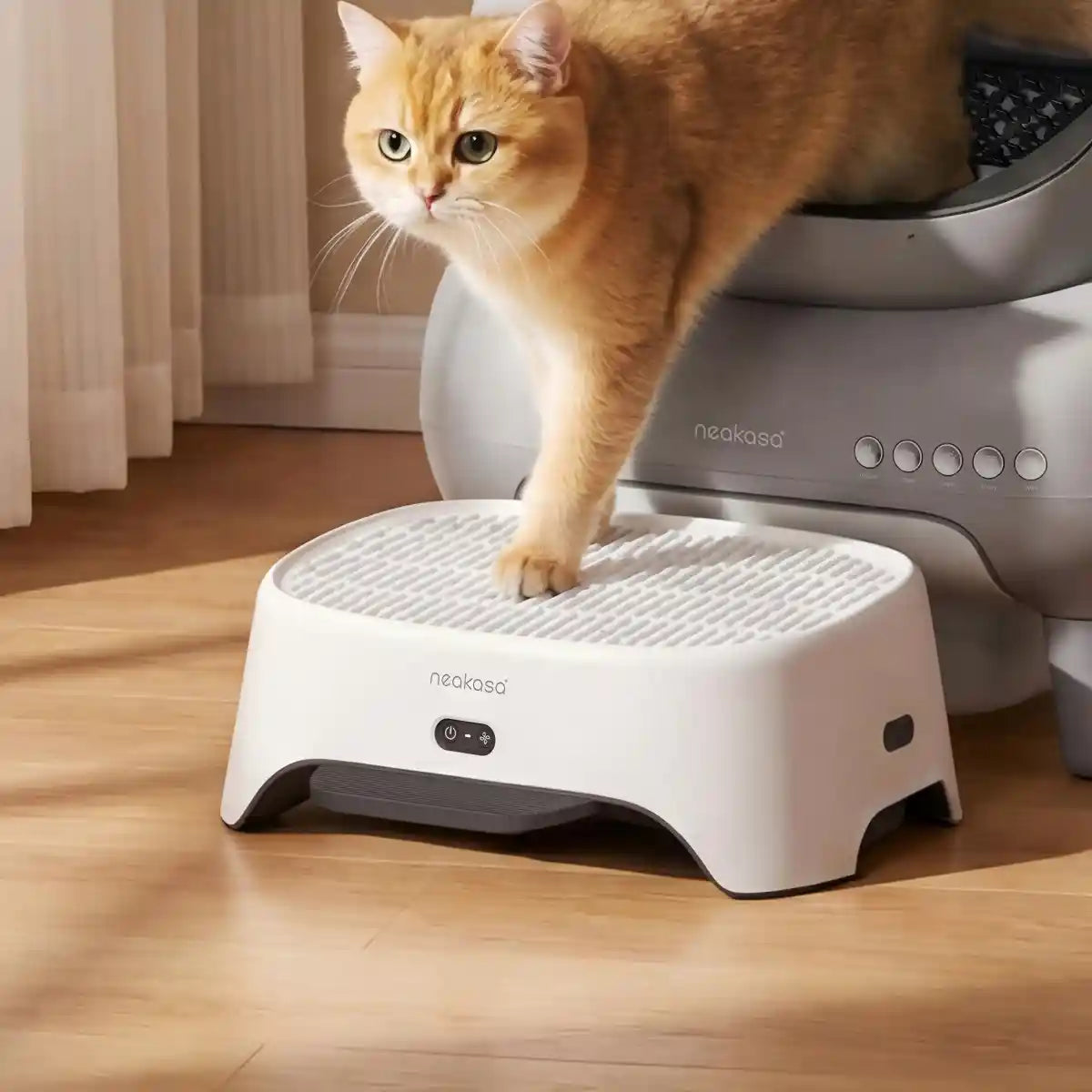
For a completely bulletproof setup, pair it with the Neakasa AirStep. This 2-in-1 entry ramp catches loose litter from your cat's paws, while its built-in purifier actively neutralizes ammonia odors, dust, and dander right at the source.

Neakasa M1: Smart Scooping
- Auto-Cleaning: No more scooping; safe open-top design.
- 2-Week Freedom: Sealed bin locks waste and odors for 14 days.
- Fits All Cats: Spacious interior, supports up to 33 lbs.
Neakasa AirStep: Air Purification
- Instant Action: Neutralizes odors the moment your cat leaves.
- 99% Efficiency: High-performance filter stops smells from spreading.
- Total Freshness: The perfect companion for a 100% odor-free home.
2. Anti-Tracking System: Keep Litter Off Your Floors
To stop cat litter tracking, you need to look at the box design, external traps, and the litter material itself.
Choose High-Sided or Top-Entry Litter Boxes
Many cats love to dig aggressively when covering their waste. A high-sided box blocks most of the flying litter. A top-entry box is even better; as the cat jumps out, the grated lid naturally knocks loose pellets off their paws and back into the box.
Use a Double-Layer Litter Mat
This is one of the highest-ROI purchases for any cat owner. The best cat litter mat for tracking usually features a dual-layer honeycomb design. The large upper holes trap litter from your cat’s paws, letting it fall into the bottom layer. To clean it, you simply pick it up and pour the trapped litter back into the box.
Switch to Low-Tracking, Low-Dust Litter
The type of litter you use directly affects how much ends up on your floor and how dusty your air gets.
| Litter Type | Tracking Level | Odor Control | Pros & Cons |
|---|---|---|---|
| Clay (Clumping) | High | Excellent | Clumps well, but small particles easily stick to paws. Tends to be dusty. |
| Tofu | Low | Good | Pellet-shaped so it won’t track easily. Flushable, eco-friendly, and safe. |
| Pine Pellets | Lowest | Moderate | Large pellets turn to sawdust when wet; almost zero tracking. Requires a sifting litter box. |
Optimize Litter Depth and Placement
Keep the litter depth between 2 to 3 inches (5-8 cm). If it’s too shallow, urine will stick to the bottom, causing severe odors. If it’s too deep, you increase the chance of your cat enthusiastically kicking it over the sides.
3. Space Optimization: Hide the Litter Box Without Hiding Problems
Here is how to smartly conceal your cat’s bathroom while keeping it fresh and accessible for both you and your pet.
Use Functional Litter Box Furniture
If you live in a smaller space, hidden cat litter box furniture is the perfect solution. They look like standard side tables, benches, or storage cabinets on the outside, but house the litter box inside. This gives your cat privacy while blending perfectly with your home decor.
Add Odor Absorbers
Place activated charcoal bags or bamboo charcoal odor absorbers near the litter box or tucked into the corners of the hidden furniture. They silently absorb airborne odor molecules 24/7 without introducing artificial fragrances that might bother your cat.
Place the Litter Box in the Right Location
The litter box should be placed in a well-ventilated, relatively quiet area away from your cat’s food and water bowls. Avoid putting it in damp, enclosed closets or corners, which can accelerate odor buildup.
FAQs
Q1: Does baking soda really eliminate litter box odor?
Yes, it helps neutralize acidic odors when sprinkled underneath the litter. However, it's a supplement, not a substitute for daily scooping and deep cleaning.
Q2: Why does my cat kick litter everywhere?
Cats instinctively bury their waste to hide their scent. Excessive kicking usually means the box is too small or the litter is too deep. Switching to a larger, high-sided box easily solves this.
Q3: How do I clean cat urine from hardwood floors safely?
- Blot the wet urine immediately with paper towels.
- Apply an enzymatic cleaner and let it sit for 10-15 minutes to break down the uric acid.
- Wipe clean with a damp cloth and dry the area completely to prevent wood damage.
Conclusion
Figuring out how to keep the cat litter area clean doesn’t require magic—just a systematic daily routine.
By scooping daily, using the right enzymatic cleaners, putting down a double-layer mat, and utilizing clever litter box furniture, you can maintain a fresh, spotless home while giving your cat a five-star bathroom experience.


Leave a comment
All comments are moderated before being published.
This site is protected by hCaptcha and the hCaptcha Privacy Policy and Terms of Service apply.